
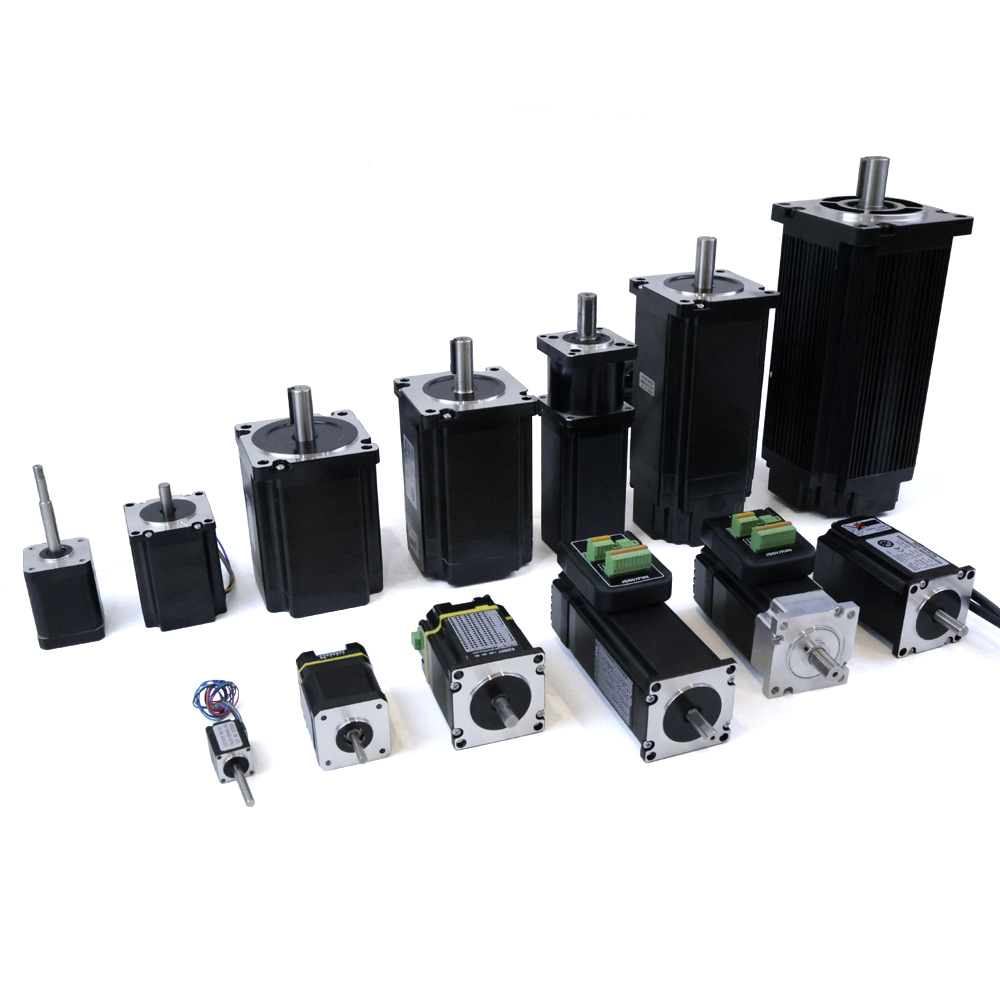
The hybrid stepper motor represents a critical engineering achievement in motion control systems, designed to address the fundamental challenge of balancing rotational speed with positional accuracy. Unlike traditional stepper motor designs, the hybrid stepper motor combines advantages from both permanent magnet and variable reluctance technologies, creating a platform where manufacturers and engineers can achieve higher torque density while maintaining exceptional holding precision. This balance is not accidental but rather the result of sophisticated mechanical and electromagnetic design choices that allow the hybrid stepper motor to perform reliably across diverse industrial applications, from precision manufacturing to medical device instrumentation.
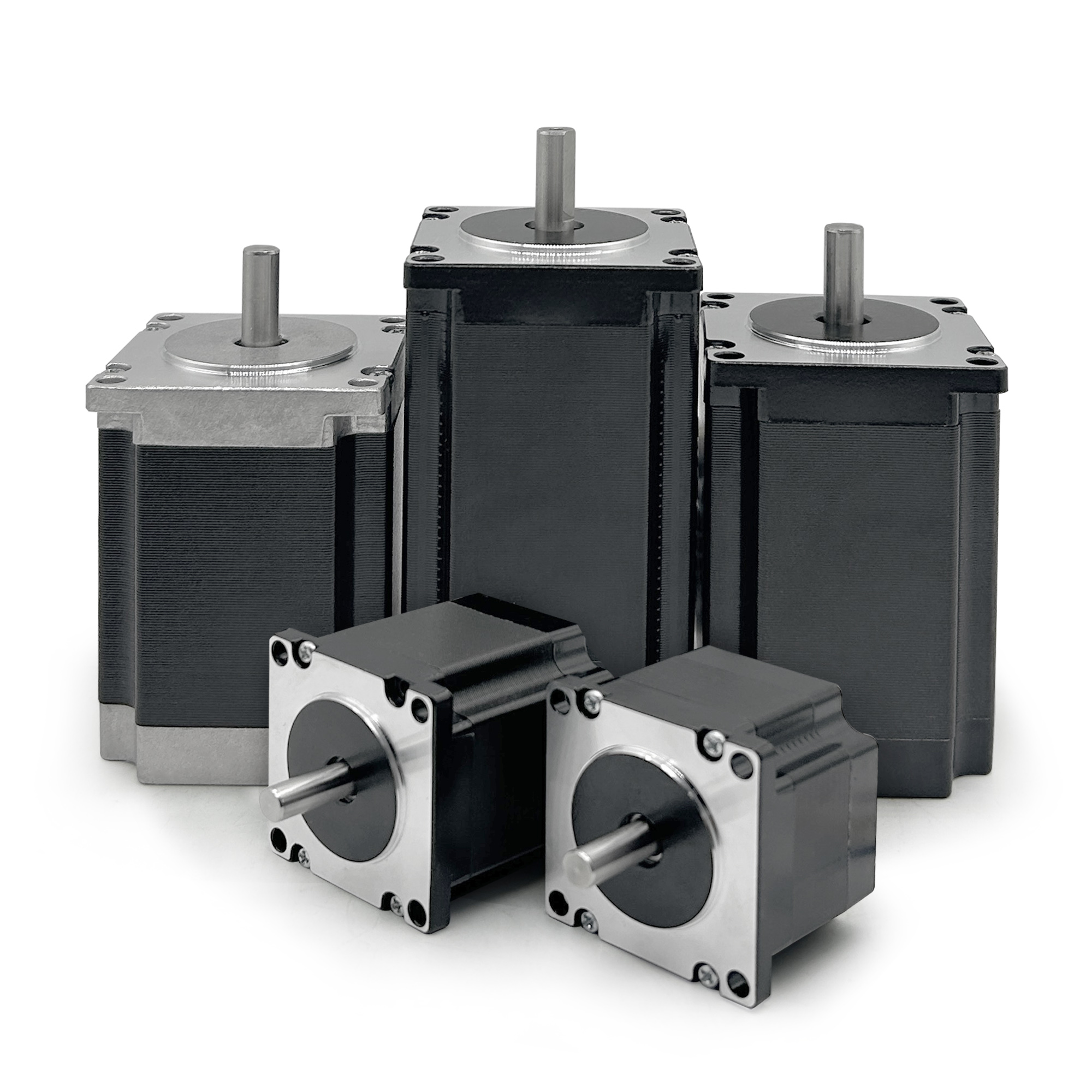
Understanding how a hybrid stepper motor manages this speed-to-precision trade-off requires knowledge of electromagnetic principles, driver capabilities, and real-world application constraints. The performance envelope of any hybrid stepper motor is shaped by step resolution, electrical design, and the quality of control electronics. When properly implemented, a hybrid stepper motor can deliver smooth acceleration curves, predictable torque profiles, and accurate position tracking without requiring complex feedback systems, making it the preferred choice for countless industrial motion control scenarios.
Electromagnetic Architecture and Design Principles
Permanent Magnet and Reluctance Integration
The core advantage of a hybrid stepper motor lies in its integrated design approach. A hybrid stepper motor combines a permanent magnet rotor with soft-iron teeth on both the rotor and stator, creating multiple magnetic poles that align during energization. This architecture allows a hybrid stepper motor to generate higher holding torque than permanent magnet designs while maintaining better speed performance than reluctance motors. The tooth geometry of a hybrid stepper motor is precision-manufactured to ensure consistent alignment and repeatable positioning, enabling the motor to hold position reliably even during power interruptions or when subjected to external loads.
The electromagnetic field distribution in a hybrid stepper motor is optimized to produce strong detent torque, which helps the motor resist load disturbances and maintain angular position accuracy. When comparing a hybrid stepper motor to other motor types, engineers often observe that the hybrid stepper motor delivers superior positioning repeatability because the permanent magnet component provides a consistent baseline magnetization, while the reluctance elements ensure fine-resolution stepping. This synergy means that a hybrid stepper motor can operate with smaller electrical current fluctuations while maintaining full torque output, reducing heat generation and extending motor lifespan in continuous-duty applications.
Step Resolution and Precision Control
Step resolution is where a hybrid stepper motor truly distinguishes itself from simpler motor designs. A standard hybrid stepper motor typically offers 1.8 degrees per step in full-step mode, but microstepping technology allows a hybrid stepper motor to achieve 16, 32, or even 256 steps per full rotation. This microstepping capability means that a hybrid stepper motor can provide smooth, precise motion with minimal vibration, making it suitable for applications demanding both accuracy and quiet operation. The driver electronics play a crucial role in extracting this resolution potential from a hybrid stepper motor, as microstepping requires sophisticated current waveform generation.
When a hybrid stepper motor operates in microstepping mode, the rotor moves through intermediate positions that are not full magnetic pole alignments. This technique makes a hybrid stepper motor behave almost like a servo motor in terms of smoothness, while retaining the open-loop control simplicity and lower cost that define stepper technology. The precision achieved by a hybrid stepper motor under microstepping remains proportional to the bit depth and current accuracy of the driver, so component selection directly impacts the effective resolution delivered by your hybrid stepper motor installation.
Speed Performance and Torque Characteristics
Torque-Speed Trade-offs in Motor Operation
Every hybrid stepper motor exhibits a characteristic torque-speed curve that defines its practical operating envelope. At low speeds, a hybrid stepper motor delivers full holding torque and exceptional positioning accuracy, making it ideal for precision positioning tasks. However, as stepping frequency increases, the torque output of a hybrid stepper motor begins to decrease due to back-EMF effects and winding inductance limitations. The steepness of this torque decline varies significantly among hybrid stepper motor designs, depending on coil impedance, permanent magnet strength, and pole tooth pitch.
Driver electronics significantly influence the speed capability of a hybrid stepper motor system. A well-designed driver can help a hybrid stepper motor maintain higher torque at elevated speeds through techniques such as voltage boosting and current regulation optimization. When selecting a hybrid stepper motor for an application requiring both high speed and maintained control precision, engineers must carefully match motor specifications with driver capabilities. The quality of the hybrid stepper motor control electronics often determines whether the theoretical speed rating translates into practical performance.
Acceleration and Dynamic Response
The ability of a hybrid stepper motor to accelerate smoothly while maintaining step accuracy is a key performance differentiator in motion control systems. A hybrid stepper motor can achieve rapid acceleration when properly driven, but the acceleration profile must be carefully managed to prevent step loss. If acceleration rates exceed the capability of a hybrid stepper motor to transition smoothly between steps, the motor will either miss steps or experience excessive vibration. Modern motor controllers allow hybrid stepper motor acceleration profiles to be programmed with precise ramp rates and current profiles.
The holding torque of a hybrid stepper motor remains constant regardless of speed or load, making it possible to design acceleration profiles that guarantee reliable motion control. Once a hybrid stepper motor reaches its programmed speed, the control system can reduce driver current to maintain position while conserving electrical power. This efficiency is particularly valuable in battery-powered or energy-conscious applications where a hybrid stepper motor can deliver precision motion while minimizing power consumption. The dynamic behavior of a hybrid stepper motor under acceleration reveals much about the overall quality and responsiveness of the motor-driver system.
Industrial Applications and Control Implementation
Precision Positioning and Repeatability
The defining characteristic that makes a hybrid stepper motor ideal for precision positioning is its ability to reliably execute thousands of identical moves with virtually no position drift. A hybrid stepper motor used in automated manufacturing equipment can maintain positioning accuracy to within a fraction of a degree across millions of cycles, without feedback sensors or calibration adjustments. This repeatability stems from the inherent detent torque and magnetic pole alignment mechanism built into every hybrid stepper motor design. Industries including semiconductor manufacturing, medical device assembly, and laboratory automation rely on hybrid stepper motor technology specifically for this reproducible precision.
When integrating a hybrid stepper motor into production systems, engineers benefit from the fact that position tracking requires no external encoder or feedback mechanism. This simplifies installation, reduces wiring complexity, and lowers total system cost compared to servo motor solutions. A hybrid stepper motor system achieves predictable performance without the tuning and calibration cycles required by closed-loop servo systems. The open-loop control paradigm of a hybrid stepper motor makes it particularly attractive for applications where system reliability and simplicity are paramount concerns.
Speed Optimization and Load Matching
Achieving optimal performance from a hybrid stepper motor requires careful matching of motor specifications to actual application requirements. A hybrid stepper motor selected with excessive torque capacity relative to actual load will consume more electrical power and generate unnecessary heat. Conversely, a hybrid stepper motor that is undersized for the application may experience step loss or insufficient acceleration during transient conditions. The torque-speed curve of a hybrid stepper motor must be analyzed against the combined demands of inertia, friction, and external load throughout the complete motion profile.
When configuring a hybrid stepper motor for speed-critical applications, the choice of driver current and microstepping resolution directly influences both speed capability and control precision. A hybrid stepper motor operating in full-step mode achieves higher speeds but with more vibration and less smoothness. By contrast, running the same hybrid stepper motor in 16-microstep or 32-microstep mode sacrifices maximum speed slightly but delivers smoother motion and better control precision. The specific speed-versus-precision balance required by each application dictates the optimal hybrid stepper motor configuration and driver strategy.
FAQ
What determines whether a hybrid stepper motor can maintain precision at high speeds?
The ability of a hybrid stepper motor to maintain precision at elevated speeds depends primarily on driver quality, microstepping resolution, and load inertia. A hybrid stepper motor with advanced current regulation and proper acceleration profiling can sustain accuracy even as stepping frequency increases. However, if speed demands exceed the capabilities specified in the hybrid stepper motor torque-speed curve, precision may degrade as the motor struggles to transition reliably between steps. Load inertia also affects speed performance; higher inertial loads require more torque from the hybrid stepper motor to achieve smooth acceleration, potentially limiting achievable speeds.
Can a hybrid stepper motor replace a servo motor in applications requiring both speed and control precision?
In many applications, a hybrid stepper motor can provide equivalent or superior performance compared to servo motors at lower total cost. A hybrid stepper motor offers inherent position holding, repeatable precision, and straightforward open-loop control without complex feedback tuning. However, applications requiring very high speeds, variable load conditions, or real-time load feedback may benefit from servo technology. A hybrid stepper motor is optimally suited to applications where load conditions are predictable and positioning accuracy is paramount, while servo motors excel in dynamic environments where rapid load compensation is necessary.
How does microstepping technology improve the control precision of a hybrid stepper motor?
Microstepping enhances a hybrid stepper motor by dividing each full step into smaller intermediate positions through sophisticated current waveform control. Instead of the rotor jumping between discrete magnetic pole positions, a hybrid stepper motor under microstepping moves smoothly through many intermediate angles, dramatically reducing vibration and improving motion smoothness. This makes a hybrid stepper motor capable of delivering servo-motor-like smoothness while retaining open-loop simplicity. Higher microstepping resolution means finer position increments from the hybrid stepper motor, enabling applications to achieve finer control without upgrading to more expensive motor technologies.