
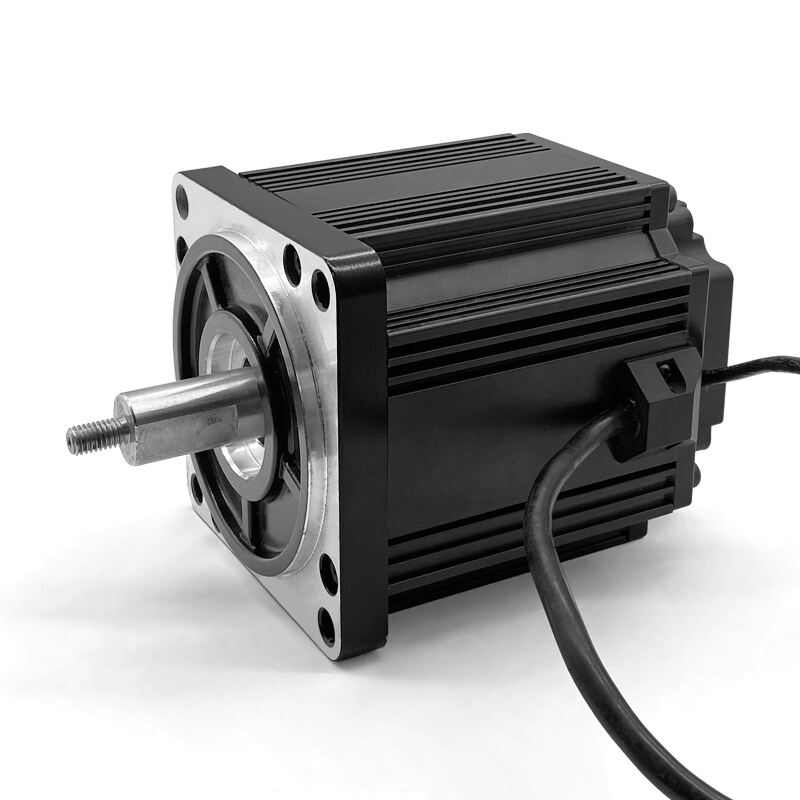
Die Leistungsmerkmale eines bürstenlosen Gleichstrommotors unterliegen erheblichen Veränderungen, wenn sie unterschiedlichen Lastbedingungen ausgesetzt werden; daher ist die Lastanalyse für Ingenieure und Systemdesigner von entscheidender Bedeutung. Das Verständnis, wie diese Motoren auf verschiedene betriebliche Anforderungen reagieren, ermöglicht eine optimale Auswahl und Implementierung in einer breiten Palette industrieller Anwendungen. Moderne bürstenlose Gleichstrommotoren bieten im Vergleich zu herkömmlichen Motoren mit Bürsten eine überlegene Effizienz und Zuverlässigkeit; ihre Leistungscharakteristiken weisen jedoch deutlich unterschiedliches Verhalten bei geringer, mittlerer und hoher Last auf.
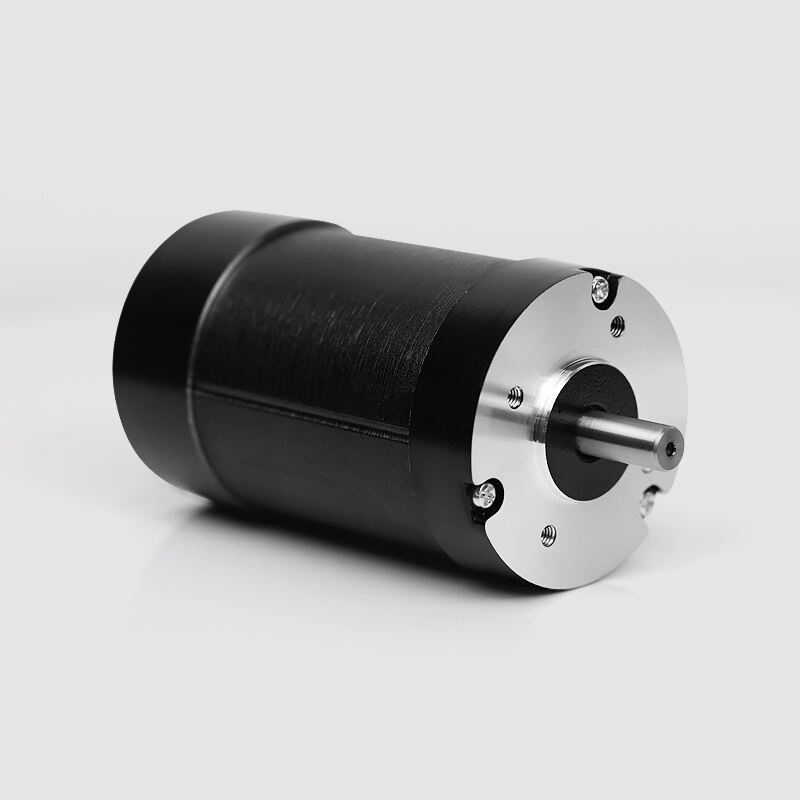
Grundlegende Lastreaktionsmerkmale
Drehmoment-Drehzahl-Beziehung bei variabler Belastung
Die Drehmoment-Drehzahl-Beziehung eines bürstenlosen Gleichstrommotors weist eine lineare Kennlinie auf, die sich bei unterschiedlichen Lastbedingungen als konstant erweist. Bei geringer Belastung hält der Motor höhere Drehzahlen aufrecht und verbraucht dabei nur minimalen Strom, was zu optimalen Wirkungsgradwerten führt. Mit zunehmender Last sinkt die Motordrehzahl proportional, während die Drehmomentabgabe steigt, um den mechanischen Anforderungen der jeweiligen Anwendung gerecht zu werden.
Diese lineare Beziehung ermöglicht vorhersagbare Leistungsberechnungen und erlaubt es Ingenieuren, das Verhalten des Motors unter spezifischen Lastszenarien präzise abzuschätzen. Die Steigung der Drehmoment-Drehzahl-Kennlinie bleibt unabhängig von der Lasthöhe konstant und gewährleistet damit konsistente Regelungseigenschaften, die den Systementwurf und die Implementierung vereinfachen.
Stromverbrauchsmuster
Der Stromverbrauch eines bürstenlosen Gleichstrommotors steht in direktem Zusammenhang mit der aufgebrachten Last und folgt vorhersagbaren Mustern, die präzise Strategien zum Leistungsmanagement ermöglichen. Im Leerlauf verbraucht der Motor nur den Strom, der erforderlich ist, um innere Reibungs- und magnetische Verluste zu überwinden; dies entspricht typischerweise 10–15 % des Nennstromverbrauchs.
Mit zunehmender mechanischer Last steigt der Stromverbrauch proportional, um die erforderliche Drehmomentabgabe aufrechtzuerhalten. Diese Beziehung ermöglicht eine Echtzeit-Lastüberwachung mittels Strommessverfahren und erlaubt adaptive Regelungssysteme, die die Leistung anhand der tatsächlichen Betriebsbedingungen – und nicht anhand vorgegebener Parameter – optimieren.
Wirkungsgradschwankungen über den Lastbereich
Betriebspunkte mit maximalem Wirkungsgrad
Jeder bürstenlose Gleichstrommotor weist innerhalb eines bestimmten Lastbereichs einen maximalen Wirkungsgrad auf, der typischerweise zwischen 75 und 85 % des Nenn-Drehmoments liegt. Der Betrieb innerhalb dieser optimalen Zone gewährleistet eine maximale Energieumwandlung bei gleichzeitiger Minimierung der Wärmeentwicklung und einer Verlängerung der Lebensdauer der Komponenten. Das Verständnis dieser Wirkungsgradkurven ermöglicht es Systemdesignern, geeignete Motornennwerte auszuwählen, die mit den typischen Anwendungslasten übereinstimmen.
Die Wirkungsgradkurve eines bürstenloser Gleichstrommotor weist ein glockenförmiges Verhalten auf, wobei der Wirkungsgrad sowohl bei sehr leichter als auch bei sehr hoher Last abnimmt. Dieses Verhalten resultiert daraus, dass bei leichter Last die festen Verluste dominieren, während bei hoher Last erhöhte Kupferverluste die Leistung beeinträchtigen.
Thermisches Management – Überlegungen
Die Wärmeentwicklung bei Anwendungen mit bürstenlosen Gleichstrommotoren variiert erheblich je nach Lastbedingungen, weshalb eine sorgfältige thermische Analyse für einen zuverlässigen Betrieb erforderlich ist. Bei geringer Last entsteht aufgrund des reduzierten Stromflusses und der niedrigeren Kupferverluste nur minimale Wärme, während hohe Lasten beträchtliche thermische Energie erzeugen, die effektiv abgeführt werden muss, um Leistungseinbußen zu vermeiden.
Ein kontinuierlicher Betrieb unter hohen Lastbedingungen erfordert möglicherweise zusätzliche Kühlmaßnahmen wie Zwangsluftumlauf oder Kühlkörper, um optimale Betriebstemperaturen aufrechtzuerhalten. Ein geeignetes thermisches Management gewährleistet eine konsistente Leistung und verhindert eine magnetische Entmagnetisierung, die die Motorleistung dauerhaft mindern kann.
Dynamisches Antwortverhalten bei Lastschwankungen
Beschleunigungs- und Verzögerungseigenschaften
Die dynamische Reaktion eines bürstenlosen Gleichstrommotors auf Laständerungen zeigt eine ausgezeichnete Steuerbarkeit und eine schnelle Anpassung an wechselnde Betriebsanforderungen. Wenn die Last plötzlich abnimmt, beschleunigt der Motor schnell aufgrund der geringeren Drehmomentanforderung und der verfügbaren elektromagnetischen Kraft zur Drehzahlerhöhung.
Umgekehrt führen plötzliche Laststeigerungen zu einer unmittelbaren Drehzahlabsenkung, da die Motorelektronik den Stromfluss anpasst, um die Drehmomentabgabe aufrechtzuerhalten. Die Reaktionszeit für diese Anpassungen liegt typischerweise im Millisekundenbereich, wodurch bürstenlose Gleichstrommotorsysteme besonders gut für Anwendungen geeignet sind, die eine schnelle Lastkompensation erfordern.
Anpassungen des Regelungssystems
Moderne Regelungssysteme für bürstenlose Gleichstrommotoren integrieren hochentwickelte Algorithmen, die Betriebsparameter automatisch basierend auf Echtzeit-Lastrückmeldungen anpassen. Diese adaptiven Regelungsstrategien optimieren die Leistung, indem sie Schaltmuster, Strombegrenzungen und Zeitabläufe an die jeweiligen Lastanforderungen anpassen.
Moderne Steuerungssysteme können Laständerungen anhand von Anwendungsmustern vorhersagen und vorausschauend die Motorparameter anpassen, um einen gleichmäßigen Betrieb aufrechtzuerhalten. Diese prädiktive Fähigkeit verringert die Systembelastung und verbessert die Gesamtzuverlässigkeit, während gleichzeitig eine präzise Drehzahl- und Positionsregelung unter wechselnden Lastbedingungen gewährleistet bleibt.
Lastüberlegungen speziell für die jeweilige Anwendung
Anwendungen in der Industrieautomatisierung
In Umgebungen der industriellen Automatisierung muss die Leistung von bürstenlosen Gleichstrommotoren hochgradig variierenden Lasten gerecht werden – von minimalen Positionierkräften bis hin zu erheblichen Anforderungen beim Materialhandling. Förderanlagen, Roboterarme und Verpackungsmaschinen weisen jeweils spezifische Lastprofile auf, die vielseitige Motoreigenschaften erfordern.
Die Fähigkeit dieser Motoren, eine konstante Leistung über einen breiten Lastbereich aufrechtzuerhalten, macht sie ideal für automatisierte Produktionslinien, bei denen sich die betrieblichen Anforderungen häufig ändern. Ihre präzisen Steuerungsmöglichkeiten gewährleisten eine genaue Positionierung und einen reibungslosen Betrieb unabhängig von Schwankungen der Nutzlast oder den jeweiligen Prozessanforderungen.
HLK- und Lüfteranwendungen
Heizungs-, Lüftungs- und Klimaanlagen nutzen die Technologie von bürstenlosen Gleichstrommotoren, um eine stufenlose Luftstromregelung bei gleichzeitig hoher Energieeffizienz zu erreichen. Lüfteranwendungen weisen typischerweise quadratische Lastkurven auf, bei denen sich das Drehmoment exponentiell mit der Drehzahl erhöht und dadurch besondere Anforderungen an die Leistungsfähigkeit gestellt werden.
Die inhärenten Effizienzvorteile bürstenloser Gleichstrommotoren zeigen sich besonders deutlich bei drehzahlgeregelten Lüfteranwendungen, bei denen herkömmliche Motoren bei reduzierten Drehzahlen nur schwer eine akzeptable Effizienz aufrechterhalten können. Diese Fähigkeit ermöglicht erhebliche Energieeinsparungen in HLK-Anlagen durch eine optimierte Luftstromregelung.
Strategien zur Leistungsoptimierung
Lastanpassungsverfahren
Eine korrekte Lastanpassung gewährleistet eine optimale Leistung des bürstenlosen Gleichstrommotors, indem Motorleistungsdaten ausgewählt werden, die den Anwendungsanforderungen entsprechen. Übergroße Motoren arbeiten bei geringer Last ineffizient, während zu kleine Motoren bei hoher Belastung Überhitzung und vorzeitigen Ausfall erleiden können.
Ingenieure müssen bei der Auswahl geeigneter Motor-Spezifikationen nicht nur die Spitzenlastanforderungen, sondern auch das Betriebszyklus-Muster und die durchschnittlichen Lastbedingungen berücksichtigen. Diese umfassende Analyse stellt einen zuverlässigen Betrieb sicher und maximiert gleichzeitig die Energieeffizienz sowie die Lebensdauer der Komponenten.
Optimierung der Regelparameter
Durch Feinabstimmung von Regelparametern wie Strombegrenzungen, Beschleunigungsraten und Schaltfrequenzen können bürstenlose Gleichstrommotorsysteme unter bestimmten Lastbedingungen eine optimale Leistung erreichen. Diese Anpassungen müssen Leistungsanforderungen mit thermischen Grenzwerten sowie Überlegungen zur Systemstabilität in Einklang bringen.
Regelmäßige Leistungsüberwachung und Anpassung der Parameter basierend auf den tatsächlichen Betriebsbedingungen können die Systemeffizienz und -zuverlässigkeit erheblich verbessern. Moderne Steuerungssysteme bieten häufig automatisierte Optimierungsfunktionen, die die Parameter kontinuierlich für eine optimale Leistung anpassen.
Mess- und Überwachungsmethoden
Leistungsprüfverfahren
Eine umfassende Leistungsprüfung von Gleichstrommotor-Systemen mit elektronischer Kommutierung erfordert eine systematische Bewertung über das gesamte Lastspektrum. Die Prüfprotokolle sollten Messungen der Drehzahl, des Drehmoments, des Stromverbrauchs, des Wirkungsgrads sowie der thermischen Eigenschaften unter verschiedenen Lastbedingungen umfassen.
Standardisierte Prüfverfahren gewährleisten konsistente und vergleichbare Ergebnisse, die präzise Leistungsvorhersagen und Systemoptimierungen ermöglichen. Diese Prüfungen liefern wesentliche Daten zur Validierung der Konstruktionsberechnungen und zur Bestätigung, dass die ausgewählten Motoren die Anforderungen der jeweiligen Anwendung erfüllen.
Echtzeitüberwachungssysteme
Fortgeschrittene Überwachungssysteme verfolgen kontinuierlich die Leistungsparameter von Gleichstrommotoren mit elektronischer Kommutierung (brushless dc motors), wodurch proaktive Wartungs- und Optimierungsstrategien ermöglicht werden. Die Erfassung von Echtzeitdaten erlaubt die sofortige Erkennung von Abweichungen in der Leistung und liefert wertvolle Einblicke in Schwankungen der Lastmuster.
Die Integration von Überwachungssystemen in die Automatisierungsnetzwerke der Anlage ermöglicht eine umfassende Systemanalyse sowie Optimierungsmöglichkeiten. Diese Konnektivität erleichtert prädiktive Wartungsprogramme, die durch optimale Laststrategien Ausfallzeiten reduzieren und die Lebensdauer der Geräte verlängern.
Häufig gestellte Fragen
Wie beeinflusst die Last die Drehzahlregelung eines Gleichstrommotors mit elektronischer Kommutierung?
Die Last wirkt sich direkt über die inhärente Drehmoment-Drehzahl-Kennlinie auf die Geschwindigkeitsregelung bei Gleichstrom-Brushless-Motoren aus. Mit zunehmender Last nimmt die Motordrehzahl proportional entsprechend der linearen Beziehung zwischen diesen Parametern ab. Geschlossene Regelkreissysteme können jedoch eine konstante Drehzahl aufrechterhalten, indem sie den Stromfluss automatisch anpassen, um Lastschwankungen auszugleichen, was zu einer hervorragenden Geschwindigkeitsregelungsleistung führt.
Was ist der typische Wirkungsgradbereich für Gleichstrom-Brushless-Motoren unter verschiedenen Lastbedingungen?
Der Wirkungsgrad von Gleichstrom-Brushless-Motoren liegt typischerweise bei optimalen Lastbedingungen zwischen 85 und 95 %; diese treten üblicherweise bei 75–85 % des Nenn-Drehmoments auf. Bei geringer Last sinkt der Wirkungsgrad aufgrund feststehender Verluste auf etwa 70–80 %, während bei hoher Last je nach thermischen Bedingungen und Optimierung des Regelungssystems ein Wirkungsgrad von 80–90 % erreicht werden kann.
Kann ein Gleichstrom-Brushless-Motor sicher oberhalb seiner Nennlast betrieben werden?
Die meisten bürstenlosen Gleichstrommotoren können kurzfristige Überlastbedingungen bis zu 150–200 % der Nennleistung ohne Schäden verkraften. Ein kontinuierlicher Betrieb über der Nennlast führt jedoch zu einer übermäßigen Erwärmung und kann zur Entmagnetisierung der Permanentmagnete oder zu einer Beschädigung der Wicklungen führen. Eine geeignete thermische Managementstrategie sowie Schutzfunktionen des Steuerungssystems sind für einen sicheren Überlastbetrieb unerlässlich.
Wie schnell kann ein bürstenloser Gleichstrommotor auf plötzliche Laständerungen reagieren?
Moderne Steuerungssysteme für bürstenlose Gleichstrommotoren können auf Laständerungen innerhalb weniger Millisekunden reagieren, da sie über eine elektronische Kommutierung und fortschrittliche Regelalgorithmen verfügen. Die tatsächliche Reaktionszeit hängt von der Bandbreite des Steuerungssystems, der Trägheit des Motors und dem Ausmaß der Laständerung ab; typische Systeme erreichen jedoch eine vollständige Lastkompensation innerhalb von 1–10 Millisekunden nach Aufschalten oder Abschalten der Last.
Inhaltsverzeichnis
- Grundlegende Lastreaktionsmerkmale
- Wirkungsgradschwankungen über den Lastbereich
- Dynamisches Antwortverhalten bei Lastschwankungen
- Lastüberlegungen speziell für die jeweilige Anwendung
- Strategien zur Leistungsoptimierung
- Mess- und Überwachungsmethoden
-
Häufig gestellte Fragen
- Wie beeinflusst die Last die Drehzahlregelung eines Gleichstrommotors mit elektronischer Kommutierung?
- Was ist der typische Wirkungsgradbereich für Gleichstrom-Brushless-Motoren unter verschiedenen Lastbedingungen?
- Kann ein Gleichstrom-Brushless-Motor sicher oberhalb seiner Nennlast betrieben werden?
- Wie schnell kann ein bürstenloser Gleichstrommotor auf plötzliche Laständerungen reagieren?