
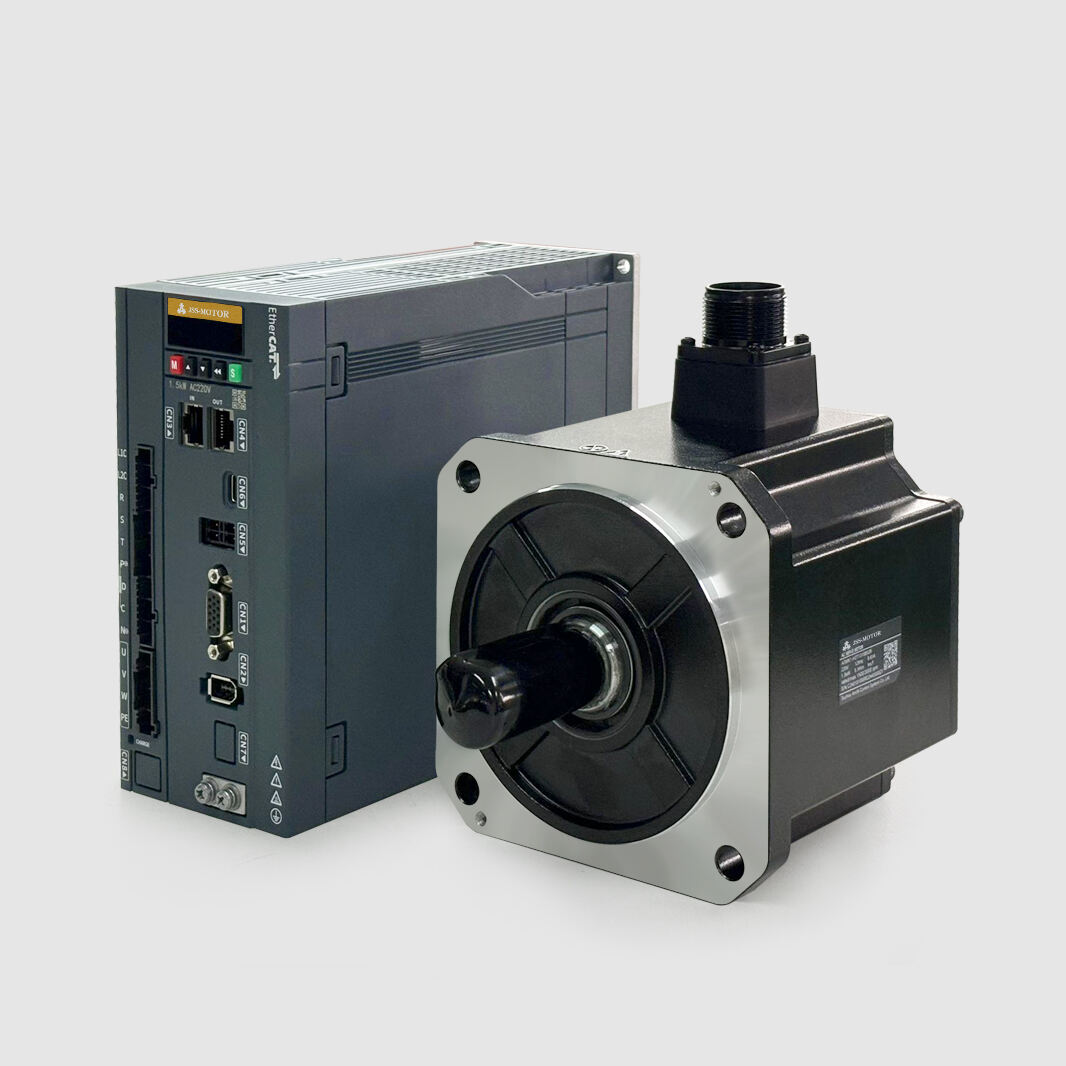
Synchronized motion systems form the backbone of modern industrial automation, enabling multiple axes to work together with extraordinary precision and timing. The key to achieving this level of coordination lies in the sophisticated control capabilities of servo motor technology, which provides the exact positioning, speed regulation, and torque control necessary for complex multi-axis applications. Industries ranging from packaging and assembly to robotics and CNC machining rely heavily on these synchronized systems to maintain product quality and operational efficiency.

The precision demands of synchronized motion applications require servo motor systems that can respond instantaneously to control commands while maintaining consistent performance across all connected axes. This level of control becomes particularly critical when multiple servo motor units must operate in perfect harmony, such as in pick-and-place operations, conveyor synchronization, or multi-spindle machining centers. The ability to maintain synchronized motion directly impacts production quality, cycle times, and overall equipment effectiveness.
Understanding Servo Motor Precision Fundamentals
Core Components of Precision Control
The foundation of servo motor precision lies in its closed-loop control system, which continuously monitors and adjusts motor performance based on feedback from high-resolution encoders. These encoders provide real-time position data with exceptional accuracy, often measuring incremental movements as small as a fraction of a degree. The servo motor controller processes this feedback information and makes instantaneous corrections to maintain the desired position, speed, and acceleration profiles.
Advanced servo motor systems utilize sophisticated control algorithms, including proportional-integral-derivative control and adaptive control strategies, to optimize performance across varying load conditions. The integration of these algorithms with high-speed digital signal processors enables servo motor systems to respond to command changes within microseconds, ensuring that synchronized motion requirements are consistently met even during complex operational sequences.
Encoder Technology and Resolution
Modern servo motor applications demand increasingly higher resolution feedback systems to achieve the precision required for synchronized motion control. High-resolution encoders, such as 17-bit absolute encoders, provide over 130,000 distinct position counts per revolution, enabling extremely fine positioning control and smooth motion profiles. This level of resolution becomes essential when coordinating multiple axes that must maintain precise relationships throughout their motion cycles.
The choice of encoder technology significantly impacts servo motor system performance, with absolute encoders offering advantages in synchronized applications where position retention during power cycles is critical. Unlike incremental encoders, absolute encoders maintain position information even after power loss, eliminating the need for homing sequences and reducing system startup times in multi-axis synchronized applications.
Communication Protocols for Synchronized Systems
EtherCAT Network Architecture
The implementation of high-speed communication protocols like EtherCAT has revolutionized synchronized motion control by enabling deterministic communication between servo motor drives and the master controller. EtherCAT provides cycle times as low as 100 microseconds, ensuring that position commands and feedback data are transmitted across the network with minimal latency and precise timing synchronization.
This real-time communication capability allows servo motor systems to maintain tight coordination across multiple axes, even in complex applications involving dozens of synchronized drives. The distributed clock functionality inherent in EtherCAT ensures that all servo motor drives receive their position commands simultaneously, eliminating timing variations that could compromise synchronized motion performance.
Motion Control Integration
Effective synchronized motion requires sophisticated motion control software that can coordinate multiple servo motor axes while maintaining precise timing relationships. Advanced motion controllers utilize interpolation algorithms to generate smooth trajectory profiles that account for the dynamic characteristics of each servo motor in the system. These controllers continuously calculate position, velocity, and acceleration commands for each axis while ensuring that the relative positioning between axes remains within specified tolerances.
The integration of servo motor drives with motion control systems also enables advanced features such as electronic gearing and cam profiling, where one or more axes follow predetermined relationships relative to a master axis. This capability proves invaluable in applications such as packaging machinery, where product handling operations must be precisely synchronized with conveyor movement.
Dynamic Response and System Performance
Bandwidth and Settling Time Characteristics
The dynamic response characteristics of servo motor systems directly impact their ability to maintain synchronized motion under varying load conditions and command profiles. High-bandwidth servo motor systems can respond more quickly to command changes, reducing the time required to settle at target positions and minimizing position errors during acceleration and deceleration phases.
Servo motor systems designed for synchronized motion applications typically feature bandwidth capabilities exceeding 1000 Hz, enabling rapid response to command changes while maintaining stability across the entire speed range. This high-frequency response capability becomes critical when multiple axes must coordinate their movements during rapid direction changes or when following complex motion profiles that require frequent velocity adjustments.
Load Matching and Inertia Considerations
Proper load matching between servo motor characteristics and application requirements plays a crucial role in achieving optimal synchronized motion performance. The ratio of load inertia to motor inertia significantly affects system response time and stability, with optimal ratios typically ranging from 1:1 to 10:1 depending on the application requirements and control system tuning.
In synchronized motion applications, maintaining consistent dynamic response across all axes requires careful consideration of inertia matching and servo motor sizing. Variations in load characteristics between different axes can introduce timing errors that compromise synchronization accuracy, making it essential to select servo motor systems with compatible dynamic characteristics for each axis in the coordinated motion system.
Application-Specific Precision Requirements
Manufacturing and Assembly Applications
Manufacturing applications involving synchronized motion place demanding requirements on servo motor precision, particularly in high-speed assembly operations where multiple components must be positioned with sub-millimeter accuracy. Automotive assembly lines, for example, utilize synchronized servo motor systems to coordinate the movement of welding robots, part handling equipment, and conveyor systems, all operating within precisely defined timing windows.
The precision requirements for these applications often extend beyond simple positioning accuracy to include velocity synchronization, where multiple servo motor axes must maintain matched speeds throughout their motion profiles. This capability enables smooth material transfer between processing stations and ensures consistent product quality across varying production rates.
Packaging and Material Handling
Packaging machinery represents one of the most demanding applications for synchronized servo motor systems, requiring precise coordination between product feeding, forming, filling, and sealing operations. Modern packaging lines utilize distributed servo motor control systems that can coordinate dozens of axes while maintaining registration accuracy measured in fractions of a millimeter.
The ability of servo motor systems to maintain synchronization during speed changes proves particularly valuable in packaging applications, where production rates may vary based on product specifications or market demands. Advanced servo motor controllers incorporate feed-forward compensation and predictive algorithms that minimize synchronization errors during acceleration and deceleration phases, ensuring consistent package quality regardless of line speed variations.
Performance Optimization Strategies
Tuning and Calibration Procedures
Achieving optimal synchronized motion performance requires systematic tuning of servo motor control parameters to match the dynamic characteristics of each axis in the coordinated system. Auto-tuning algorithms can provide baseline parameter sets, but fine-tuning often requires manual adjustment of gain settings, filter parameters, and feed-forward compensation values to optimize both individual axis performance and inter-axis synchronization.
The tuning process for synchronized servo motor systems typically involves analyzing frequency response characteristics, step response behavior, and following error performance under various load conditions. Advanced tuning procedures may also include disturbance rejection testing and dynamic stiffness measurements to ensure that the servo motor system can maintain precision under realistic operating conditions.
Environmental Compensation Techniques
Environmental factors such as temperature variations, mechanical wear, and electrical noise can affect servo motor precision and synchronized motion performance over time. Compensation techniques include thermal drift correction, where servo motor controllers automatically adjust control parameters based on temperature measurements, and adaptive control algorithms that modify system response based on observed performance variations.
Modern servo motor systems incorporate predictive maintenance capabilities that monitor performance parameters and provide early warning of potential synchronization issues before they impact production quality. These systems can detect gradual changes in servo motor response characteristics and recommend maintenance actions or parameter adjustments to maintain optimal synchronized motion performance.
Future Developments in Servo Motor Technology
Artificial Intelligence Integration
The integration of artificial intelligence and machine learning algorithms into servo motor control systems represents a significant advancement in synchronized motion capability. AI-enhanced servo motor controllers can learn from operational data to optimize control parameters automatically, predict maintenance requirements, and adapt to changing application conditions without manual intervention.
Machine learning algorithms can analyze vast amounts of operational data from synchronized servo motor systems to identify patterns and optimize performance parameters that would be difficult to tune manually. This capability enables servo motor systems to maintain peak synchronization performance even as mechanical components age or operating conditions change over time.
Advanced Sensing Technologies
Future servo motor systems will incorporate advanced sensing technologies beyond traditional encoders, including vision systems, force sensors, and accelerometers to provide comprehensive feedback for synchronized motion control. Multi-sensor fusion techniques will enable servo motor controllers to compensate for factors such as mechanical compliance, thermal expansion, and dynamic loading that can affect synchronization accuracy.
The development of wireless sensing networks will also enable more flexible servo motor system architectures, reducing wiring complexity while maintaining the high-speed communication requirements essential for synchronized motion control. These wireless systems will incorporate advanced error correction and redundancy features to ensure reliable operation in industrial environments.
FAQ
What factors determine the precision level of servo motor systems in synchronized applications
The precision level of servo motor systems in synchronized applications depends on several key factors including encoder resolution, control loop bandwidth, mechanical stiffness, and communication network timing accuracy. Higher resolution encoders provide finer position feedback, while faster control loops enable quicker response to disturbances. The mechanical design of the system, including coupling stiffness and backlash elimination, also significantly impacts overall precision. Communication protocols like EtherCAT ensure that position commands reach all servo motor drives simultaneously, maintaining tight synchronization across multiple axes.
How does encoder resolution affect synchronized motion performance
Encoder resolution directly impacts the smallest incremental movement that a servo motor can accurately detect and control, with higher resolution encoders enabling finer positioning control and smoother motion profiles. In synchronized motion applications, consistent encoder resolution across all axes helps maintain uniform positioning accuracy and reduces relative positioning errors between coordinated axes. Advanced encoders with 17-bit or higher resolution provide over 130,000 position counts per revolution, enabling precise control even in high-speed applications where small positioning errors could accumulate into significant synchronization issues.
What communication protocols are most suitable for servo motor synchronization
EtherCAT is widely considered the most suitable communication protocol for servo motor synchronization due to its deterministic timing characteristics and low latency performance. EtherCAT enables cycle times as low as 100 microseconds while providing distributed clock functionality to ensure simultaneous command delivery to all servo motor drives. Other suitable protocols include SERCOS III and PROFINET IRT, both offering real-time communication capabilities necessary for precise synchronized motion control. The choice of protocol depends on specific application requirements, existing infrastructure, and the level of synchronization accuracy required.
How can environmental factors be compensated in synchronized servo motor systems
Environmental compensation in synchronized servo motor systems involves implementing adaptive control algorithms that adjust system parameters based on temperature measurements, vibration monitoring, and performance feedback analysis. Thermal compensation techniques automatically modify control gains and position offsets to account for thermal expansion and temperature-related changes in servo motor characteristics. Advanced systems incorporate predictive algorithms that anticipate environmental effects and preemptively adjust control parameters to maintain synchronization accuracy. Regular calibration procedures and condition monitoring systems help identify gradual changes in system performance that may require parameter adjustments or maintenance interventions.
Table of Contents
- Understanding Servo Motor Precision Fundamentals
- Communication Protocols for Synchronized Systems
- Dynamic Response and System Performance
- Application-Specific Precision Requirements
- Performance Optimization Strategies
- Future Developments in Servo Motor Technology
-
FAQ
- What factors determine the precision level of servo motor systems in synchronized applications
- How does encoder resolution affect synchronized motion performance
- What communication protocols are most suitable for servo motor synchronization
- How can environmental factors be compensated in synchronized servo motor systems