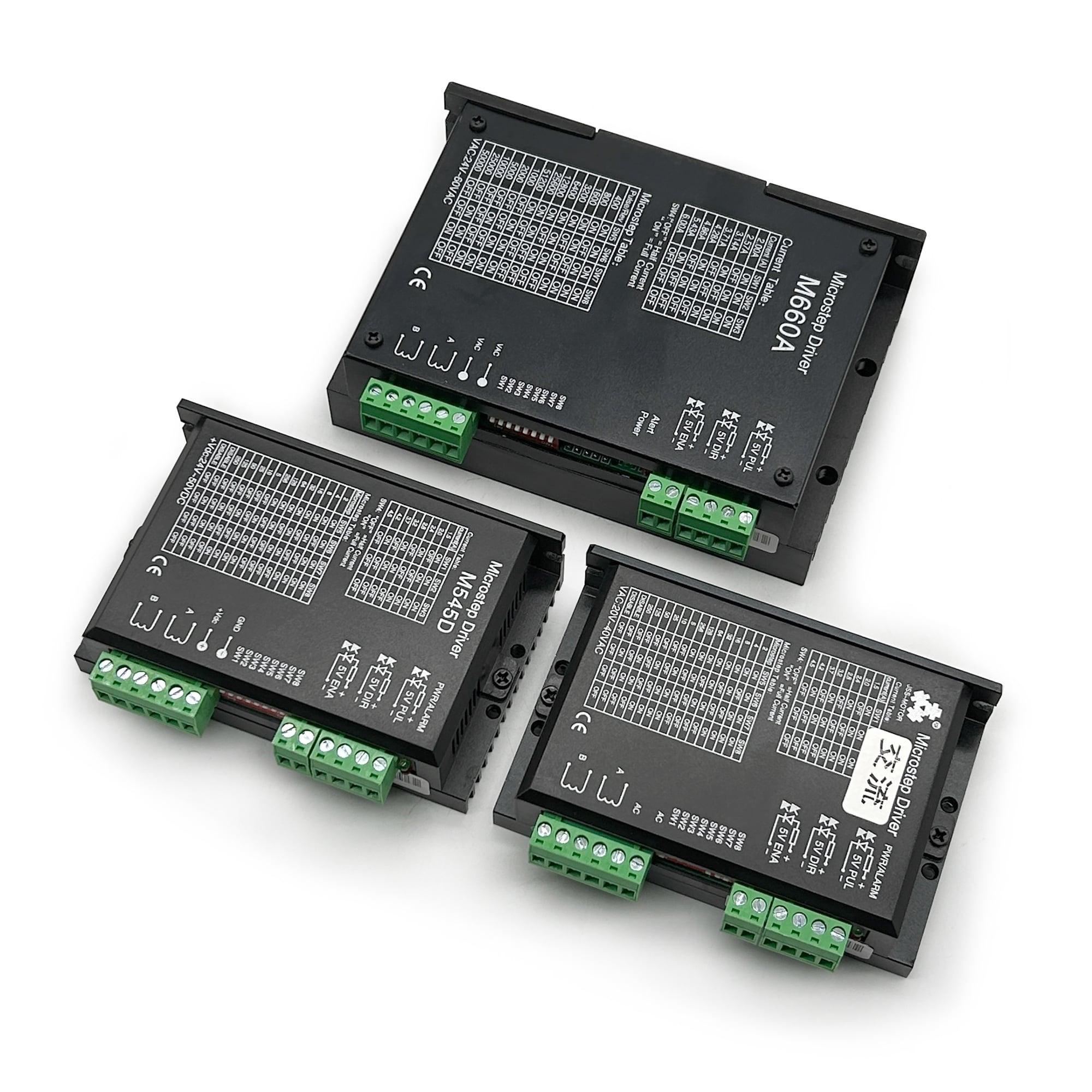
When precision motion matters, the stepper motor driver plays a central role in determining how smoothly a motor moves through each microstep. Without a capable stepper motor driver, even a high-quality motor will produce rough, vibration-prone movement that compromises output quality and mechanical longevity. Understanding how the stepper motor driver achieves smooth microstepping motion helps engineers, system integrators, and machine builders make smarter decisions about their motion control architecture.
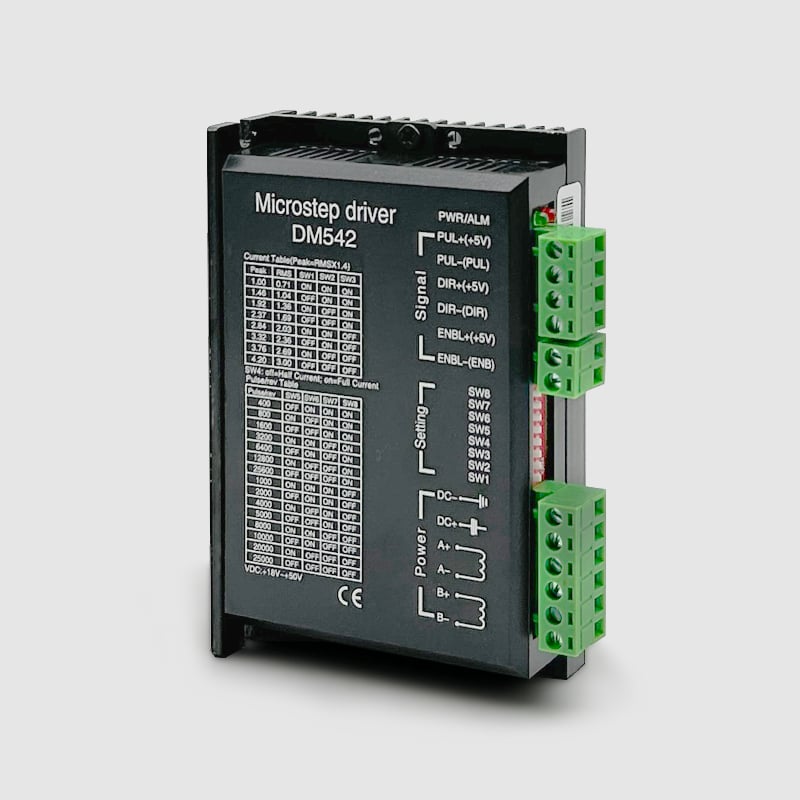
A stepper motor driver is the electronic interface between a motion controller and a stepper motor. It receives step and direction signals, then translates those signals into precisely regulated current waveforms delivered to the motor windings. The quality of this translation directly determines whether the motor moves in smooth, accurate increments or produces audible noise and mechanical instability. This article explains the core mechanisms by which a stepper motor driver enables smooth microstepping motion at the hardware and signal level.
The Fundamentals of Microstepping in a Stepper Motor Driver
What Microstepping Actually Means
A standard stepper motor moves in full steps, where each step represents a fixed angular displacement. In a typical 1.8-degree motor, that means 200 full steps per revolution. Microstepping is the technique by which a stepper motor driver subdivides each full step into smaller increments by controlling the current in each motor phase with greater resolution. Instead of switching phase current abruptly from one state to the next, the stepper motor driver varies the current gradually, following a sinusoidal profile that produces intermediate rotor positions between full steps.
A stepper motor driver configured for 16-microstep resolution, for example, divides each full step into 16 smaller movements, resulting in 3200 steps per revolution. The stepper motor driver achieves this by modulating the amplitude of current in two motor phases simultaneously, creating a rotating magnetic field that pulls the rotor into finely spaced angular positions. This is the core mechanism that transforms coarse stepping into smooth, continuous-looking rotation.
Sinusoidal Current Profiles and Their Role
The key to effective microstepping in any stepper motor driver is the accuracy of the sinusoidal current waveform applied to each phase. As the stepper motor driver advances through each microstep, it adjusts the current in phase A and phase B according to cosine and sine values respectively. Ideally, the relationship between those two currents traces a perfect circle on a polar plot, meaning the magnetic torque vector rotates evenly with each microstep command. A well-designed stepper motor driver uses lookup tables or digital signal processing to maintain precise sine-cosine current ratios across all microstep positions, ensuring that each angular increment is uniform and the motion is genuinely smooth.
Current Regulation Techniques That Drive Smooth Motion
Chopper Control and PWM Regulation
A stepper motor driver relies on pulse-width modulation, commonly called PWM, to regulate the current delivered to motor windings at high speed. The stepper motor driver switches the supply voltage on and off at a high frequency, adjusting the duty cycle to maintain a target current level in each phase. This chopper-style regulation allows the stepper motor driver to respond quickly to changing load conditions while keeping winding current close to the programmed reference value. When this regulation is accurate, the motor rotor experiences consistent magnetic force during each microstep, producing uniform angular displacement and minimal vibration.
The switching frequency of the stepper motor driver also matters significantly. A higher PWM frequency reduces current ripple in the motor windings, which means the actual current profile stays closer to the ideal sinusoidal shape. Reduced ripple translates directly into smoother torque delivery, lower audible noise, and less mechanical resonance in the driven system. Many modern stepper motor driver designs operate at switching frequencies above 20 kHz, which places PWM noise outside the audible range and further improves the quality of motion.
Adaptive and Auto-Current Control
Advanced versions of the stepper motor driver include adaptive current control features that automatically adjust phase current based on detected motor conditions. Some stepper motor driver designs reduce holding current when the motor is stationary, which lowers heat generation without sacrificing positional accuracy. Others dynamically adjust current during acceleration and deceleration phases to maintain torque without overshooting target positions. These intelligent control loops within the stepper motor driver contribute to motion that feels smooth not just at constant velocity but throughout the full velocity profile of the drive cycle.
Signal Processing and Step Pulse Interpretation
Input Signal Quality and Resolution
The stepper motor driver does not act alone. It depends on step pulses generated by a motion controller or CNC system to know when and how far to move. For microstepping to produce genuinely smooth motion, the stepper motor driver must receive clean, consistently timed pulses from the controller. If pulses arrive irregularly, the stepper motor driver will translate that irregularity into uneven velocity, which defeats the purpose of microstepping entirely. This is why system designers pair a high-quality stepper motor driver with a controller capable of generating smooth, interpolated step streams rather than raw on-off pulses.
The stepper motor driver interprets each incoming pulse as a command to advance one microstep. Because the stepper motor driver handles the current modulation internally, the controller only needs to manage timing. This division of responsibility means a capable stepper motor driver can take even modest pulse streams and convert them into smooth, finely resolved motor motion, provided the microstep settings and current levels are correctly configured.
Microstepping Resolution Settings and Their Practical Effect
Most commercial stepper motor driver models offer selectable microstep resolutions, typically ranging from full step to 1/32 or even 1/128 subdivisions. Selecting a higher microstep setting on a stepper motor driver increases angular resolution and reduces low-speed roughness, but it also demands more pulses per revolution from the controller. The stepper motor driver at higher microstep settings distributes torque more evenly across a revolution, which reduces the step-to-step vibration that causes resonance at mid-range speeds. For applications like 3D printing, CNC routing, and precision dispensing, the stepper motor driver microstepping setting is often the single most influential parameter affecting motion quality.
FAQ
What microstep resolution should I choose for my stepper motor driver?
The ideal microstep setting for a stepper motor driver depends on your required positional resolution and the pulse output capability of your controller. For most applications, settings between 1/8 and 1/16 step offer a practical balance between smooth motion and manageable pulse frequency. Higher resolutions like 1/32 step improve smoothness further but require faster pulse generation from the controller to maintain the same motor speed.
Does a stepper motor driver eliminate all vibration during microstepping?
A stepper motor driver with accurate sinusoidal current control significantly reduces vibration compared to full-step operation, but it does not eliminate it entirely. Residual vibration can result from mechanical resonance in the load, imperfect motor winding symmetry, or current waveform distortion. Selecting a stepper motor driver with low-ripple PWM regulation and precise sine-cosine current tables minimizes these effects in most practical applications.
Can any stepper motor driver support microstepping, or are there specific requirements?
Not every stepper motor driver supports microstepping. Basic full-step or half-step drivers switch phase current in discrete on-off patterns and do not modulate current amplitude between steps. True microstepping requires a stepper motor driver with PWM current chopper control, a DAC or sine-table reference, and sufficient switching frequency to maintain accurate current profiles. When selecting a stepper motor driver for smooth motion applications, always verify that the driver explicitly supports microstepping with sinusoidal current regulation.