
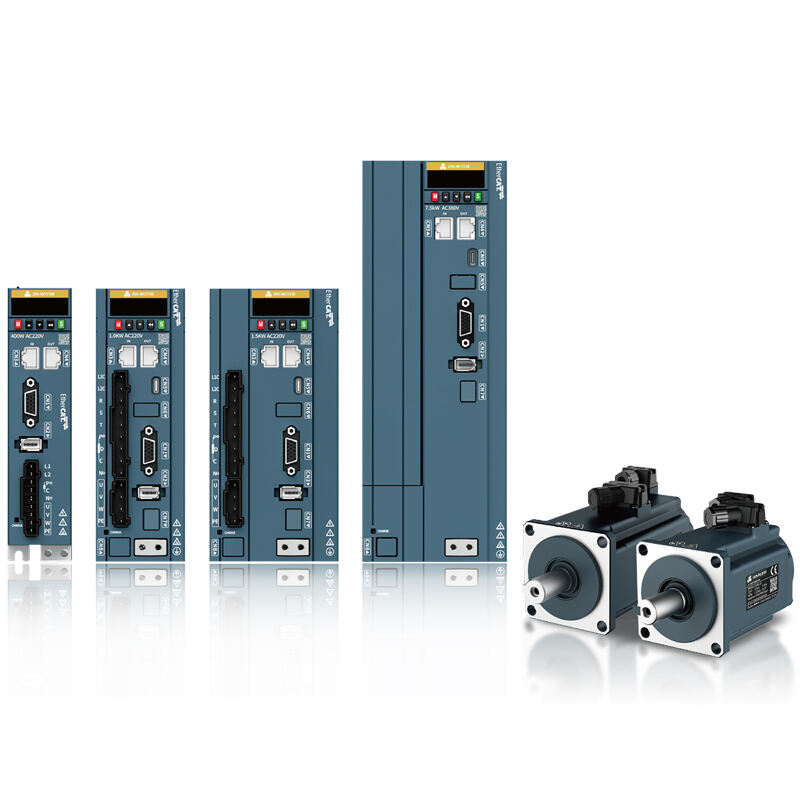
The evolution of industrial automation has positioned servo motors as essential components in modern manufacturing and production systems. These precision-engineered devices deliver exceptional accuracy, superior speed control, and remarkable efficiency across numerous applications. Understanding how servo motor technology transforms various industrial processes reveals their critical role in advancing manufacturing capabilities and operational excellence.

Industrial Robotics and Automation
Robot Arm Articulation
In modern manufacturing facilities, servo motor systems enable precise control of robotic arm movements. These motors provide the exact torque and positioning required for complex assembly operations, welding tasks, and material handling. Their ability to maintain consistent performance under varying loads makes them ideal for automated production lines.
Automated Guided Vehicles
The implementation of servo motors in AGVs ensures smooth navigation and precise positioning in warehouse operations. These sophisticated motors enable AGVs to execute complex maneuvers while carrying heavy loads, contributing to improved logistics efficiency and reduced manual handling requirements.
Packaging and Processing Equipment
High-Speed Packaging Lines
Modern packaging operations rely heavily on servo motor technology for precise material handling and positioning. These motors excel in controlling conveyor speeds, synchronizing multiple axes of motion, and maintaining accurate product placement. Their rapid response time and precise control capabilities ensure consistent packaging quality at high production speeds.
Food Processing Applications
In food processing equipment, servo motors provide the precise control needed for cutting, portioning, and handling delicate products. Their sealed construction and reliable operation make them suitable for washdown environments while maintaining exact positioning requirements in food preparation processes.
CNC Machine Tools
Precision Machining Operations
The integration of servo motors in CNC machines enables highly accurate positioning and movement control. These motors ensure precise cutting paths, consistent feed rates, and superior surface finishes in metalworking operations. Their ability to maintain positioning accuracy under varying loads makes them essential for modern machining centers.
Tool Change Systems
Automated tool changing systems in CNC machines utilize servo motors to ensure rapid and accurate tool selection. The precise control and reliability of these motors contribute to reduced cycle times and improved manufacturing efficiency.
Printing and Converting Equipment
Web Handling Systems
Servo motors play a crucial role in controlling tension and registration in printing operations. Their precise speed control ensures consistent material feed rates and accurate positioning, essential for maintaining print quality in high-speed printing applications.
Digital Printing Technology
Modern digital printing systems rely on servo motors for precise printhead positioning and media transport. These motors enable accurate dot placement and consistent print quality across various substrate materials and printing speeds.
Medical Equipment
Surgical Robots
In medical applications, servo motors provide the precise control required for robotic surgical systems. Their exceptional accuracy and smooth operation enable surgeons to perform delicate procedures with enhanced precision and control.
Diagnostic Equipment
Medical imaging and diagnostic devices utilize servo motors for precise positioning of sensors and detection equipment. These motors ensure accurate scanning movements and consistent operation in critical medical procedures.
FAQ
What makes servo motors ideal for industrial applications?
Servo motors excel in industrial applications due to their precise position control, high torque-to-inertia ratio, and excellent dynamic response. These characteristics enable accurate motion control, rapid acceleration, and reliable performance under varying load conditions.
How do servo motors maintain positioning accuracy?
Servo motors maintain positioning accuracy through closed-loop feedback systems that continuously monitor and adjust motor position. Built-in encoders provide real-time position data, allowing the control system to make precise corrections and maintain desired positions.
What is the typical lifespan of industrial servo motors?
Industrial servo motors typically operate reliably for 20,000 to 40,000 hours under normal conditions. Regular maintenance, proper installation, and appropriate load management can significantly extend their operational life and maintain optimal performance.