
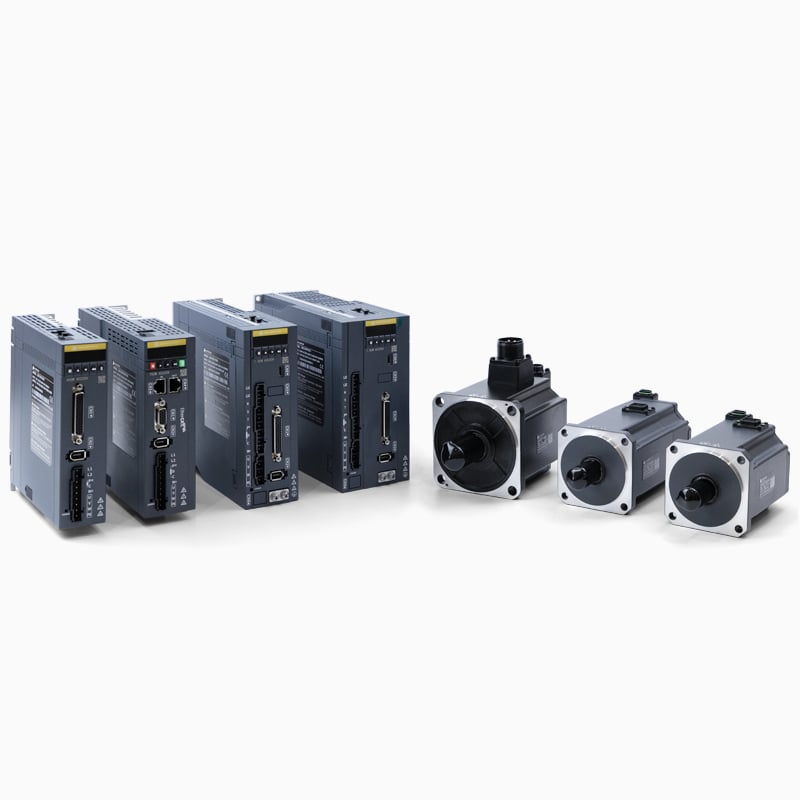
Direct current servo motors offer exceptional control characteristics that make them invaluable across numerous industrial applications requiring precise positioning, speed regulation, and torque control. While modern ac servo motor systems have gained popularity, understanding which applications specifically benefit from DC servo motor control characteristics helps engineers make informed decisions for their automation projects. These applications typically demand high precision, rapid response times, and excellent dynamic performance that DC servo motors traditionally provide through their inherent design advantages.

The fundamental control characteristics of DC servo motors include linear torque-speed relationships, excellent speed regulation, high starting torque, and superior dynamic response capabilities. These characteristics translate into practical benefits for specific application categories where precision motion control is paramount. Industries ranging from aerospace to medical devices, robotics to manufacturing automation, leverage these control advantages to achieve performance standards that define their operational success and competitive positioning in demanding markets.
Precision Manufacturing and Machining Applications
CNC Machine Tool Control Systems
Computer numerical control machine tools represent one of the most demanding applications for DC servo motor control characteristics. These systems require precise positioning accuracy, typically within micrometers, combined with smooth velocity control across varying load conditions. DC servo motors excel in CNC applications because their linear torque-current relationship provides predictable and controllable force generation that directly translates to consistent cutting performance and dimensional accuracy.
The high torque-to-inertia ratio of DC servo motors enables rapid acceleration and deceleration cycles essential for modern machining operations. During complex contouring operations, the motor must frequently change direction and speed while maintaining precise path tracking. This capability proves particularly valuable in five-axis machining centers where simultaneous multi-axis interpolation demands exceptional dynamic response from each servo axis.
Tool changing operations in automated machining centers also benefit from DC servo motor characteristics. The precise speed control enables gentle engagement during tool clamping while providing sufficient torque for secure tool retention. Many modern CNC systems now incorporate ac servo motor technology for enhanced energy efficiency, but the fundamental control requirements remain consistent with traditional DC servo motor applications.
Automated Assembly and Pick-and-Place Operations
High-speed assembly lines require servo motors capable of executing precise positioning movements with minimal settling time. DC servo motors provide the rapid response characteristics necessary for pick-and-place operations where cycle times measured in milliseconds determine production throughput. The ability to achieve precise positioning without overshoot or oscillation directly impacts assembly quality and production efficiency.
Electronic component placement machines exemplify applications where DC servo motor control characteristics prove essential. These systems must position components weighing mere grams to tolerances measured in tens of micrometers while operating at placement rates exceeding several thousand components per hour. The combination of high bandwidth control and excellent low-speed torque characteristics enables these demanding performance specifications.
Packaging machinery also relies on precise servo control for forming, sealing, and cutting operations. Variable product sizes require adaptive control systems that can quickly adjust motion profiles while maintaining consistent quality. DC servo motors provide the control flexibility necessary for these applications, though many modern packaging systems now utilize advanced ac servo motor technology with comparable performance characteristics.
Medical Device and Laboratory Equipment Applications
Surgical Robotics and Medical Imaging Systems
Medical applications demand the highest levels of precision and reliability, making them ideal candidates for DC servo motor control characteristics. Surgical robotics systems require sub-millimeter positioning accuracy combined with smooth, vibration-free operation to ensure patient safety and surgical precision. The inherent smoothness of DC motor torque production, without the cogging effects common in some motor types, provides the stability essential for delicate surgical procedures.
Medical imaging equipment such as CT scanners and MRI systems utilize servo motors for precise patient positioning and scanner component movement. These applications require extremely smooth motion profiles to prevent image artifacts while maintaining positioning accuracy throughout extended scanning procedures. The predictable control characteristics of DC servo motors enable the development of sophisticated motion control algorithms necessary for these critical medical applications.
Prosthetic device control represents an emerging application area where DC servo motor characteristics provide natural and responsive movement. The ability to provide variable torque output in response to user input signals enables prosthetic devices that closely mimic natural limb movement. While modern systems increasingly incorporate brushless ac servo motor designs for improved reliability, the control principles remain fundamentally similar to traditional DC servo applications.
Laboratory Automation and Analytical Instruments
Automated laboratory systems require precise control over sample handling, reagent dispensing, and analytical instrument positioning. DC servo motors provide the accuracy and repeatability necessary for these applications where measurement precision directly impacts research results and diagnostic accuracy. Sample preparation systems must repeatedly position samples to identical locations while accommodating varying sample sizes and weights.
Microscope stage positioning systems exemplify applications requiring both precision and stability. Research microscopes must maintain specimen positioning to nanometer accuracies while researchers adjust focus and magnification. The smooth torque characteristics and excellent speed regulation of DC servo motors enable these demanding positioning requirements while minimizing vibration that could degrade image quality.
Chromatography systems utilize servo motors for precise valve control and sample injection timing. The ability to execute rapid, repeatable movements with minimal overshoot ensures consistent analytical results. Modern analytical instruments often incorporate ac servo motor technology for enhanced performance and reduced maintenance requirements while maintaining the precision control characteristics originally achieved with DC servo systems.
Aerospace and Defense Applications
Flight Control and Navigation Systems
Aerospace applications represent some of the most demanding environments for servo motor control systems. Flight control surfaces require precise positioning in response to pilot inputs or autopilot commands, often under varying aerodynamic loads and extreme environmental conditions. DC servo motor control characteristics provide the reliability and performance necessary for these safety-critical applications where system failure could have catastrophic consequences.
Gimbal systems for navigation instruments and sensor platforms require exceptional stability and precision throughout wide temperature ranges and vibration environments. The robust control characteristics of DC servo motors enable these systems to maintain pointing accuracy despite aircraft movement and environmental disturbances. Gyroscopic stabilization systems particularly benefit from the high torque density and responsive control provided by servo motor technology.
Satellite antenna positioning systems utilize servo motors for precise pointing control necessary for communication link establishment and maintenance. These systems must operate reliably in space environments while providing positioning accuracy measured in fractions of degrees. While modern space applications increasingly utilize advanced ac servo motor designs for improved efficiency and radiation tolerance, the fundamental control requirements align with traditional DC servo motor applications.
Weapons Systems and Targeting Applications
Military targeting systems demand exceptional accuracy and rapid response capabilities that align perfectly with DC servo motor control characteristics. Turret positioning systems must quickly acquire and track targets while maintaining pointing stability sufficient for accurate weapons deployment. The combination of high acceleration capability and precise positioning control makes servo motors ideal for these demanding military applications.
Radar antenna positioning systems require continuous motion control for target scanning while maintaining the ability to rapidly reposition for target tracking. These systems must operate reliably in harsh environmental conditions while providing positioning accuracy necessary for effective target acquisition and tracking. The robust control characteristics and high reliability of servo motor systems make them well-suited for these critical defense applications.
Missile guidance systems represent perhaps the most demanding servo motor applications, requiring extreme reliability and performance in single-use scenarios. While these systems increasingly utilize specialized actuator technologies, the fundamental control principles derive from servo motor technology. Modern defense systems often incorporate brushless ac servo motor designs for enhanced reliability and performance in extreme environments.
Robotics and Automation Systems
Industrial Robotics Applications
Industrial robots require servo motors capable of providing precise control across multiple axes while accommodating varying payload conditions. DC servo motor control characteristics enable the development of sophisticated robot control systems that can execute complex motion trajectories with high accuracy and repeatability. The ability to coordinate multiple servo axes while maintaining precise timing relationships is essential for effective robot operation.
Welding robots exemplify applications where servo motor performance directly impacts product quality. These systems must maintain precise torch positioning and movement speed to ensure consistent weld quality across varying joint configurations. The smooth torque characteristics and excellent speed regulation of DC servo motors enable the development of advanced welding control algorithms that adapt to changing welding conditions while maintaining quality standards.
Material handling robots utilize servo motors for precise load positioning and transfer operations. These systems must accommodate varying load weights while maintaining positioning accuracy and cycle time consistency. The high torque-to-weight ratio and responsive control characteristics of servo motors enable efficient material handling operations across diverse industrial applications. Contemporary systems often employ high-performance ac servo motor technology that provides enhanced efficiency while maintaining the control precision traditionally associated with DC servo systems.
Autonomous Vehicle Systems
Autonomous vehicle development relies heavily on servo motor technology for precise control of steering, braking, and throttle systems. These applications require servo motors capable of responding rapidly to control system commands while providing smooth operation that ensures passenger comfort and vehicle stability. The predictable control characteristics and high reliability of servo motor systems make them essential components in autonomous vehicle development.
Camera and sensor positioning systems in autonomous vehicles utilize servo motors for precise pointing control necessary for environmental perception and navigation. These systems must maintain accurate positioning while accommodating vehicle movement and vibration. The combination of precision positioning and vibration resistance provided by servo motor systems enables effective autonomous vehicle sensor operation across diverse driving conditions.
Advanced driver assistance systems increasingly rely on servo motor technology for automated parking, lane keeping, and collision avoidance functions. These applications require servo motors capable of providing natural-feeling vehicle control while maintaining the rapid response necessary for safety-critical interventions. Modern automotive applications typically utilize specialized ac servo motor designs optimized for automotive environmental conditions and cost requirements.
FAQ
How do DC servo motor control characteristics differ from standard motor control?
DC servo motors provide closed-loop position and speed control through integrated feedback systems, enabling precise positioning accuracy and speed regulation that standard motors cannot achieve. Unlike standard motors that simply provide rotational power, servo motors incorporate position encoders and control electronics that continuously monitor and adjust motor performance to maintain desired position, speed, or torque outputs with exceptional accuracy.
Can AC servo motors provide similar control characteristics to DC servo motors?
Modern AC servo motors can indeed provide control characteristics equal to or exceeding those of traditional DC servo motors. Advanced AC servo motor systems utilize sophisticated electronic control algorithms and high-resolution feedback devices to achieve comparable precision and dynamic response. Many contemporary applications have transitioned to AC servo motor technology for improved energy efficiency, reduced maintenance requirements, and enhanced reliability while maintaining the precise control characteristics originally provided by DC servo systems.
What factors determine whether an application benefits from servo motor control characteristics?
Applications benefit from servo motor control characteristics when they require precise positioning accuracy, consistent speed regulation, rapid dynamic response, or coordinated multi-axis motion control. Key determining factors include positioning tolerance requirements typically tighter than several degrees, speed regulation requirements better than five percent, acceleration and deceleration rates exceeding standard motor capabilities, and applications requiring closed-loop feedback control for consistent performance across varying load conditions.
Are there cost considerations that might favor simpler motor control solutions over servo motor systems?
Servo motor systems typically involve higher initial costs due to sophisticated control electronics, precision feedback devices, and specialized motor construction. Applications with relaxed precision requirements, simple on-off control needs, or cost-sensitive high-volume production may benefit from simpler motor control solutions. However, the total cost of ownership often favors servo motor systems in applications requiring precision, as they eliminate the need for additional positioning mechanisms, reduce quality control costs, and increase production efficiency through improved accuracy and repeatability.
Table of Contents
- Precision Manufacturing and Machining Applications
- Medical Device and Laboratory Equipment Applications
- Aerospace and Defense Applications
- Robotics and Automation Systems
-
FAQ
- How do DC servo motor control characteristics differ from standard motor control?
- Can AC servo motors provide similar control characteristics to DC servo motors?
- What factors determine whether an application benefits from servo motor control characteristics?
- Are there cost considerations that might favor simpler motor control solutions over servo motor systems?