
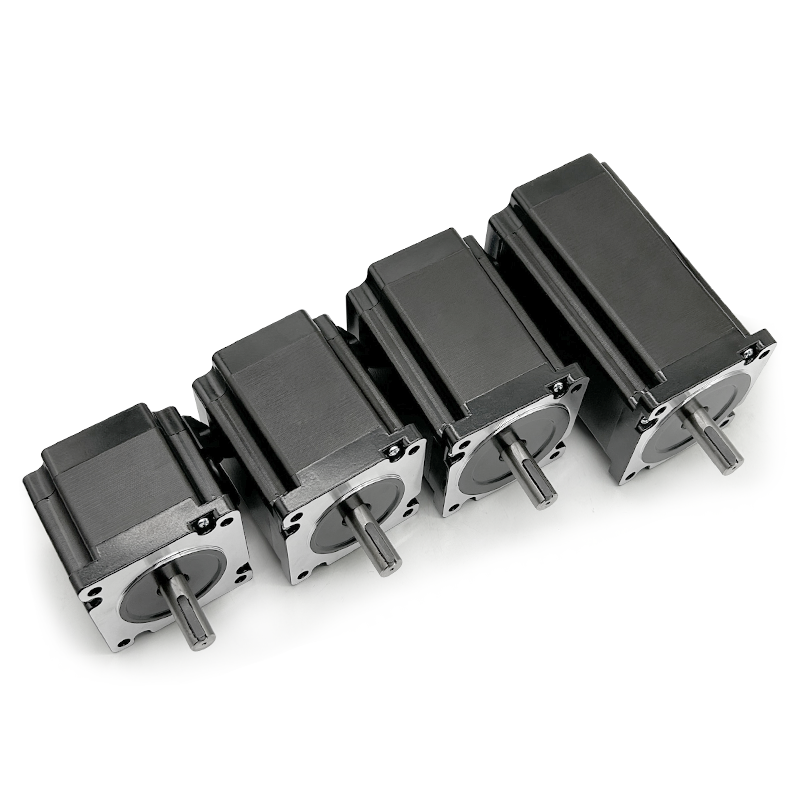
Industrial automation has witnessed a remarkable transformation with the advent of precision motion control technologies. Among the most significant developments in this field, the hybrid stepper motor has emerged as a cornerstone solution for applications demanding exceptional accuracy and reliability. These sophisticated devices combine the best characteristics of permanent magnet and variable reluctance technologies, delivering superior performance across diverse industrial sectors. Understanding which applications benefit most from hybrid stepper motor capabilities is essential for engineers and system designers seeking optimal motion control solutions.
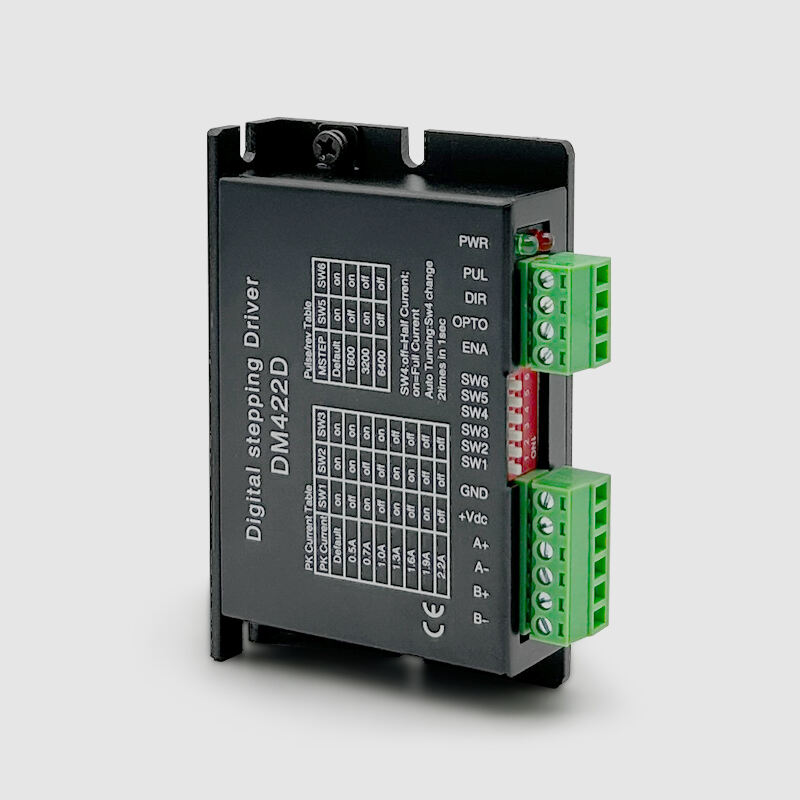
Understanding Hybrid Stepper Motor Technology
Core Construction and Operating Principles
The hybrid stepper motor represents an advanced fusion of two fundamental stepper motor technologies, creating a device that surpasses conventional alternatives in multiple performance metrics. This innovative design incorporates permanent magnets within a variable reluctance structure, enabling precise angular positioning while maintaining high torque output. The rotor contains permanent magnets that interact with electromagnetically controlled stator windings, producing smooth, controlled rotation in discrete steps.
Each step of a hybrid stepper motor corresponds to a specific angular displacement, typically ranging from 0.9 to 1.8 degrees per step. This characteristic provides inherent positioning accuracy without requiring feedback systems, making these motors particularly valuable in open-loop control applications. The electromagnetic field patterns generated by the stator windings create precise magnetic interactions that ensure consistent step execution under varying load conditions.
Performance Advantages Over Alternative Motor Types
When compared to permanent magnet or variable reluctance stepper motors, the hybrid stepper motor demonstrates superior torque-to-inertia ratios and enhanced resolution capabilities. These advantages translate directly into improved system performance, particularly in applications requiring high-speed operation combined with precise positioning. The permanent magnet rotor construction provides excellent holding torque, ensuring position maintenance even when power is removed from the motor windings.
The thermal characteristics of hybrid stepper motor designs also contribute significantly to their widespread adoption. Advanced materials and construction techniques enable these motors to operate reliably across extended temperature ranges while maintaining consistent performance parameters. This thermal stability proves crucial in industrial environments where temperature fluctuations are common and system reliability cannot be compromised.
Manufacturing and Assembly Applications
Precision Manufacturing Equipment
Manufacturing industries have embraced hybrid stepper motor technology for countless precision applications where traditional motor solutions fall short of requirements. Computer numerical control machines, commonly known as CNC systems, rely heavily on the exceptional positioning accuracy that hybrid stepper motor technology provides. These motors enable the precise control of cutting tools, ensuring dimensional accuracy and surface finish quality that meets increasingly stringent manufacturing standards.
Semiconductor manufacturing represents another critical application area where hybrid stepper motor performance proves indispensable. Wafer handling systems, die bonding equipment, and wire bonding machines all depend on the micro-positioning capabilities that these motors deliver. The clean room environments typical in semiconductor facilities also benefit from the sealed construction options available with modern hybrid stepper motor designs.
Automated Assembly Systems
Pick and place operations in automated assembly lines demand the reliability and precision that hybrid stepper motor technology consistently delivers. These systems must repeatedly position components with tolerances measured in thousandths of an inch, making the inherent accuracy of stepper motors essential for successful operation. The ability to operate without feedback sensors simplifies system design while reducing potential failure points.
Packaging machinery also extensively utilizes hybrid stepper motor solutions for controlling conveyor speeds, positioning cutting mechanisms, and managing product orientation systems. The precise speed control capabilities enable manufacturers to optimize throughput while maintaining product quality standards. Modern packaging applications often require rapid acceleration and deceleration cycles, areas where the excellent dynamic response characteristics of hybrid stepper motors provide significant advantages.
Medical and Laboratory Equipment Applications
Diagnostic Equipment Systems
Medical diagnostic equipment represents one of the most demanding application areas for precision motion control, where the performance characteristics of a hybrid stepper motor prove absolutely critical. Imaging systems such as CT scanners and X-ray equipment require precise positioning of both patient tables and imaging components to ensure accurate diagnostic results. The smooth, vibration-free operation of hybrid stepper motors contributes directly to image quality by eliminating motion-induced artifacts.
Blood analyzers and other automated laboratory instruments depend on the consistent performance that hybrid stepper motor technology provides for sample handling and processing operations. These applications often involve precise liquid handling, where even minor positioning errors can compromise test results. The repeatable positioning accuracy inherent in hybrid stepper motor designs ensures reliable operation across thousands of test cycles.
Surgical and Treatment Equipment
Robotic surgical systems increasingly rely on hybrid stepper motor technology for controlling instrument positioning and movement. The precise control characteristics enable surgeons to perform delicate procedures with enhanced accuracy and reduced invasiveness. The quiet operation of modern hybrid stepper motors also contributes to improved operating room environments by minimizing noise distractions during critical procedures.
Radiation therapy equipment utilizes hybrid stepper motor systems for patient positioning and beam shaping applications. These critical safety applications require absolute positioning reliability, as even minor errors could have serious consequences for patient safety. The self-monitoring capabilities available with advanced hybrid stepper motor control systems provide additional safety layers that medical equipment manufacturers demand.
Scientific and Research Instrumentation
Optical and Spectroscopy Systems
Scientific instrumentation applications present unique challenges that hybrid stepper motor technology addresses effectively through superior precision and stability characteristics. Spectrometers require extremely precise wavelength scanning capabilities, often with resolution requirements measured in nanometers. The micro-stepping capabilities of modern hybrid stepper motors enable these instruments to achieve the fine positioning control necessary for high-resolution measurements.
Telescope positioning systems, both terrestrial and space-based, depend on hybrid stepper motor performance for tracking celestial objects with exceptional accuracy. These applications demand smooth, continuous motion over extended periods while maintaining precise positioning throughout temperature variations and mechanical disturbances. The thermal stability and low-vibration characteristics of hybrid stepper motors make them ideal for these demanding astronomical applications.
Automated Testing and Measurement Equipment
Material testing equipment utilizes hybrid stepper motor technology for controlling load application and specimen positioning during mechanical property evaluation. These applications require precise force and displacement control, often over extended test durations. The excellent low-speed torque characteristics of hybrid stepper motors enable smooth operation during the slow loading cycles typical in materials testing applications.
Environmental testing chambers employ hybrid stepper motor systems for controlling sample positioning and environmental parameter adjustment mechanisms. The reliability requirements for these applications are particularly stringent, as test failures can invalidate months of research work. The proven durability and consistent performance of hybrid stepper motor technology provide the confidence that researchers require for critical testing applications.
Textile and Printing Industry Applications
High-Precision Printing Systems
Digital printing applications have revolutionized commercial and industrial printing through the precision capabilities that hybrid stepper motor technology enables. Large format printers rely on these motors for controlling print head positioning and media handling with accuracies measured in fractions of millimeters. The smooth motion characteristics prevent print artifacts while enabling high-speed operation that maximizes productivity.
Three-dimensional printing represents an emerging application area where hybrid stepper motor performance proves essential for achieving the layer precision required for quality part production. These applications often involve continuous operation over many hours, making the reliability and thermal stability of hybrid stepper motors particularly valuable. The precise positioning control enables the fine feature resolution that makes additive manufacturing viable for production applications.
Textile Manufacturing and Processing
Weaving and knitting equipment increasingly incorporates hybrid stepper motor technology for controlling yarn tension and fabric positioning during manufacturing processes. These applications require consistent performance over extended operating periods while maintaining precise control of delicate materials. The programmable step patterns available with hybrid stepper motor control systems enable complex fabric patterns that would be impossible with conventional motor technologies.
Embroidery machines represent another textile application where hybrid stepper motor capabilities prove indispensable for creating intricate designs with consistent quality. The multi-axis coordination required for complex embroidery patterns demands the precise timing and positioning that hybrid stepper motors deliver. Modern embroidery systems often operate at high speeds while maintaining positioning accuracies that ensure design fidelity across production runs.
Robotics and Automation Integration
Industrial Robotics Applications
Industrial robotics represents one of the fastest-growing application areas for hybrid stepper motor technology, driven by increasing demands for precision and reliability in automated manufacturing processes. Articulated robot arms utilize these motors for joint positioning and tool orientation control, enabling precise manipulation of components and assemblies. The exceptional repeatability characteristics ensure consistent performance across millions of operational cycles.
Collaborative robots, designed to work alongside human operators, particularly benefit from the smooth operation and precise control that hybrid stepper motors provide. These applications require enhanced safety features and predictable motion characteristics, areas where the inherent controllability of stepper motor technology offers significant advantages over alternative solutions.
Automated Guided Vehicle Systems
Warehouse automation and material handling applications increasingly rely on hybrid stepper motor technology for powering automated guided vehicles and conveyor systems. These applications demand reliable operation in challenging environments while maintaining precise positioning and speed control. The robust construction and sealed housing options available with industrial hybrid stepper motors ensure continued operation despite dust, moisture, and temperature variations commonly encountered in warehouse environments.
Sorting and distribution systems utilize hybrid stepper motor technology for controlling diverter mechanisms and product positioning systems throughout material handling facilities. The precise timing control enables high-throughput operations while maintaining sorting accuracy that meets quality standards. The ability to synchronize multiple hybrid stepper motors enables complex sorting patterns that maximize facility efficiency.
FAQ
What makes hybrid stepper motors more suitable than servo motors for certain applications
Hybrid stepper motors offer several advantages over servo motors in specific applications, particularly where open-loop control is preferred and precise positioning without feedback is required. Unlike servo systems that require encoders and complex control loops, hybrid stepper motors provide inherent position accuracy through their step-based operation, simplifying system design and reducing overall costs. They also maintain holding torque when stationary without continuous power consumption, making them ideal for applications requiring position maintenance during power interruptions.
How do environmental factors affect hybrid stepper motor performance
Environmental conditions significantly impact hybrid stepper motor performance, with temperature being the most critical factor affecting torque output and positioning accuracy. Most industrial-grade hybrid stepper motors operate reliably within temperature ranges from -20°C to +85°C, though extreme temperatures can affect magnet strength and electrical characteristics. Humidity and contamination can also impact performance, which is why many applications require sealed or IP-rated motor housings to ensure reliable operation in challenging environments.
What are the typical maintenance requirements for hybrid stepper motor systems
Hybrid stepper motor systems generally require minimal maintenance compared to other motor technologies, as they contain no brushes or complex mechanical components that wear over time. Regular inspection of electrical connections, bearing condition assessment, and verification of mounting hardware tightness comprise the primary maintenance activities. In demanding applications, bearing replacement may be necessary after extended operation periods, but modern hybrid stepper motors are designed for operational lives exceeding 10,000 hours under normal conditions.
How do you select the appropriate hybrid stepper motor size for specific applications
Selecting the correct hybrid stepper motor requires careful analysis of several application parameters including required torque, operating speed, positioning accuracy, and environmental conditions. Engineers must calculate the total system inertia, including connected loads, to ensure adequate torque margin for reliable operation. Additionally, thermal considerations, step resolution requirements, and power supply constraints influence motor selection decisions, making it essential to consult detailed performance specifications and application guidelines during the selection process.
Table of Contents
- Understanding Hybrid Stepper Motor Technology
- Manufacturing and Assembly Applications
- Medical and Laboratory Equipment Applications
- Scientific and Research Instrumentation
- Textile and Printing Industry Applications
- Robotics and Automation Integration
-
FAQ
- What makes hybrid stepper motors more suitable than servo motors for certain applications
- How do environmental factors affect hybrid stepper motor performance
- What are the typical maintenance requirements for hybrid stepper motor systems
- How do you select the appropriate hybrid stepper motor size for specific applications