
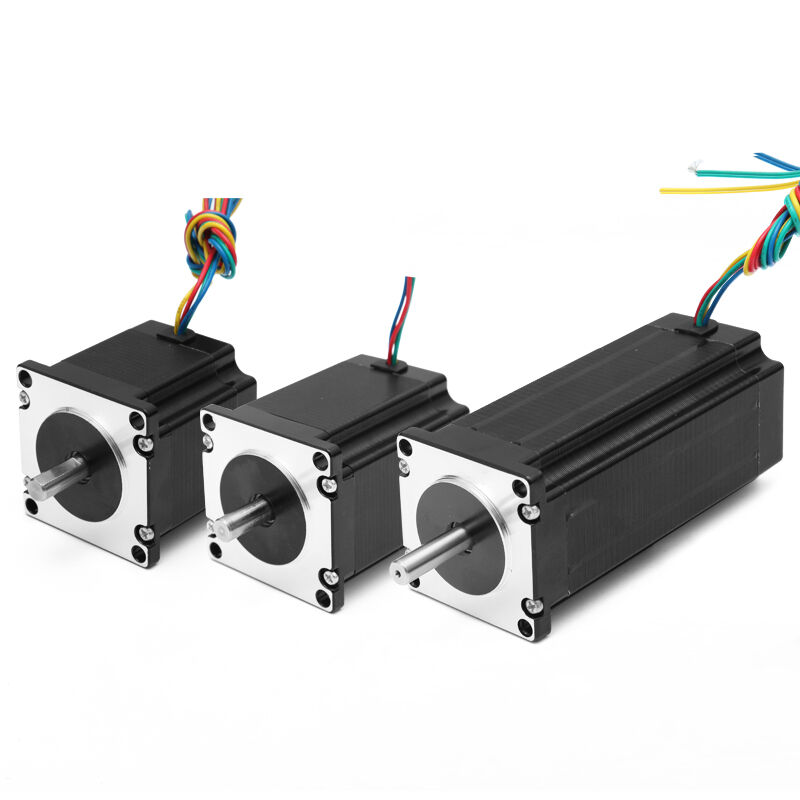
Motion control systems demand precision, reliability, and efficiency across countless industrial applications. Within this demanding landscape, the hybrid stepper motor has emerged as a leading solution that combines the best characteristics of both permanent magnet and variable reluctance technologies. This innovative motor design offers exceptional positioning accuracy, high torque output, and remarkable control flexibility that makes it indispensable for modern automation systems.
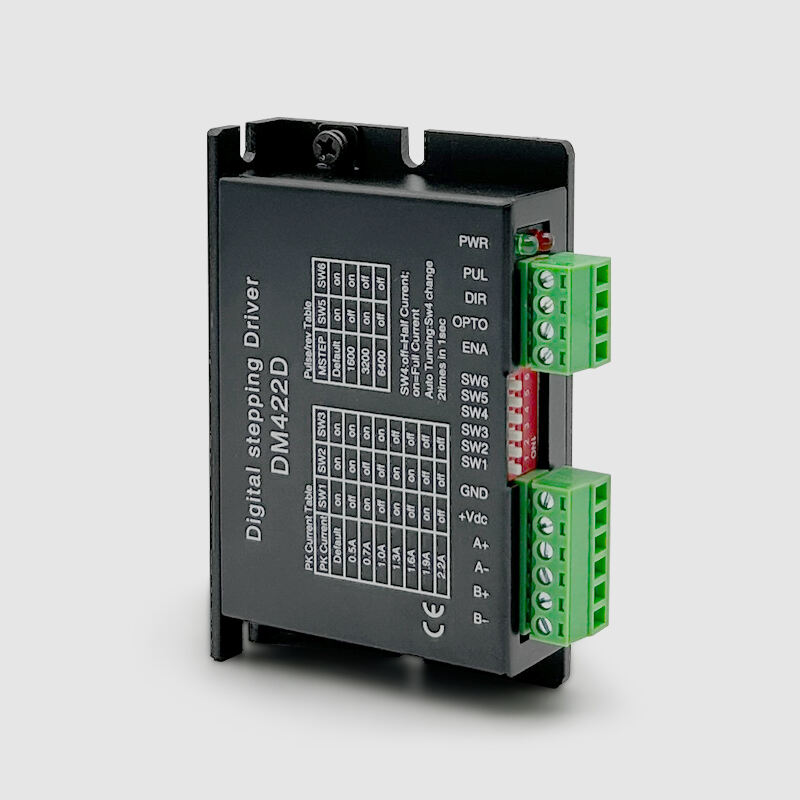
Engineers and system designers increasingly rely on hybrid stepper motor technology to achieve precise positioning without the complexity of closed-loop feedback systems. These motors deliver consistent performance across diverse operating conditions while maintaining cost-effectiveness that appeals to both large-scale manufacturers and smaller automation integrators. Understanding the specific advantages of hybrid stepper motor implementations can significantly impact project success and operational efficiency.
Superior Precision and Positioning Accuracy
Exceptional Step Resolution Capabilities
The hybrid stepper motor architecture delivers outstanding step resolution that enables incredibly precise positioning control. Unlike traditional motor types, these units can achieve step angles as fine as 0.9 degrees or even smaller with microstepping techniques. This level of precision translates directly into improved product quality and enhanced system performance across manufacturing processes that demand exact positioning.
Manufacturing applications benefit tremendously from the inherent accuracy of hybrid stepper motor systems. Pick-and-place operations, CNC machining, and automated assembly lines rely on this precision to maintain tight tolerances and consistent output quality. The motor's ability to maintain position without drift ensures that complex multi-axis movements remain synchronized throughout extended operation cycles.
Consistent Repeatability Performance
Repeatability represents a critical performance metric in industrial automation, and hybrid stepper motor technology excels in this area. These motors consistently return to the same position with minimal variation, typically achieving repeatability within 0.05% of the step angle. This reliability stems from the motor's digital control nature, which eliminates the accumulation of positioning errors common in analog systems.
Quality control processes depend heavily on this repeatability advantage. Inspection systems, testing equipment, and calibration fixtures require motors that can repeatedly position sensors and components with unwavering accuracy. The hybrid stepper motor meets these demanding requirements while maintaining performance consistency over millions of operational cycles.
Robust Torque Characteristics and Power Delivery
High Holding Torque at Standstill
One of the most significant advantages of hybrid stepper motor design is its exceptional holding torque capability when stationary. These motors can maintain their position against external forces without consuming continuous power for dynamic positioning. This characteristic proves invaluable in vertical applications where gravity constantly works against the positioning system.
Elevator systems, robotic arms, and vertical positioning stages benefit enormously from this holding torque feature. The hybrid stepper motor can support substantial loads without the energy consumption associated with servo systems that require constant power to maintain position. This efficiency translates into reduced operational costs and simplified system design requirements.
Excellent Low-Speed Torque Performance
Low-speed operations often challenge conventional motor technologies, but hybrid stepper motor systems thrive in these conditions. These motors deliver maximum torque at zero speed and maintain high torque output throughout their low-speed operating range. This characteristic enables smooth, controlled motion even during the most demanding start-stop operations.
Precision machining applications particularly benefit from this low-speed torque advantage. Threading operations, fine surface finishing, and delicate material handling require motors that can provide substantial force while operating at very low rotational speeds. The hybrid stepper motor delivers this capability without the speed reduction gearing often required by other motor types.
Cost-Effective Control Implementation
Simplified Open-Loop Operation
The hybrid stepper motor operates effectively in open-loop control systems, eliminating the need for expensive encoder feedback devices and complex servo amplifiers. This simplification reduces both initial system costs and ongoing maintenance requirements. Engineers can implement precise positioning systems with relatively straightforward control electronics and software.
Small to medium-scale automation projects benefit significantly from this cost advantage. 3D printers, laboratory equipment, and packaging machinery often operate with tight budget constraints that make hybrid stepper motor solutions particularly attractive. The reduced component count also improves system reliability by eliminating potential failure points associated with feedback devices.
Reduced System Complexity
System integration becomes significantly simpler when using hybrid stepper motor technology. These motors require fewer interconnections, generate less electromagnetic interference, and demand less sophisticated control algorithms compared to servo systems. This simplicity accelerates development timelines and reduces the technical expertise required for successful implementation.
Maintenance operations also benefit from this reduced complexity. Technicians can troubleshoot hybrid stepper motor systems more easily because fewer components can fail, and diagnostic procedures remain straightforward. This advantage proves particularly valuable in remote installations or facilities with limited technical support capabilities.
Versatile Application Compatibility
Wide Operating Environment Range
The hybrid stepper motor demonstrates remarkable resilience across diverse operating environments. These motors function reliably in temperature ranges from -40°C to +85°C while maintaining consistent performance characteristics. This temperature tolerance enables deployment in harsh industrial environments where other motor technologies might struggle or require expensive protective measures.
Outdoor applications, automotive systems, and industrial furnace automation benefit from this environmental robustness. The hybrid stepper motor continues operating effectively despite temperature fluctuations, humidity variations, and exposure to industrial contaminants that might compromise more sensitive motor technologies.
Flexible Speed and Acceleration Control
Modern hybrid stepper motor controllers provide extensive flexibility in speed and acceleration programming. Engineers can customize motion profiles to match specific application requirements, optimizing for factors such as settling time, vibration reduction, or energy efficiency. This adaptability makes hybrid stepper motor systems suitable for an enormous range of motion control challenges.
Multi-axis coordination becomes particularly straightforward with hybrid stepper motor systems. CNC machines, pick-and-place robots, and automated inspection equipment can synchronize multiple axes with precise timing control. The predictable response characteristics of hybrid stepper motor technology enable complex motion sequences with minimal programming complexity.
Energy Efficiency and Operational Benefits
Optimized Power Consumption
Modern hybrid stepper motor systems incorporate advanced power management features that optimize energy consumption throughout the operational cycle. Microstepping techniques reduce power consumption while improving motion smoothness, and intelligent current control algorithms minimize heating during extended operation periods.
Battery-powered and portable applications particularly benefit from these efficiency improvements. Medical devices, scientific instruments, and mobile automation equipment can operate longer on available power while maintaining precise positioning capabilities. This efficiency advantage supports the growing trend toward sustainable manufacturing practices and reduced operational costs.
Minimal Maintenance Requirements
The hybrid stepper motor design inherently requires minimal maintenance compared to other motion control technologies. These motors contain no brushes to wear out, no complex feedback mechanisms to calibrate, and no sensitive optical components to clean or align. This reliability translates into reduced downtime and lower total cost of ownership.
Continuous operation applications benefit significantly from this maintenance advantage. Packaging lines, printing equipment, and automated manufacturing cells can operate for extended periods without scheduled maintenance interruptions. The hybrid stepper motor's robust construction ensures consistent performance throughout these demanding operational requirements.
FAQ
How does a hybrid stepper motor differ from other stepper motor types
A hybrid stepper motor combines permanent magnet and variable reluctance technologies to achieve higher torque output and better precision than either technology alone. This design provides superior step resolution, higher torque-to-size ratio, and improved dynamic performance compared to permanent magnet or variable reluctance stepper motors. The hybrid construction enables step angles as small as 0.9 degrees while maintaining excellent holding torque characteristics.
What applications benefit most from hybrid stepper motor technology
Applications requiring precise positioning without feedback sensors benefit enormously from hybrid stepper motor implementation. CNC machines, 3D printers, robotic systems, medical equipment, and automated manufacturing equipment frequently utilize these motors. Any application demanding accurate positioning, reliable operation, and cost-effective control typically finds hybrid stepper motor solutions advantageous over alternative technologies.
Can hybrid stepper motors operate at high speeds effectively
While hybrid stepper motors excel at low speeds and precise positioning, their torque output decreases as rotational speed increases. Most applications using these motors operate below 1000 RPM where torque characteristics remain favorable. For higher speed requirements, engineers often implement gear reduction or consider servo motor alternatives depending on specific performance requirements and system constraints.
What factors should be considered when selecting a hybrid stepper motor driver
Driver selection depends on motor specifications, required performance characteristics, and application demands. Key considerations include current rating, voltage compatibility, microstepping resolution, and protection features. The driver must provide adequate current to achieve desired torque while offering appropriate step resolution for positioning accuracy. Environmental conditions, interface requirements, and control complexity also influence optimal driver selection for specific applications.