
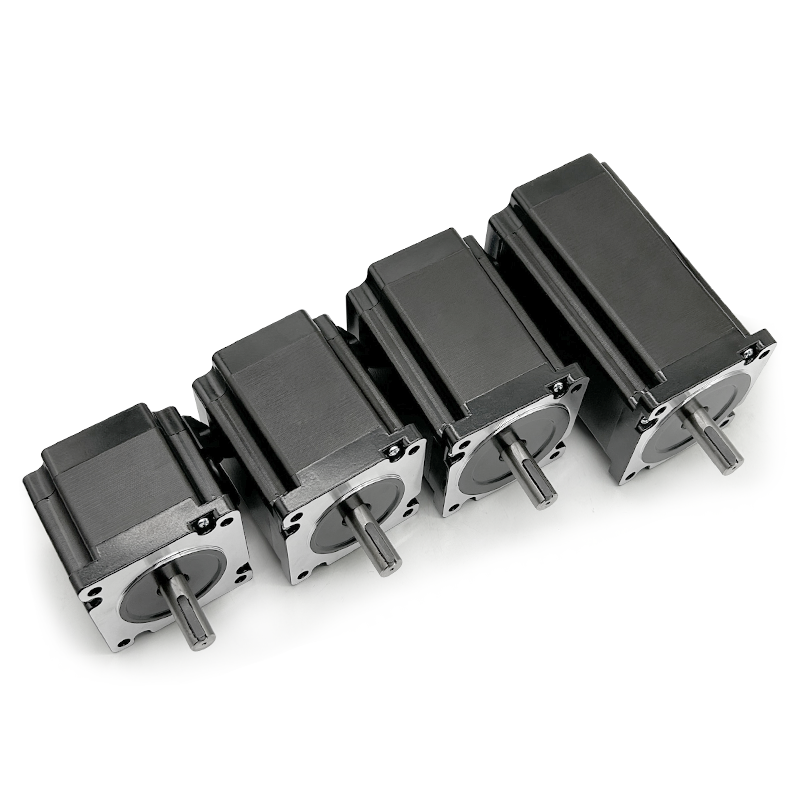
In the world of precision motion control, understanding the differences between various motor technologies is crucial for selecting the right solution for your application. The hybrid stepper motor has emerged as a dominant force in industrial automation, offering superior performance characteristics compared to traditional stepping motor designs. This comprehensive analysis explores the fundamental distinctions, advantages, and practical applications that set hybrid stepper motor technology apart from conventional alternatives.
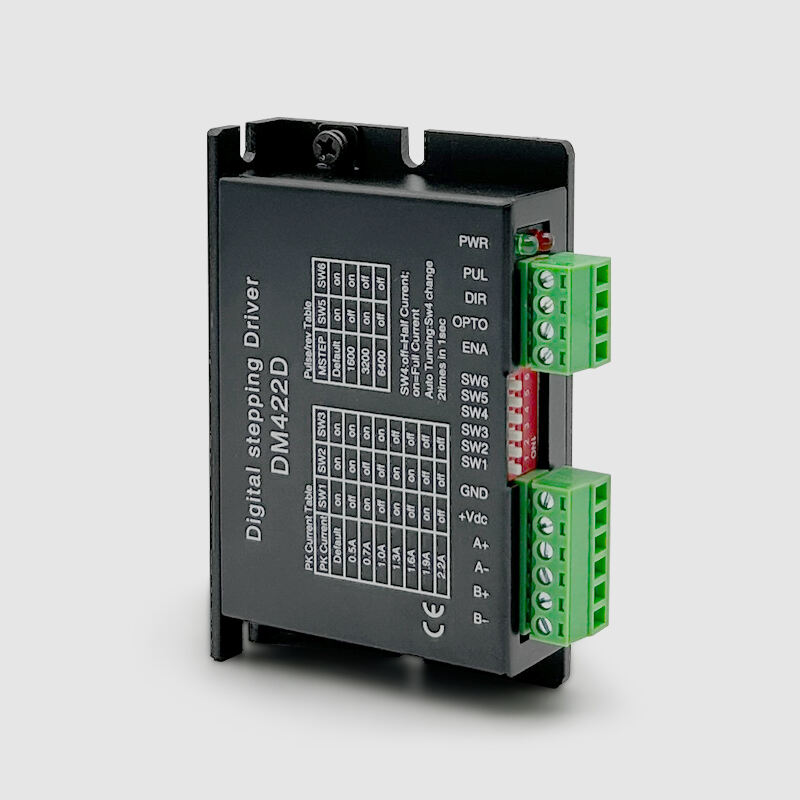
The evolution of stepper motor technology has led to significant improvements in torque output, precision, and reliability. While traditional permanent magnet and variable reluctance motors served early automation needs adequately, the hybrid stepper motor combines the best features of both technologies to deliver enhanced performance across diverse industrial applications.
Fundamental Design Differences
Construction and Magnetic Configuration
The hybrid stepper motor incorporates a unique rotor design that fundamentally differs from traditional stepping motors. Unlike permanent magnet motors that rely solely on permanent magnets for torque generation, or variable reluctance motors that depend entirely on magnetic reluctance variations, the hybrid stepper motor combines both principles in its construction.
Traditional permanent magnet stepper motors feature a simple rotor with permanent magnets aligned radially or axially. This design provides basic stepping capability but limits torque output and resolution. Variable reluctance motors, on the other hand, use a toothed iron rotor without permanent magnets, relying on magnetic attraction to toothed stator poles for operation.
The hybrid stepper motor rotor consists of two toothed iron sections separated by a permanent magnet ring. This configuration creates alternating north and south magnetic poles on the rotor teeth, enabling higher torque density and improved step resolution compared to traditional designs.
Stator Configuration Advantages
Modern hybrid stepper motor designs typically employ eight-pole stator configurations with concentrated windings, providing better magnetic flux utilization than traditional four-pole arrangements. This enhanced stator design contributes to improved torque characteristics and reduced vibration during operation.
Traditional stepper motors often suffer from uneven magnetic field distribution, leading to torque ripple and positioning inaccuracies. The hybrid stepper motor stator design minimizes these issues through optimized pole geometry and winding distribution, resulting in smoother operation and enhanced precision.
The magnetic circuit efficiency in hybrid stepper motor designs significantly exceeds that of traditional alternatives, enabling higher power density and improved thermal characteristics. This efficiency advantage translates directly into better performance per unit weight and volume.
Performance Characteristics Comparison
Torque Output and Holding Capabilities
The torque performance of a hybrid stepper motor substantially surpasses traditional stepper motor designs across the entire speed range. While permanent magnet steppers typically produce 1-3 Nm of holding torque, hybrid stepper motor designs routinely achieve 5-20 Nm or higher, depending on frame size and construction.
Holding torque represents the maximum torque a motor can withstand without losing position when energized. The hybrid stepper motor excels in this parameter due to its dual magnetic system, providing superior position retention compared to traditional alternatives.
Dynamic torque characteristics also favor hybrid stepper motor technology. At low speeds, hybrid motors maintain higher torque output than traditional designs, while their torque rolloff at higher speeds occurs more gradually, extending the useful operating range significantly.
Speed and Acceleration Performance
Maximum operating speeds achievable with hybrid stepper motor technology typically exceed those of traditional stepper motors by 50-100%. This improvement stems from better magnetic design, reduced rotor inertia, and optimized electrical characteristics that enable faster switching and reduced losses.
Acceleration capabilities represent another area where hybrid stepper motor designs demonstrate clear advantages. The improved torque-to-inertia ratio allows for faster acceleration and deceleration cycles, reducing cycle times in automated processes and improving overall system productivity.
Resonance behavior also differs significantly between hybrid stepper motor and traditional designs. While all stepper motors exhibit some resonance characteristics, hybrid designs typically have better damping properties and more predictable resonance frequencies, simplifying system tuning and optimization.
Precision and Resolution Advantages
Step Accuracy and Repeatability
The step accuracy of hybrid stepper motor technology significantly exceeds traditional stepper motor capabilities. Standard hybrid stepper motor designs achieve step accuracy of ±3-5% without feedback, while traditional permanent magnet motors typically exhibit ±10-15% step accuracy under similar conditions.
Repeatability measurements also favor hybrid stepper motor designs, with typical values of ±0.05-0.1 degrees per step compared to ±0.2-0.5 degrees for traditional motors. This enhanced repeatability directly translates to improved positioning accuracy in precision applications.
Long-term stability represents another critical advantage of hybrid stepper motor technology. The permanent magnet component maintains its magnetic properties better over time and temperature variations compared to traditional permanent magnet motors, ensuring consistent performance throughout the motor's operational life.
Microstepping Capabilities
Microstepping performance distinguishes hybrid stepper motor technology from traditional alternatives significantly. While basic permanent magnet steppers may achieve 4-8 microsteps per full step with acceptable linearity, hybrid stepper motor designs routinely support 16, 32, or even 256 microsteps per full step with excellent linearity.
The superior microstepping capability of hybrid stepper motor technology enables smoother motion profiles, reduced vibration, and enhanced resolution for precision positioning applications. This advantage proves particularly valuable in applications requiring fine positioning control or smooth continuous motion.
Torque smoothness during microstepping operation also favors hybrid stepper motor designs. The more uniform magnetic field distribution and optimized rotor geometry minimize torque ripple, resulting in smoother motion and reduced mechanical stress on driven components.
Application-Specific Advantages
Industrial Automation Benefits
In industrial automation applications, hybrid stepper motor technology offers significant advantages over traditional stepper motors in terms of reliability, performance, and versatility. The higher torque output enables direct drive of heavier loads without gear reduction, simplifying mechanical designs and reducing backlash.
CNC machining applications particularly benefit from hybrid stepper motor characteristics. The enhanced torque and precision capabilities enable faster cutting speeds and more accurate tool positioning, improving both productivity and part quality compared to traditional stepper motor implementations.
Packaging and material handling systems leverage hybrid stepper motor advantages for improved throughput and positioning accuracy. The faster acceleration capabilities and higher operating speeds reduce cycle times while maintaining precise control over product placement and movement.
Laboratory and Scientific Instrumentation
Scientific and laboratory equipment applications frequently demand the precision and reliability that hybrid stepper motor technology provides. Traditional stepper motors often lack the resolution and stability required for critical measurements and positioning tasks in research environments.
Optical positioning systems, spectrometers, and analytical instruments rely on hybrid stepper motor precision for accurate sample positioning and optical component alignment. The superior step accuracy and long-term stability ensure reliable measurements and reproducible results.
Automated laboratory systems benefit from hybrid stepper motor versatility in handling diverse motion requirements within a single system. From high-precision pipetting to rapid sample transport, hybrid stepper motor technology adapts to varying performance demands effectively.
Cost-Benefit Analysis
Initial Investment Considerations
While hybrid stepper motor systems typically require higher initial investment compared to traditional stepper motor solutions, the performance advantages often justify the additional cost. The superior torque output may eliminate the need for gear reducers, offsetting some of the motor cost premium.
Drive electronics for hybrid stepper motor systems have become increasingly cost-effective, with many modern drivers offering advanced features like microstepping, current control, and diagnostic capabilities at competitive prices. This trend has narrowed the total system cost gap between hybrid and traditional solutions.
Integration complexity also factors into cost considerations. Hybrid stepper motor systems often require less mechanical complexity, fewer sensors, and simpler control algorithms, potentially reducing overall system development and implementation costs.
Long-term Value Proposition
The operational advantages of hybrid stepper motor technology translate into significant long-term value through improved productivity, reduced maintenance requirements, and enhanced system reliability. Higher speeds and acceleration rates increase throughput in automated systems, providing rapid return on investment.
Energy efficiency considerations also favor hybrid stepper motor designs in many applications. The improved magnetic efficiency and optimized electrical characteristics often result in lower power consumption compared to traditional motors operating at equivalent performance levels.
Maintenance costs typically decrease with hybrid stepper motor implementations due to improved reliability and reduced mechanical stress on system components. The superior precision and smooth operation minimize wear on mechanical interfaces and extend component lifecycles.
Selection Criteria and Best Practices
Application Requirements Assessment
Selecting between hybrid stepper motor and traditional alternatives requires careful evaluation of application-specific requirements including torque, speed, precision, and environmental factors. Applications demanding high torque or rapid acceleration cycles typically favor hybrid stepper motor solutions.
Load characteristics significantly influence motor selection decisions. Continuous duty applications with varying loads benefit from the superior torque characteristics and thermal performance of hybrid stepper motor designs compared to traditional alternatives.
Environmental considerations such as temperature range, vibration levels, and contamination exposure may influence the choice between hybrid stepper motor and traditional designs. Hybrid motors often demonstrate better performance stability across varying environmental conditions.
System Integration Considerations
Drive compatibility represents a crucial factor in hybrid stepper motor selection. Modern drives offer sophisticated control algorithms optimized for hybrid stepper motor characteristics, enabling maximum performance extraction from these advanced motor designs.
Mechanical interface requirements must align with hybrid stepper motor specifications to achieve optimal performance. Proper coupling selection, mounting considerations, and load alignment ensure reliable operation and maximum motor life.
Control system integration capabilities affect the ability to fully utilize hybrid stepper motor advantages. Advanced features like encoder feedback, closed-loop control, and adaptive current control enhance hybrid stepper motor performance beyond traditional open-loop implementations.
FAQ
What makes hybrid stepper motors more precise than traditional stepper motors
Hybrid stepper motors achieve superior precision through their unique rotor construction combining permanent magnets with toothed iron sections. This design creates more uniform magnetic fields and enables finer step resolution, typically achieving ±3-5% step accuracy compared to ±10-15% for traditional permanent magnet steppers. The enhanced magnetic circuit also provides better microstepping linearity and reduced torque ripple.
Are hybrid stepper motors worth the additional cost compared to traditional designs
The cost premium for hybrid stepper motors is often justified by their superior performance characteristics including higher torque output, better precision, and increased operating speeds. These advantages can eliminate the need for gear reduction, reduce cycle times, and improve product quality, providing rapid return on investment in many applications. Long-term operational benefits typically outweigh initial cost differences.
Can hybrid stepper motors operate at higher speeds than traditional steppers
Yes, hybrid stepper motors typically achieve 50-100% higher maximum operating speeds compared to traditional stepper motor designs. This improvement results from better magnetic design, optimized electrical characteristics, and reduced losses at higher switching frequencies. The torque rolloff at high speeds also occurs more gradually, extending the useful operating speed range significantly.
Do hybrid stepper motors require special drive electronics
While hybrid stepper motors can operate with standard stepper motor drives, they achieve optimal performance with drives designed to leverage their enhanced characteristics. Modern stepper drives offer features like advanced microstepping algorithms, adaptive current control, and resonance damping that maximize hybrid motor performance. These specialized drives have become increasingly cost-effective and widely available.