
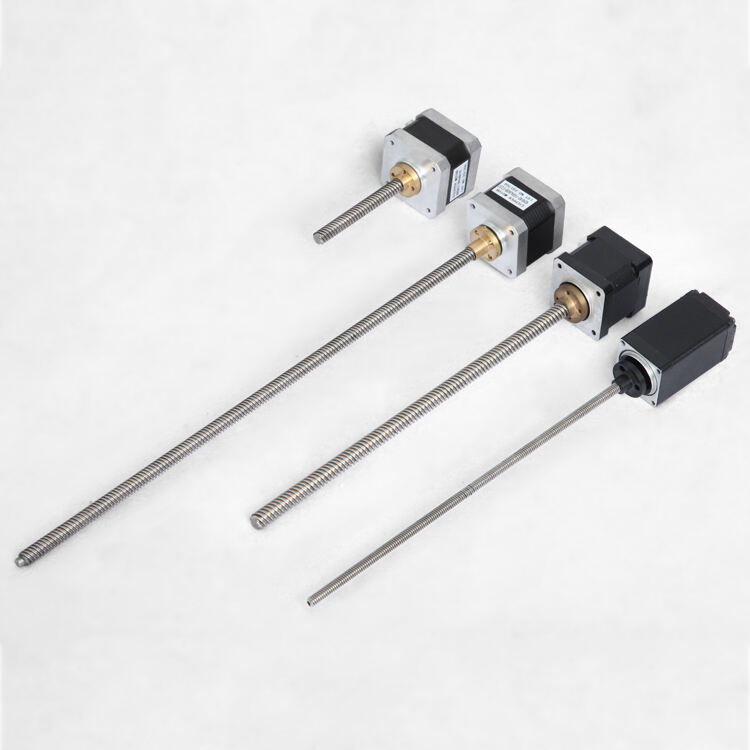
Understanding the relationship between step motor torque and low-speed motion control performance is crucial for engineers designing precise positioning systems. Step motor torque characteristics directly influence the accuracy, smoothness, and reliability of motion control applications across various industrial sectors. When operating at low speeds, the torque delivery profile of a step motor becomes even more critical, as this operational range demands maximum precision while maintaining consistent performance under varying load conditions.
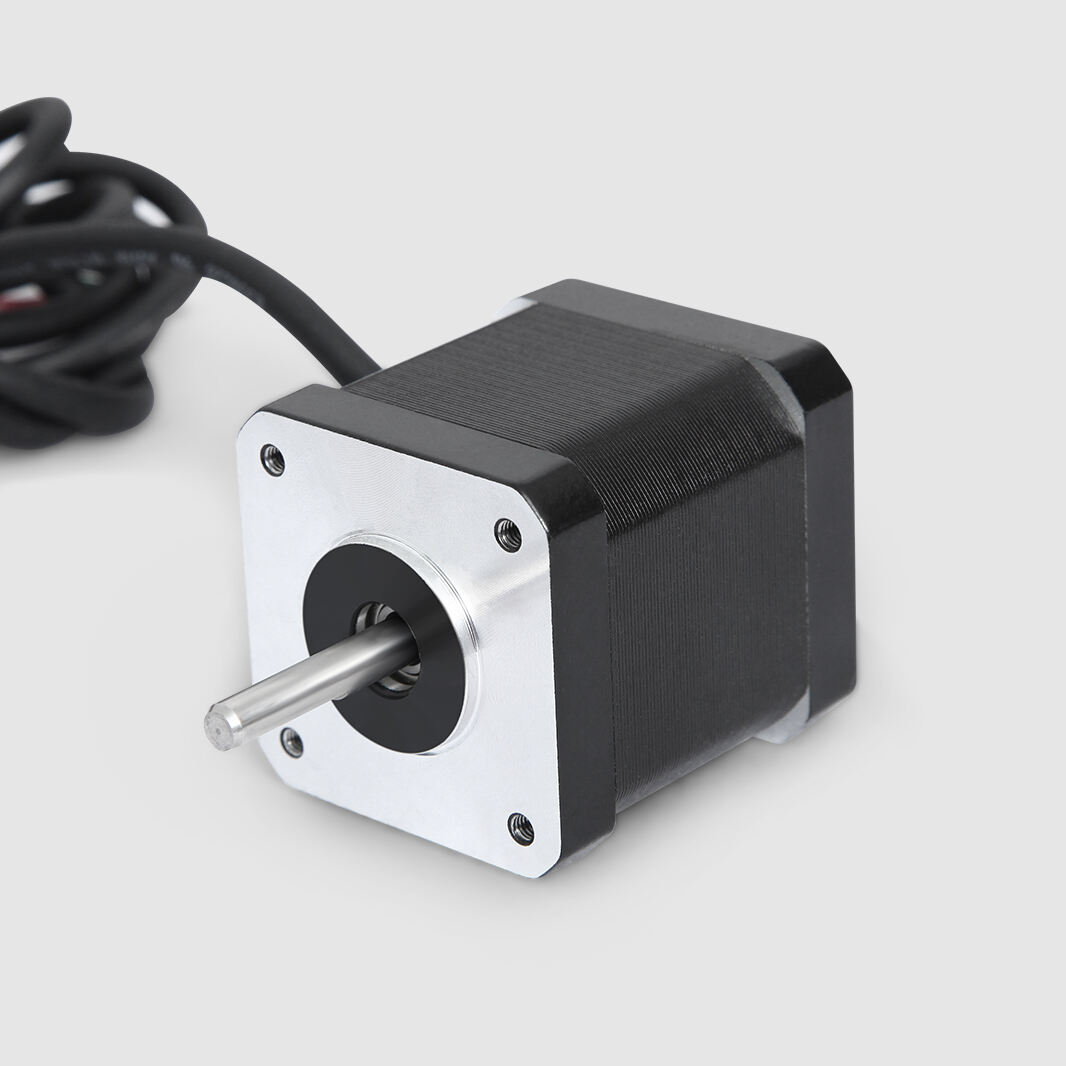
Fundamental Torque Characteristics in Step Motor Operations
Static Torque Properties and Their Impact
Static torque represents the maximum torque a step motor can deliver when energized but not rotating. This parameter serves as a baseline measurement for evaluating step motor capabilities in holding applications. The static torque value determines how effectively the motor can resist external forces attempting to displace the rotor from its commanded position. Engineers must carefully consider static torque specifications when selecting motors for applications requiring precise positioning hold capability.
The relationship between static torque and low-speed performance becomes particularly evident when examining step motor behavior under load variations. Higher static torque ratings typically correlate with improved low-speed stability, as the motor can better resist disturbances that might cause step loss or positional errors. Manufacturing processes requiring precise indexing operations benefit significantly from step motor designs optimized for maximum static torque delivery.
Dynamic Torque Behavior at Low Speeds
Dynamic torque characteristics of a step motor change significantly as operating speed decreases. At very low speeds, the motor operates closer to its static torque capability, providing maximum holding and accelerating force. This enhanced torque availability at low speeds makes step motor technology particularly suitable for applications requiring high precision positioning with substantial load handling capacity.
The torque-speed relationship in step motor systems follows a generally declining curve as speed increases. However, the initial portion of this curve, representing low-speed operation, maintains relatively high torque values. Understanding this characteristic helps engineers optimize motion profiles to take advantage of the superior low-speed torque performance inherent in step motor designs.
Load Interaction and Torque Requirements
Calculating Required Torque for Specific Applications
Proper step motor selection requires accurate calculation of the total torque requirements for the intended application. This calculation must account for various load components including inertial loads, friction forces, external resistance, and safety margins. The combined effect of these factors determines the minimum torque specification needed for reliable low-speed operation.
Inertial matching between the step motor rotor and the driven load significantly affects low-speed performance characteristics. When the reflected load inertia approaches or exceeds the motor rotor inertia, the system may experience reduced acceleration capability and increased susceptibility to resonance effects. Careful analysis of the complete mechanical system ensures optimal torque utilization and motion control results.
Safety Margins and Torque Reserve
Engineering best practices dictate incorporating appropriate safety margins when specifying step motor torque requirements. A typical safety factor of 1.5 to 2.0 times the calculated load torque provides adequate reserve for handling unexpected load variations, manufacturing tolerances, and system degradation over time. This margin ensures consistent performance throughout the operational life of the motion control system.
Temperature effects on step motor torque output must also be considered when establishing safety margins. Step motor torque decreases as winding temperature increases due to electrical resistance changes and magnetic material properties. Low-speed applications often result in higher average winding temperatures due to continuous current flow, making thermal considerations particularly important for sustained operation scenarios.
Control Methodology Impact on Torque Delivery
Microstepping Effects on Low-Speed Torque
Microstepping drive techniques significantly influence step motor torque characteristics and low-speed motion smoothness. By subdividing each full step into smaller increments, microstepping reduces torque ripple and improves positional resolution. However, the peak torque available during microstepping operation is typically lower than full-step operation, requiring careful consideration in torque-critical applications.
The benefit of microstepping becomes most apparent in low-speed applications where smooth motion is prioritized over maximum torque output. Modern microstepping controllers can achieve resolution improvements of 256 or more subdivisions per full step, resulting in exceptionally smooth low-speed motion characteristics. This enhanced smoothness often outweighs the modest reduction in peak torque availability for precision positioning applications.
Current Control and Torque Optimization
Advanced current control algorithms in modern step motor drives enable optimized torque delivery across the entire speed range. These systems dynamically adjust phase currents to maintain maximum available torque while minimizing power consumption and heat generation. Such optimization becomes particularly valuable in low-speed applications where sustained operation is common.
Chopper-type current regulation provides precise control over step motor phase currents, enabling consistent torque output regardless of supply voltage variations or winding resistance changes. This regulation technique ensures predictable step motor performance in low-speed applications where torque consistency directly affects positioning accuracy and repeatability.
Application-Specific Torque Considerations
Precision Positioning Systems
Precision positioning applications place unique demands on step motor torque characteristics, particularly during low-speed indexing operations. These systems require sufficient torque to overcome static friction while maintaining smooth acceleration and deceleration profiles. The ability to deliver consistent torque at very low speeds enables precise incremental movements essential for high-accuracy positioning tasks.
Machine tool applications exemplify the importance of step motor low-speed torque performance. CNC machining operations often require extremely precise feed rates and positioning accuracy, demanding motors capable of delivering substantial torque at very low speeds. The step motor inherent ability to provide high torque at low speeds makes it an ideal choice for such demanding applications.
Material Handling and Processing Equipment
Material handling systems frequently operate at low speeds while managing substantial loads, making step motor torque characteristics critical for reliable operation. Conveyor indexing, pick-and-place systems, and automated assembly equipment all benefit from the high low-speed torque capabilities typical of properly specified step motor systems.
The predictable torque output of step motor systems simplifies control system design for material handling applications. Unlike servo motors that require complex feedback systems to maintain position under load, step motor systems provide inherent position holding capability through their detent torque and controlled current delivery. This characteristic reduces system complexity while ensuring reliable low-speed performance.
Performance Optimization Strategies
Motor Selection Criteria
Selecting the optimal step motor for low-speed applications requires careful evaluation of torque-speed curves provided by manufacturers. These curves illustrate the available torque across the complete speed range, enabling engineers to verify that adequate torque is available at the intended operating speeds. Peak torque values at low speeds often exceed static torque ratings due to the electrical time constants of the motor windings.
Frame size selection significantly impacts both torque capability and system cost. Larger frame sizes generally provide higher torque output but require more space and typically consume more power. The engineering challenge involves selecting the smallest frame size that meets torque requirements while maintaining appropriate safety margins for reliable operation.
System Integration Best Practices
Proper mechanical coupling between the step motor and driven load affects torque transmission efficiency and system reliability. Rigid couplings provide direct torque transmission but may introduce alignment sensitivity, while flexible couplings accommodate misalignment at the cost of some torque transmission efficiency. The coupling selection must balance these competing requirements based on specific application needs.
Gear reduction systems can multiply step motor output torque for applications requiring higher torque than available from direct-drive configurations. However, gear systems introduce backlash and compliance that may affect positioning accuracy in precision applications. The decision to incorporate gear reduction requires careful analysis of torque requirements versus positioning accuracy needs.
Troubleshooting Torque-Related Performance Issues
Common Symptoms and Causes
Step loss represents the most common symptom of inadequate step motor torque in low-speed applications. When the load torque exceeds the motor capability, individual steps may be missed, resulting in cumulative positioning errors. Identifying step loss requires careful monitoring of actual position versus commanded position, particularly during high-load conditions or direction changes.
Excessive heating during low-speed operation often indicates current settings that are too high for the application requirements. While higher currents increase available torque, they also increase power dissipation and winding temperature. Finding the optimal balance between torque capability and thermal management requires careful adjustment of drive current settings based on actual load requirements.
Diagnostic Techniques and Solutions
Torque measurement techniques help verify that step motor systems meet their specified performance requirements. Direct torque measurement using calibrated torque transducers provides the most accurate assessment of actual motor output. However, indirect measurement techniques, such as monitoring drive current and calculating torque based on motor constants, offer practical alternatives for routine performance verification.
System oscilloscope analysis can reveal important information about step motor torque delivery characteristics. Current waveforms during step transitions show how quickly the motor reaches its commanded torque level, while position encoder feedback can verify that actual motion matches commanded profiles. These diagnostic techniques help identify system performance limitations and guide optimization efforts.
FAQ
How does step motor torque vary with speed in low-speed applications
Step motor torque remains relatively high at low speeds, typically maintaining 80-90% of static torque up to several hundred RPM. As speed increases, available torque decreases due to electrical time constants and back EMF effects. This characteristic makes step motors particularly well-suited for low-speed applications requiring high torque output.
What factors determine the minimum torque required for reliable step motor operation
Minimum torque requirements depend on load inertia, friction forces, acceleration requirements, and external disturbances. A proper safety margin of 1.5-2.0 times the calculated load torque ensures reliable operation under varying conditions. Environmental factors such as temperature and supply voltage variations should also be considered in torque calculations.
Can microstepping improve step motor performance in low-speed torque applications
Microstepping significantly improves motion smoothness at low speeds but may reduce peak torque availability by 10-30% compared to full-step operation. For applications prioritizing smooth motion over maximum torque, microstepping provides substantial benefits. However, torque-critical applications may require full-step operation to maximize available force output.
How do temperature changes affect step motor torque output during extended low-speed operation
Temperature increases reduce step motor torque output due to increased winding resistance and changes in magnetic material properties. Typical torque reduction is approximately 0.5-1% per degree Celsius above rated temperature. Low-speed operation with continuous energization can lead to higher operating temperatures, making thermal management crucial for maintaining consistent torque output.
Table of Contents
- Fundamental Torque Characteristics in Step Motor Operations
- Load Interaction and Torque Requirements
- Control Methodology Impact on Torque Delivery
- Application-Specific Torque Considerations
- Performance Optimization Strategies
- Troubleshooting Torque-Related Performance Issues
-
FAQ
- How does step motor torque vary with speed in low-speed applications
- What factors determine the minimum torque required for reliable step motor operation
- Can microstepping improve step motor performance in low-speed torque applications
- How do temperature changes affect step motor torque output during extended low-speed operation