
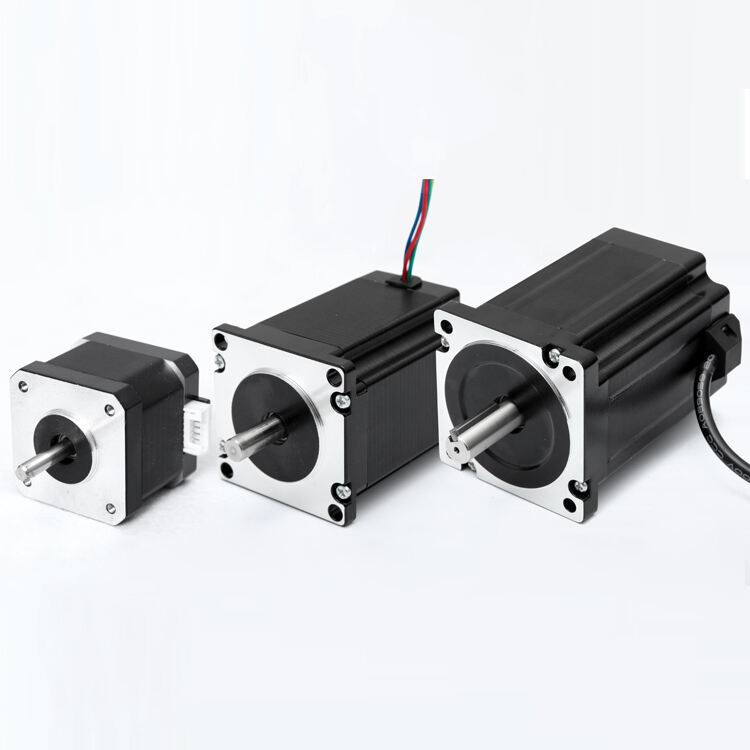
Automated equipment systems have revolutionized modern manufacturing and industrial processes, with the step motor serving as a fundamental component that enables precise positioning and controlled movement. These electromechanical devices convert electrical pulses into discrete mechanical movements, making them ideal for applications requiring accuracy and repeatability. The widespread adoption of step motor technology in automated systems stems from their unique ability to provide open-loop control without the need for feedback sensors, while delivering consistent performance across various operating conditions.
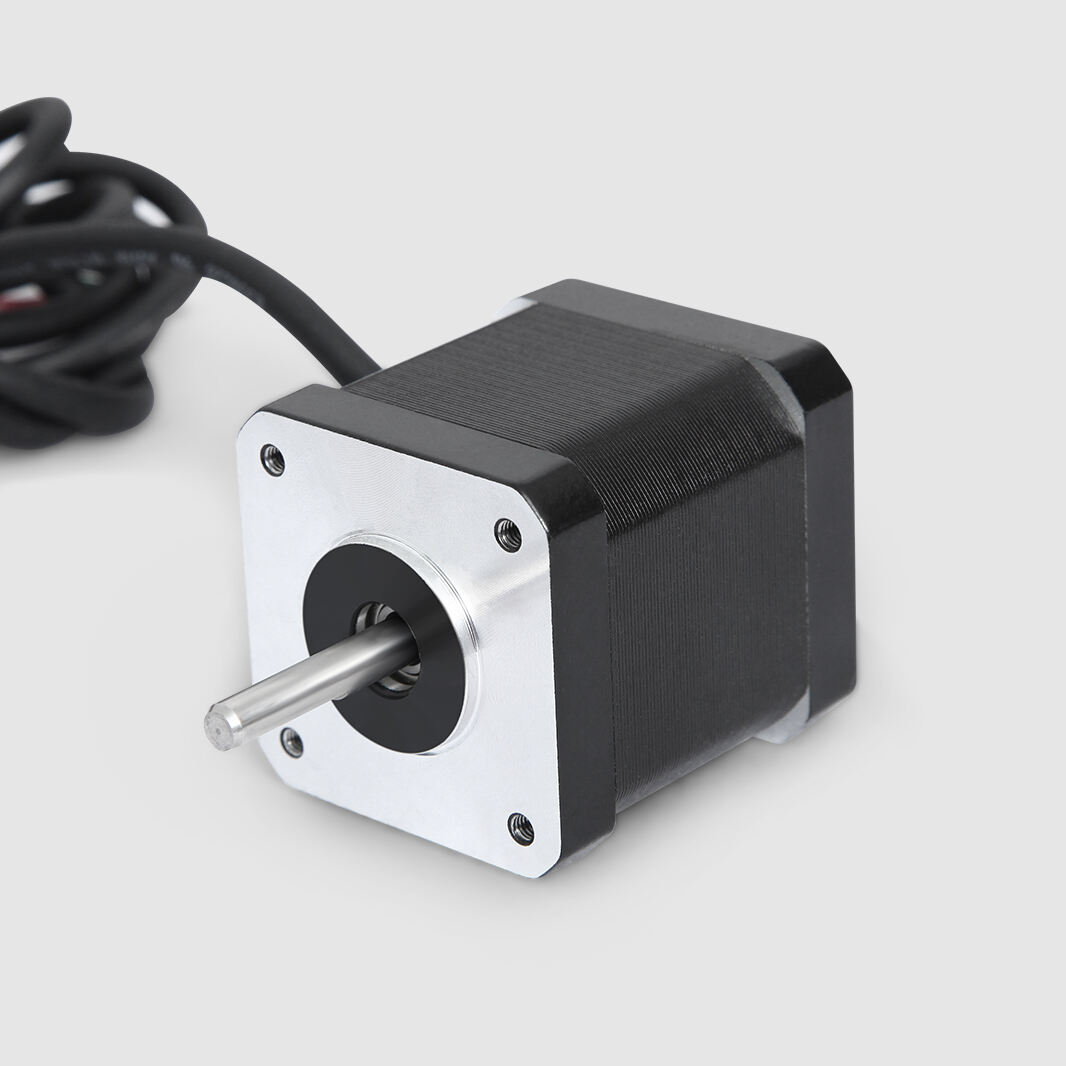
Fundamental Advantages of Step Motors in Automation
Precise Positioning Capabilities
The primary advantage of a step motor lies in its exceptional positioning accuracy, which is crucial for automated equipment systems. Unlike conventional motors that require complex feedback mechanisms, a step motor inherently provides precise angular positioning through its step-by-step rotation mechanism. Each electrical pulse corresponds to a specific angular movement, typically ranging from 0.9 to 1.8 degrees per step, enabling systems to achieve positioning accuracies within micrometers.
This precision makes step motor technology indispensable in applications such as CNC machining centers, 3D printers, and automated assembly lines where exact positioning determines product quality. The ability to control position without external sensors reduces system complexity while maintaining high accuracy standards required in modern manufacturing environments.
Open-Loop Control System Benefits
Step motor systems operate effectively in open-loop configurations, eliminating the need for position feedback devices such as encoders or resolvers. This characteristic significantly reduces system costs and complexity while improving reliability since there are fewer components that can fail. The inherent self-synchronization property of step motor designs ensures that the rotor position remains synchronized with the applied pulse sequence under normal operating conditions.
The open-loop nature of step motor control systems also simplifies programming and commissioning procedures in automated equipment. Engineers can implement precise motion profiles by calculating the required pulse sequences, making these motors particularly attractive for applications where cost-effectiveness and simplicity are paramount considerations.
Technical Characteristics Supporting Automation Applications
Torque and Speed Performance
Modern step motor designs offer excellent torque characteristics at low and medium speeds, making them well-suited for most automated equipment applications. The torque output of a step motor remains relatively constant across a wide speed range, providing consistent performance during various operational phases. This characteristic proves particularly valuable in applications requiring high starting torque or precise control during acceleration and deceleration phases.
The speed-torque relationship of step motor systems can be optimized through advanced drive electronics and control algorithms. Microstepping techniques allow for smoother operation and reduced vibration while maintaining the inherent positioning accuracy that makes step motor technology so valuable in automated systems.
Electrical Interface and Control Simplicity
Step motor control interfaces are remarkably straightforward, requiring only digital pulse signals to achieve precise motion control. This simplicity makes integration with programmable logic controllers, microcontrollers, and computer-based control systems exceptionally straightforward. The digital nature of step motor control eliminates the need for complex analog signal processing, reducing electromagnetic interference and improving system reliability.
The standardized control protocols used with step motor drives facilitate easy integration into existing automation architectures. Most modern step motor controllers accept standard pulse and direction signals, making them compatible with virtually any control system capable of generating digital outputs.
Industrial Applications and Use Cases
Manufacturing and Assembly Systems
Manufacturing facilities extensively utilize step motor technology in automated assembly lines, pick-and-place systems, and precision manufacturing equipment. The ability of a step motor to provide repeatable positioning without external feedback makes it ideal for applications such as component placement, material handling, and quality inspection systems. These applications benefit from the consistent performance and reliability that step motor systems provide in demanding industrial environments.
Automated packaging equipment represents another significant application area where step motor technology excels. The precise control capabilities enable accurate material dispensing, label placement, and package positioning, ensuring consistent product quality while maximizing throughput in high-volume production environments.
Laboratory and Scientific Instrumentation
Scientific instruments and laboratory automation systems frequently employ step motor technology for precise sample positioning, automated analysis procedures, and robotic sample handling. The accuracy and repeatability offered by step motor systems are essential for maintaining the stringent requirements of scientific measurements and analytical procedures.
Microscopy systems, analytical instruments, and automated sample preparation equipment rely on step motor precision to ensure accurate and reproducible results. The ability to achieve sub-micron positioning accuracy makes step motor technology indispensable in advanced research and quality control applications.
Economic and Operational Benefits
Cost-Effectiveness and Maintenance
The economic advantages of step motor systems in automated equipment stem from their inherent simplicity and reliability. The absence of brushes and the robust construction of modern step motor designs result in minimal maintenance requirements and extended operational lifespans. This reliability translates to reduced downtime and lower total cost of ownership for automated systems.
Step motor systems typically require less sophisticated drive electronics compared to servo motor systems, further reducing initial equipment costs. The standardized nature of step motor interfaces and control protocols also simplifies spare parts management and reduces inventory requirements for maintenance operations.
Energy Efficiency and Environmental Considerations
Modern step motor designs incorporate advanced materials and manufacturing techniques that improve energy efficiency while reducing environmental impact. The precise control characteristics of step motor systems enable optimized motion profiles that minimize energy consumption during automated processes. This efficiency becomes particularly important in applications involving continuous operation or high-duty cycle requirements.
The long operational lifespan and recyclable materials used in step motor construction contribute to sustainable manufacturing practices. The absence of rare earth magnets in many step motor designs also reduces dependency on scarce materials while maintaining excellent performance characteristics.
Integration Challenges and Solutions
Vibration and Resonance Management
While step motor systems offer numerous advantages, certain applications may experience vibration or resonance issues that require careful consideration during system design. The discrete stepping action inherent in step motor operation can occasionally excite mechanical resonances in the driven system, particularly at specific operating frequencies. Modern step motor controllers incorporate anti-resonance features and microstepping capabilities to mitigate these effects.
Advanced drive technologies such as vector control and adaptive current control further enhance step motor performance by reducing vibration and improving smoothness of operation. These technologies allow step motor systems to compete effectively with more complex servo systems in applications previously considered unsuitable for stepper technology.
Speed and Power Limitations
Step motor systems are typically optimized for applications requiring high accuracy at moderate speeds rather than high-speed continuous operation. Understanding these limitations is crucial for proper application selection and system design. However, recent advances in step motor design and control electronics have significantly extended the useful speed range while maintaining positioning accuracy.
High-performance step motor systems now incorporate features such as field-oriented control and advanced current profiling to extend operating ranges and improve efficiency. These developments continue to expand the applicability of step motor technology in demanding automated equipment applications.
Future Developments and Trends
Smart Motor Technologies
The integration of intelligent features into step motor systems represents a significant trend in automation technology. Modern step motor controllers incorporate diagnostic capabilities, predictive maintenance features, and communication protocols that enable seamless integration with Industry 4.0 initiatives. These smart features enhance system reliability while providing valuable operational data for process optimization.
Embedded sensors and advanced control algorithms are being integrated directly into step motor assemblies, creating self-contained motion control solutions that combine the simplicity of traditional step motor systems with enhanced performance and diagnostic capabilities.
Advanced Materials and Design Innovations
Ongoing research in magnetic materials, winding technologies, and mechanical design continues to improve step motor performance characteristics. New permanent magnet materials and optimized magnetic circuit designs are enabling higher torque density and improved efficiency in compact packages suitable for space-constrained automated equipment applications.
The development of hybrid step motor designs that incorporate the best characteristics of different motor technologies promises to further expand the applicability of step motor systems in demanding automation applications while maintaining the fundamental advantages that make this technology so popular.
FAQ
What makes step motors more suitable than servo motors for certain automated applications
Step motors excel in applications requiring precise positioning without the complexity and cost of closed-loop feedback systems. They provide excellent positioning accuracy for moderate-speed applications while offering superior cost-effectiveness and simplified control interfaces compared to servo motor systems.
How do step motors maintain accuracy without feedback sensors
Step motors maintain accuracy through their inherent design that converts each electrical pulse into a precise angular movement. The rotor position remains synchronized with the control pulse sequence as long as the motor operates within its torque capacity, eliminating the need for external position feedback under normal operating conditions.
What are the typical lifespan expectations for step motors in automated equipment
Modern step motors typically provide reliable operation for 10,000 to 20,000 hours or more in properly designed applications. The brushless construction and robust bearing systems contribute to extended operational lifespans with minimal maintenance requirements, making them ideal for continuous-duty automated equipment applications.
Can step motors be used in applications requiring variable speed operation
Yes, step motors can effectively handle variable speed applications through electronic control of the pulse frequency applied to the motor windings. Modern step motor drives incorporate ramping algorithms and microstepping capabilities that enable smooth acceleration, deceleration, and speed variation while maintaining positioning accuracy throughout the operational range.
Table of Contents
- Fundamental Advantages of Step Motors in Automation
- Technical Characteristics Supporting Automation Applications
- Industrial Applications and Use Cases
- Economic and Operational Benefits
- Integration Challenges and Solutions
- Future Developments and Trends
-
FAQ
- What makes step motors more suitable than servo motors for certain automated applications
- How do step motors maintain accuracy without feedback sensors
- What are the typical lifespan expectations for step motors in automated equipment
- Can step motors be used in applications requiring variable speed operation