
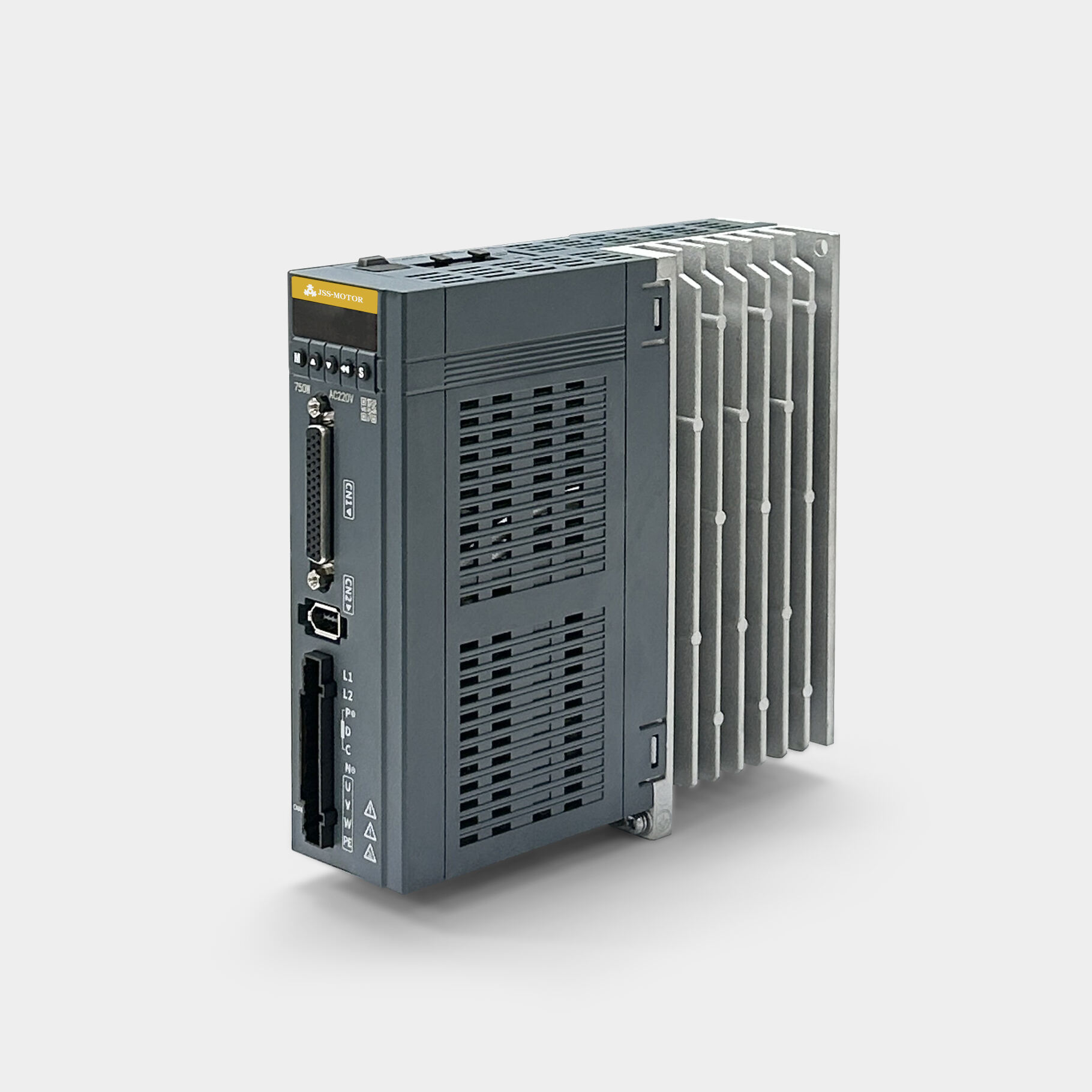
In modern industrial automation, the servo drive sits at the heart of motion control systems, translating command signals into precise mechanical output. When a servo drive performs reliably, entire production lines run with consistency, minimal downtime, and predictable output quality. When it fails, the consequences ripple outward — halted processes, damaged workpieces, and costly emergency maintenance. Understanding what actually determines servo drive reliability is therefore not an academic exercise but a practical engineering priority for anyone specifying, deploying, or maintaining automated machinery.
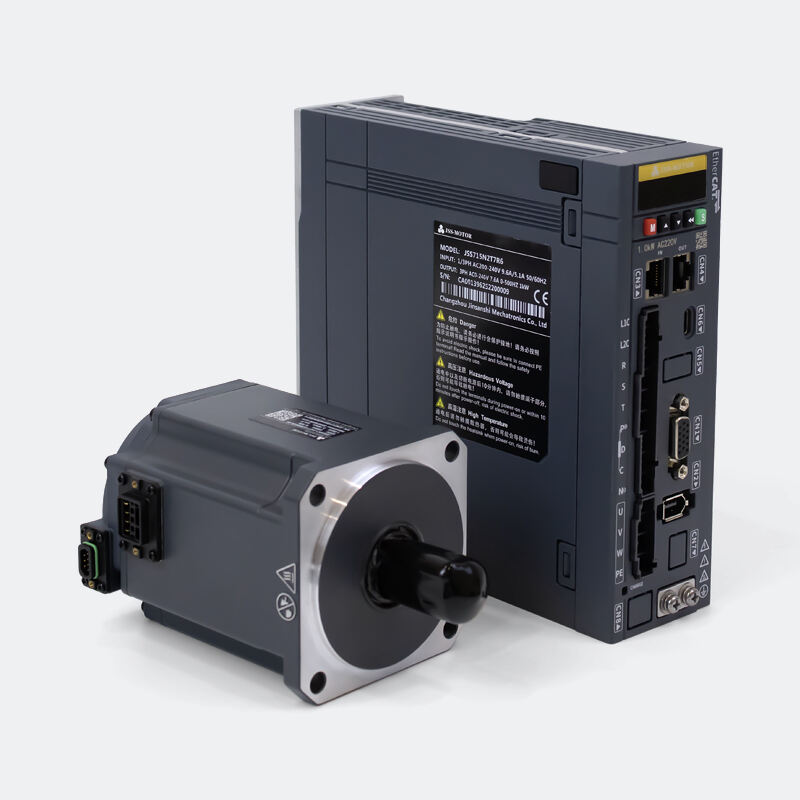
Reliability in a servo drive is not a single attribute — it is the combined result of hardware design quality, thermal management, firmware robustness, communication integrity, and how well the unit is matched to its application environment. Each of these factors interacts with the others, meaning that a weakness in one area can undermine strengths elsewhere. This article examines the key determinants of servo drive reliability in depth, giving automation engineers and procurement professionals the framework they need to evaluate and select drives that will perform consistently over long service lives.
Hardware Design and Component Quality
Power Stage Construction
The power stage of a servo drive is where electrical energy is converted and regulated to drive the motor. It typically includes IGBTs or MOSFETs, gate drivers, DC bus capacitors, and current sensing circuits. The quality and rating of these components directly determine how well the servo drive handles peak current demands, voltage transients, and continuous load cycles.
Components rated conservatively relative to the drive's nominal output provide a safety margin that extends operational life. A servo drive whose power semiconductors are operated close to their absolute maximum ratings will degrade faster, particularly under repetitive high-current pulses common in dynamic motion profiles. Selecting drives where the internal components are derated — meaning they are rated well above the expected operating conditions — is a reliable indicator of long-term durability.
PCB layout quality also matters significantly. Poor trace routing, inadequate creepage distances, or insufficient copper weight in high-current paths can introduce parasitic inductance, localized heating, and even arcing under fault conditions. A well-designed servo drive PCB reflects engineering discipline that correlates strongly with overall product reliability.
Capacitor and Passive Component Selection
Electrolytic capacitors on the DC bus are among the most life-limited components in any servo drive. Their degradation is primarily driven by temperature and ripple current stress. Drives that use high-grade capacitors with extended temperature ratings and low equivalent series resistance (ESR) will maintain stable DC bus voltage over many more operating hours than those using budget components.
Similarly, inductors, resistors, and filtering components contribute to the overall reliability profile. A servo drive designed with attention to passive component quality will exhibit more stable performance across varying load conditions and will be less susceptible to nuisance faults caused by voltage spikes or harmonic disturbances on the supply line.
Thermal Management and Environmental Robustness
Heat Dissipation Architecture
Heat is the primary enemy of electronic longevity, and a servo drive generates significant heat during normal operation due to switching losses in the power stage and conduction losses in the motor windings. How effectively that heat is removed from critical components determines how long those components remain within their safe operating temperature range.
Drives with well-engineered heatsinks, thermally optimized component placement, and intelligent fan control maintain lower junction temperatures under sustained load. Some servo drive designs route the cooling airflow specifically over the hottest components rather than relying on general convection, which results in meaningfully lower thermal stress. Junction temperature directly governs semiconductor failure rates according to Arrhenius-based reliability models, so even a modest reduction in operating temperature can double or triple the expected service life of the power stage.
Thermal interface materials between power devices and heatsinks also play a role. High-quality thermal pads or compounds with stable conductivity over time prevent the gradual increase in thermal resistance that can occur as cheaper materials dry out or delaminate after years of thermal cycling.
Protection Against Environmental Contaminants
Industrial environments expose a servo drive to dust, humidity, vibration, and occasionally corrosive atmospheres. Drives with higher ingress protection ratings, conformal-coated PCBs, and sealed connector interfaces are significantly more resistant to the gradual contamination that causes insulation breakdown, connector corrosion, and short circuits.
Vibration resistance is particularly relevant in applications where the servo drive is mounted on or near moving machinery. Solder joint fatigue, connector fretting, and component loosening are all failure modes that vibration accelerates. Drives designed with vibration-resistant mounting provisions and mechanically secured connectors will outlast those that rely solely on friction-fit connections in high-vibration environments.
Firmware Intelligence and Fault Handling
Adaptive Control Algorithms
Modern servo drive firmware does far more than execute a basic PID loop. Advanced drives incorporate adaptive gain tuning, notch filtering for mechanical resonance suppression, and feed-forward compensation that reduces tracking error under dynamic conditions. These capabilities reduce the mechanical stress placed on both the motor and the driven load, which in turn reduces wear and the likelihood of mechanical faults that can cascade into electrical failures.
A servo drive with intelligent auto-tuning can adapt to changes in load inertia or friction over time, maintaining stable control without requiring manual recalibration. This adaptability is a reliability factor because it prevents the control instability that can arise when a fixed-gain controller is applied to a system whose mechanical characteristics have drifted.
Firmware that includes robust current limiting, overspeed protection, and position error monitoring provides a safety net that prevents transient disturbances from escalating into hardware damage. The quality and thoroughness of these protective algorithms is a meaningful differentiator between servo drive products.
Diagnostic Transparency and Fault Logging
A servo drive that provides detailed fault codes, historical fault logs, and real-time diagnostic data enables maintenance teams to identify developing problems before they cause unplanned downtime. Drives that only report a generic fault code offer little actionable information, forcing technicians to replace components speculatively rather than diagnose precisely.
Comprehensive diagnostics also support predictive maintenance strategies. When a servo drive can report trends in bus voltage, motor temperature, regenerative braking activity, and encoder signal quality, engineers can schedule maintenance during planned downtime windows rather than reacting to unexpected failures. This capability transforms the servo drive from a passive component into an active contributor to system reliability.
Communication Protocol and System Integration
Fieldbus Compatibility and Signal Integrity
The communication interface of a servo drive determines how reliably it exchanges position, velocity, and torque commands with the motion controller. Drives that support deterministic industrial protocols such as EtherCAT, PROFINET, or CANopen benefit from synchronized, low-latency communication that reduces the risk of command errors caused by network jitter or packet loss.
EtherCAT in particular offers distributed clock synchronization that allows multiple servo drive axes to execute motion commands within nanoseconds of each other, which is critical in multi-axis coordinated motion applications. When communication timing is unreliable, position errors accumulate, and the servo drive must work harder to correct them — increasing thermal and electrical stress on the power stage.
Signal integrity on encoder feedback lines is equally important. A servo drive that receives corrupted position data from the encoder will generate incorrect current commands, potentially causing oscillation, overcurrent faults, or mechanical damage. Drives with differential signal inputs, proper impedance matching, and noise filtering on feedback lines are inherently more reliable in electrically noisy industrial environments.
Encoder Resolution and Feedback Quality
The resolution and type of encoder used with a servo drive directly affects control quality and, by extension, reliability. High-resolution encoders — such as 17-bit or 23-bit absolute encoders — provide finer position information that allows the servo drive to generate smoother current waveforms, reducing torque ripple and the associated mechanical vibration that accelerates bearing wear.
Absolute encoders offer an additional reliability advantage over incremental types: they retain position information through power cycles without requiring a homing sequence. This eliminates the risk of position loss after an unexpected power interruption, which can cause collisions or process errors when the machine restarts. A servo drive paired with a high-resolution absolute encoder is therefore more robust in applications where power reliability cannot be guaranteed.
Application Matching and Installation Practices
Correct Sizing and Load Matching
One of the most common causes of premature servo drive failure is incorrect sizing. A servo drive that is undersized for its application will operate continuously near its thermal and current limits, accelerating component degradation. Oversizing, while less immediately harmful, can introduce control instability if the drive's minimum stable current output is too high relative to the motor's requirements at light load.
Proper sizing requires accurate knowledge of the load's inertia, friction, duty cycle, and peak torque requirements. A servo drive selected with appropriate headroom — typically 20 to 30 percent above the calculated peak demand — will operate in a comfortable thermal and electrical range that supports long service life. Inertia matching between the motor and load is also important; a large inertia mismatch forces the servo drive to generate large corrective current pulses that stress the power stage.
Installation Environment and Wiring Quality
Even a well-designed servo drive will fail prematurely if installed incorrectly. Inadequate clearance around the drive restricts airflow and raises ambient temperature. Shared conduit between power and signal cables introduces electromagnetic interference that corrupts feedback signals. Improper grounding creates ground loops that cause erratic behavior and can damage sensitive input circuits.
Following the manufacturer's installation guidelines for cable routing, grounding topology, and minimum clearances is not optional — it is a prerequisite for achieving the reliability that the servo drive's design is capable of delivering. Shielded cables terminated correctly at both ends, separate cable trays for power and signal wiring, and a clean, low-impedance ground reference are all installation practices that directly support servo drive reliability in service.
FAQ
What is the most common cause of servo drive failure in industrial applications?
Thermal stress caused by inadequate cooling or incorrect sizing is the most frequent root cause of servo drive failure. When a drive operates continuously near its thermal limits, electrolytic capacitors degrade faster, solder joints fatigue, and power semiconductors accumulate damage that eventually leads to failure. Ensuring proper heatsinking, adequate airflow, and conservative sizing relative to the application's peak demands is the most effective way to extend servo drive service life.
How does encoder resolution affect servo drive reliability?
Higher encoder resolution gives the servo drive more precise position feedback, which allows it to generate smoother current commands with less torque ripple. Reduced torque ripple means less mechanical vibration transmitted to bearings and couplings, which slows mechanical wear. Absolute encoders also eliminate the need for homing after power loss, reducing the risk of position errors that could cause mechanical collisions and damage both the load and the servo drive itself.
Does the communication protocol used with a servo drive affect its reliability?
Yes, significantly. Deterministic protocols like EtherCAT provide synchronized, low-latency communication that ensures the servo drive receives accurate, timely commands. When communication is unreliable or introduces jitter, the drive must compensate with larger corrective current pulses, increasing thermal and electrical stress. Reliable communication also enables faster fault detection and response, which limits the duration and severity of fault conditions that could otherwise damage the drive or connected machinery.
How important is correct installation for servo drive reliability?
Installation quality is critically important and is often underestimated. A servo drive installed with insufficient airflow clearance, poor cable shielding, or inadequate grounding will experience reliability problems regardless of its intrinsic design quality. Electromagnetic interference from improperly routed cables can corrupt encoder feedback and cause erratic control behavior. Following the manufacturer's installation guidelines for grounding, cable separation, and environmental conditions is essential to realizing the full reliability potential of any servo drive.