
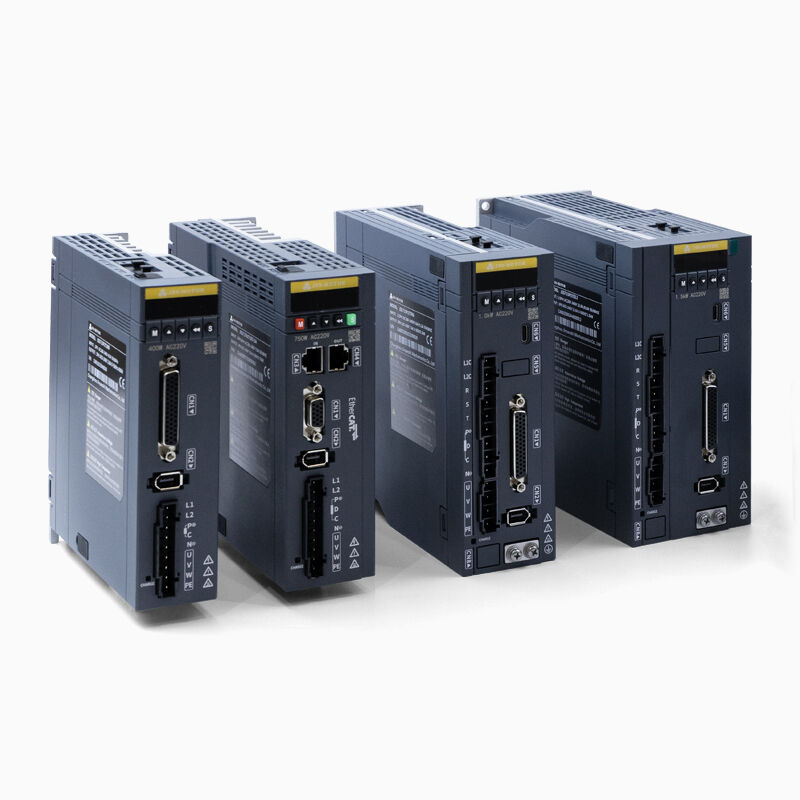
The dynamic response of automated systems relies heavily on the precision and efficiency of their control components. A servo motor driver serves as the critical interface between control signals and mechanical motion, directly influencing how quickly and accurately a system responds to command changes. Understanding the relationship between servo motor driver performance and dynamic response characteristics becomes essential for engineers designing high-performance automation solutions. Modern industrial applications demand exceptional responsiveness, positioning accuracy, and stability under varying load conditions, making the selection and optimization of servo motor driver technology a paramount consideration for system designers.
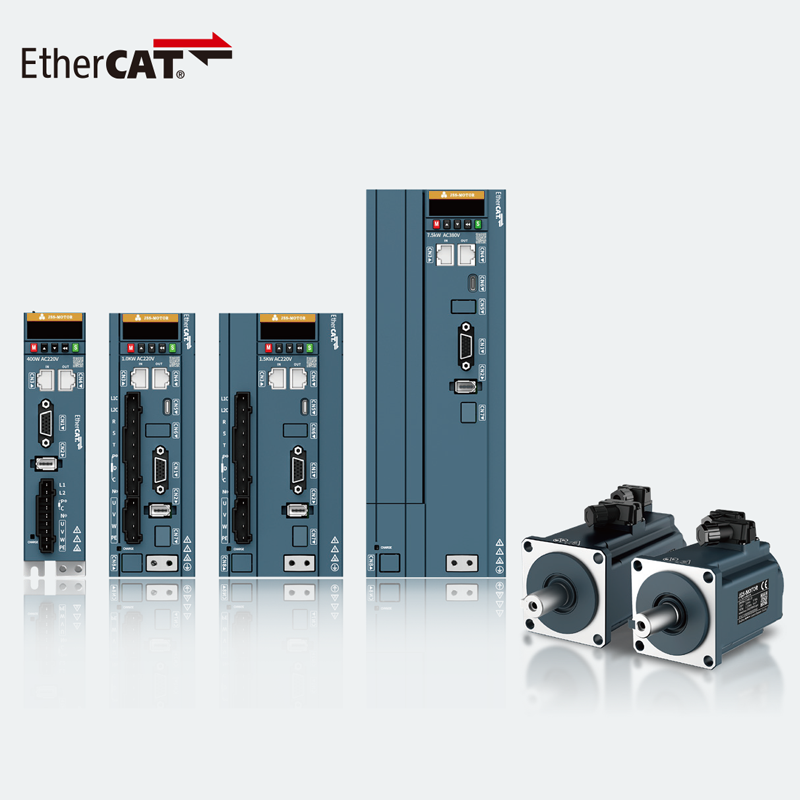
Core Performance Parameters Affecting Dynamic Response
Current Loop Bandwidth and Response Time
The current loop bandwidth of a servo motor driver fundamentally determines how rapidly the drive can respond to torque demands. Higher bandwidth capabilities enable faster current regulation, resulting in improved transient response and reduced settling times during acceleration and deceleration phases. Advanced servo motor driver designs typically feature current loop bandwidths exceeding 2 kHz, allowing for precise torque control even during rapid command changes. This enhanced bandwidth directly translates to better dynamic performance in applications requiring frequent direction changes or variable speed operations.
Response time characteristics become particularly critical in applications involving precise positioning or synchronized multi-axis operations. A servo motor driver with optimized current loop performance can achieve current rise times under 100 microseconds, enabling rapid torque buildup and minimizing mechanical settling time. This fast response capability proves essential in high-speed packaging machinery, precision manufacturing equipment, and robotic systems where timing accuracy directly impacts product quality and throughput efficiency.
Voltage Regulation and Power Delivery
Consistent voltage regulation within the servo motor driver ensures stable power delivery across varying operational conditions. Fluctuations in supply voltage can significantly impact motor performance, causing variations in torque output and affecting positioning accuracy. Modern servo motor driver architectures incorporate advanced switching techniques and filtering systems to maintain stable DC bus voltages, even under dynamic loading conditions. This voltage stability directly influences the system's ability to maintain consistent dynamic response characteristics throughout extended operational cycles.
Power delivery capabilities of the servo motor driver must align with the dynamic requirements of the application. During rapid acceleration phases, motors require peak currents that can exceed nominal ratings by significant margins. A properly sized servo motor driver provides adequate power reserves to handle these transient demands without compromising performance or triggering protective shutdowns. The drive's ability to deliver sustained high current during demanding operational sequences directly correlates with the system's dynamic response capabilities and overall productivity levels.
Control Algorithm Impact on System Dynamics
PID Controller Tuning and Optimization
The proportional-integral-derivative control algorithms embedded within servo motor driver systems play a crucial role in determining dynamic response characteristics. Proper PID tuning ensures optimal balance between responsiveness, stability, and overshoot minimization during position and velocity control operations. Advanced servo motor driver platforms offer auto-tuning capabilities that automatically optimize control parameters based on system identification procedures, reducing commissioning time while maximizing performance. The integration of adaptive control algorithms allows the drive to maintain optimal tuning even as system characteristics change due to wear, temperature variations, or load fluctuations.
Sophisticated servo motor driver implementations incorporate multiple control loops operating at different frequencies to achieve superior dynamic performance. Position loops typically operate at 1-2 kHz, while velocity and current loops function at much higher frequencies to ensure rapid response to command changes. The coordination between these nested control loops determines the overall system's ability to track reference commands accurately while maintaining stability under varying operational conditions.
Feedforward Compensation Strategies
Modern servo motor driver designs integrate feedforward compensation algorithms to enhance dynamic response by predicting system requirements based on command profiles. Acceleration feedforward compensates for inertial loads during velocity changes, while friction feedforward addresses static and dynamic friction effects that could otherwise degrade positioning accuracy. These predictive control strategies enable the servo motor driver to proactively adjust control outputs, reducing tracking errors and improving overall system responsiveness.
Velocity feedforward functionality within advanced servo motor driver systems significantly reduces following errors during constant velocity operations. By anticipating the steady-state requirements of motion profiles, the drive can maintain tighter position tolerance while reducing the workload on feedback control loops. This proactive approach to control implementation results in smoother motion profiles and enhanced dynamic performance across a wide range of operating conditions.
Hardware Architecture and Dynamic Performance
Switching Frequency and PWM Control
The switching frequency employed by servo motor driver power stages directly influences both control precision and dynamic response capabilities. Higher switching frequencies enable more precise current control and reduce torque ripple, resulting in smoother motor operation and improved positioning accuracy. Modern servo motor driver designs typically utilize switching frequencies between 8-20 kHz, balancing control precision with switching losses and electromagnetic interference considerations. Advanced silicon carbide power devices enable even higher switching frequencies while maintaining excellent efficiency characteristics.
Pulse width modulation strategies within the servo motor driver determine how effectively the drive can convert DC power into precisely controlled AC currents for motor operation. Space vector modulation techniques provide superior utilization of available DC bus voltage while minimizing harmonic distortion. These advanced PWM strategies contribute to improved dynamic response by enabling more precise current control and reducing the impact of dead time effects that can compromise low-speed performance and positioning accuracy.
Encoder Integration and Feedback Resolution
High-resolution feedback systems integrated with servo motor driver platforms enable precise position and velocity measurement, directly impacting dynamic response quality. Modern encoder technologies provide resolution levels exceeding 17 bits per revolution, allowing for extremely fine position control and smooth velocity regulation even at low speeds. The servo motor driver must process this high-resolution feedback information rapidly to maintain tight control loops and achieve optimal dynamic performance characteristics.
Communication interfaces between encoders and servo motor driver systems significantly influence overall system response times. Serial communication protocols introduce inherent delays that can limit control loop performance, while parallel interfaces enable faster data transfer but require more complex wiring. Advanced servo motor driver designs incorporate dedicated encoder processing hardware to minimize feedback delays and maximize control loop bandwidth, resulting in superior dynamic response capabilities.
Environmental Factors and Performance Optimization
Temperature Effects on Dynamic Response
Temperature variations significantly impact servo motor driver performance and subsequently affect dynamic response characteristics. Power semiconductor devices exhibit temperature-dependent behavior that influences switching times, voltage drops, and overall efficiency. Advanced servo motor driver designs incorporate temperature monitoring and compensation algorithms to maintain consistent performance across operational temperature ranges. Thermal management systems within the drive ensure stable component temperatures during demanding operational cycles, preserving dynamic response quality throughout extended periods of operation.
Motor parameters also change with temperature, affecting the accuracy of control algorithms and potentially degrading dynamic performance. Modern servo motor driver systems incorporate parameter adaptation features that automatically adjust control settings based on estimated motor temperature. This adaptive approach ensures optimal dynamic response is maintained even as operating conditions change, providing consistent performance across varying environmental conditions and duty cycles.
Power Quality and Grid Stability Impact
Input power quality significantly influences servo motor driver performance and the resulting dynamic response characteristics of controlled systems. Voltage fluctuations, harmonics, and transient disturbances can affect DC bus regulation and introduce instabilities that compromise control precision. High-performance servo motor driver designs incorporate active power factor correction and filtering systems to minimize the impact of power quality issues on system operation. These protective measures ensure consistent dynamic response even when operating from problematic power sources.
Grid stability considerations become particularly important in facilities with multiple servo motor driver installations or when operating from generator power sources. Coordinated control strategies can help minimize interactions between drives and reduce the impact of simultaneous high-power operations on overall system stability. Advanced servo motor driver platforms offer configuration options to optimize operation under various power source conditions while maintaining superior dynamic response capabilities.
Application-Specific Performance Considerations
High-Speed Machining Requirements
High-speed machining applications place extreme demands on servo motor driver dynamic response capabilities. Rapid feed rate changes, frequent direction reversals, and complex toolpath following require exceptional responsiveness from the motion control system. servo motor driver systems designed for these applications must provide bandwidth capabilities exceeding 500 Hz to maintain adequate path accuracy during high-speed operations. The integration of advanced interpolation algorithms and look-ahead processing helps optimize motion profiles for improved surface finish quality and reduced machining times.
Vibration suppression becomes critical in high-speed applications where mechanical resonances can compromise surface quality and dimensional accuracy. Modern servo motor driver implementations incorporate active damping algorithms that identify and suppress resonant frequencies within the mechanical system. These adaptive filtering techniques enable operation at higher speeds while maintaining dynamic response quality and preventing the excitation of unwanted vibrations that could affect machining precision.
Packaging and Assembly Line Integration
Packaging machinery and assembly line applications require servo motor driver systems capable of maintaining precise timing relationships between multiple axes while achieving high throughput rates. Synchronization accuracy becomes paramount when coordinating cutting, sealing, and product handling operations that must occur at specific intervals. Advanced servo motor driver networks utilize real-time communication protocols to ensure coordinated motion execution with timing accuracies measured in microseconds, enabling complex packaging sequences to operate at maximum efficiency levels.
Electronic camming and virtual shaft functionality within sophisticated servo motor driver systems enable complex mechanical relationships to be implemented through software configuration. These features allow for rapid changeover between product types without mechanical adjustments, significantly reducing setup times and improving operational flexibility. The dynamic response quality of the servo motor driver directly impacts the accuracy of these electronic cam profiles and determines the maximum operating speeds achievable while maintaining product quality standards.
Advanced Technologies and Future Developments
Artificial Intelligence Integration
Artificial intelligence algorithms are increasingly being integrated into servo motor driver systems to enhance dynamic response through predictive optimization and adaptive control strategies. Machine learning techniques enable drives to automatically optimize control parameters based on historical performance data and real-time system behavior analysis. These intelligent systems can predict and compensate for disturbances before they impact dynamic response, resulting in more consistent performance and reduced maintenance requirements over extended operational periods.
Neural network implementations within advanced servo motor driver platforms enable sophisticated pattern recognition capabilities that can identify developing issues before they affect system performance. Predictive maintenance algorithms analyze vibration signatures, current waveforms, and thermal patterns to anticipate component degradation and schedule maintenance activities proactively. This intelligent monitoring capability helps maintain optimal dynamic response characteristics throughout the servo motor driver's operational lifecycle while minimizing unexpected downtime events.
Communication Protocol Evolution
Next-generation communication protocols are revolutionizing how servo motor driver systems integrate within automated manufacturing environments. Time-sensitive networking standards enable deterministic communication with guaranteed latency characteristics, allowing for tighter coordination between distributed control systems and improved overall dynamic response. These advanced protocols support higher bandwidth requirements while maintaining the real-time performance necessary for demanding motion control applications that require precise synchronization between multiple servo motor driver units.
Edge computing capabilities integrated directly within servo motor driver hardware enable local processing of complex algorithms without introducing communication delays. This distributed intelligence approach allows for faster response to local disturbances while maintaining coordination with higher-level control systems. The result is enhanced dynamic response capabilities that can adapt to changing conditions more rapidly than traditional centralized control architectures while providing comprehensive system monitoring and optimization features.
FAQ
What factors most significantly impact servo motor driver dynamic response performance
The most critical factors affecting servo motor driver dynamic response include current loop bandwidth, control algorithm sophistication, power delivery capabilities, and feedback system resolution. Current loop bandwidth determines how quickly the drive responds to torque commands, while advanced control algorithms like feedforward compensation improve tracking accuracy. Adequate power delivery ensures consistent performance during transient conditions, and high-resolution feedback systems enable precise control. Environmental factors such as temperature and power quality also influence dynamic response characteristics significantly.
How does switching frequency affect servo motor driver performance
Higher switching frequencies in servo motor driver systems enable more precise current control and reduced torque ripple, resulting in improved dynamic response and smoother motor operation. Typical switching frequencies range from 8-20 kHz, with higher frequencies providing better control precision at the cost of increased switching losses. Advanced power devices like silicon carbide enable even higher switching frequencies while maintaining efficiency, contributing to superior dynamic response capabilities and positioning accuracy in demanding applications.
What role does encoder resolution play in dynamic response quality
Encoder resolution directly impacts the precision of position and velocity feedback, which is fundamental to achieving optimal dynamic response in servo motor driver systems. Higher resolution encoders, such as 17-bit systems, enable finer position control and smoother velocity regulation, particularly at low speeds. The servo motor driver must process this high-resolution feedback rapidly to maintain tight control loops, and the communication interface between encoder and drive affects overall system response times and control loop performance.
How do environmental conditions affect servo motor driver dynamic response
Environmental conditions, particularly temperature and power quality, significantly influence servo motor driver dynamic response characteristics. Temperature affects both drive electronics and motor parameters, potentially degrading control accuracy. Advanced drives incorporate temperature compensation and adaptive algorithms to maintain consistent performance. Power quality issues like voltage fluctuations and harmonics can affect DC bus regulation and control stability. Modern servo motor driver systems include power conditioning and filtering to minimize these effects and preserve dynamic response quality across varying environmental conditions.