dm860a
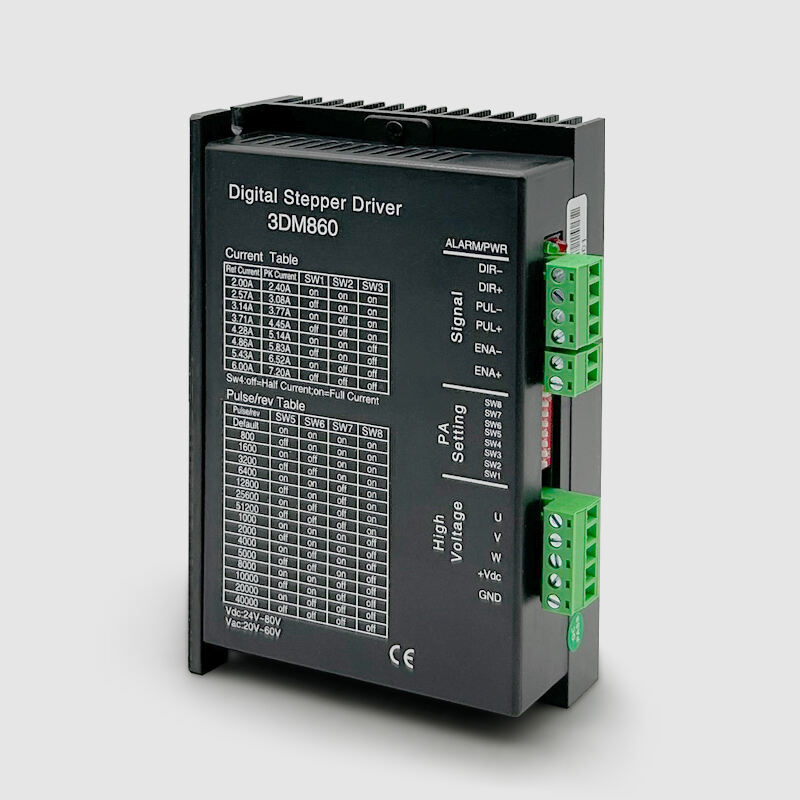
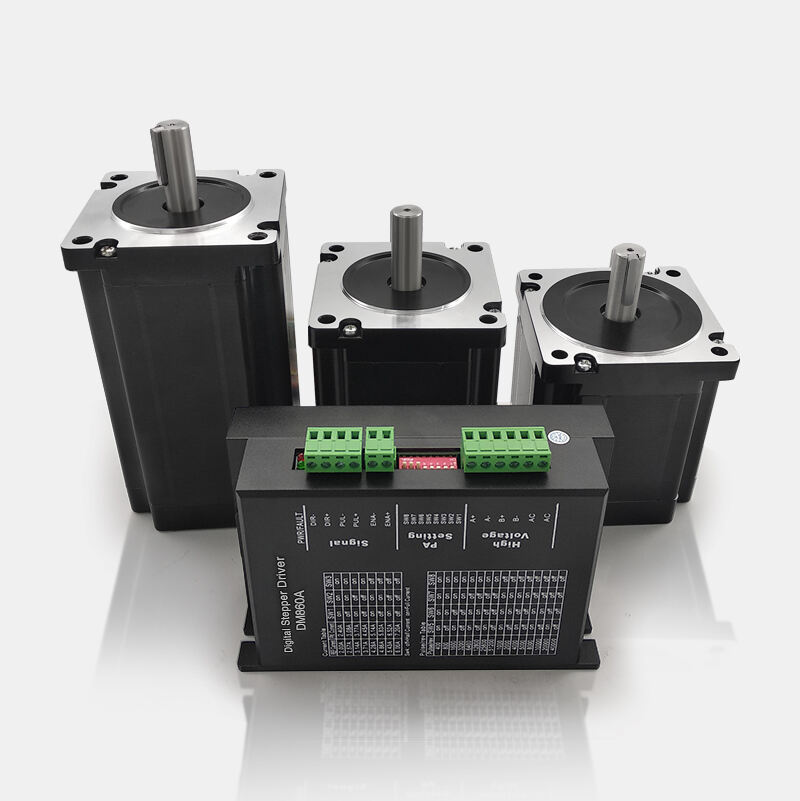
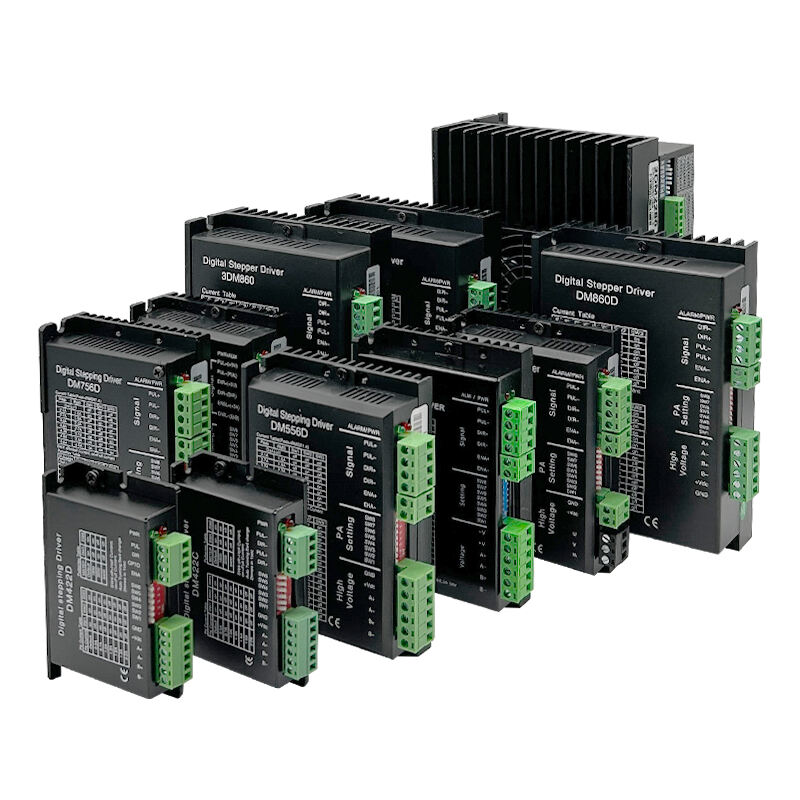
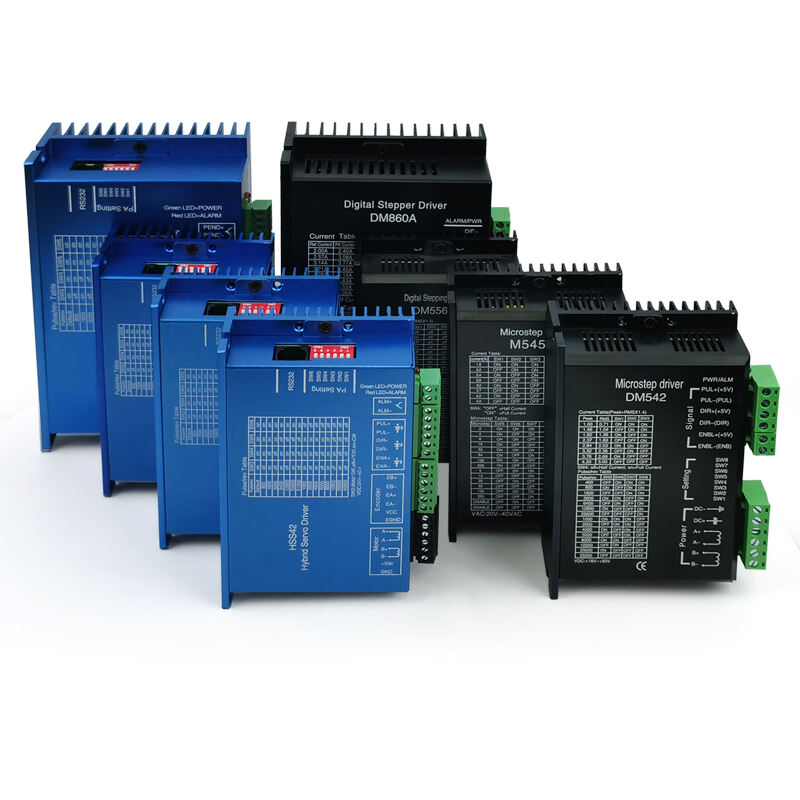
The dm860a represents a cutting-edge stepper motor driver that delivers exceptional performance for industrial automation and precision control applications. This advanced digital stepper motor controller incorporates sophisticated microstepping technology, enabling smooth operation and reduced vibration across a wide range of motor speeds. The dm860a operates with supply voltages ranging from 18 to 80VDC, making it compatible with various power systems and industrial environments. Its current output capability reaches up to 7.2A, providing sufficient power for demanding applications requiring high torque and precision positioning. The dm860a features intelligent current control that automatically adjusts power consumption based on load requirements, resulting in improved energy efficiency and reduced heat generation. The driver supports multiple step resolutions from full-step to 256 microsteps per full step, allowing users to achieve precise positioning control tailored to their specific application needs. Built-in protection circuits safeguard against overcurrent, overvoltage, and overheating conditions, ensuring reliable operation in harsh industrial environments. The dm860a incorporates advanced anti-resonance technology that eliminates mid-frequency resonance problems commonly associated with stepper motors, resulting in smoother operation and improved performance characteristics. Its compact design measures just 118mm x 78mm x 35mm, making it ideal for space-constrained installations while maintaining robust construction suitable for industrial use. The driver accepts step and direction signals from various control systems, including PLCs, motion controllers, and computer interfaces, providing seamless integration into existing automation systems. The dm860a supports both common anode and common cathode signal configurations, offering flexibility in wiring arrangements and compatibility with different control systems. Its optically isolated inputs provide excellent noise immunity and electrical isolation between control circuits and power circuits, enhancing system reliability and safety.