
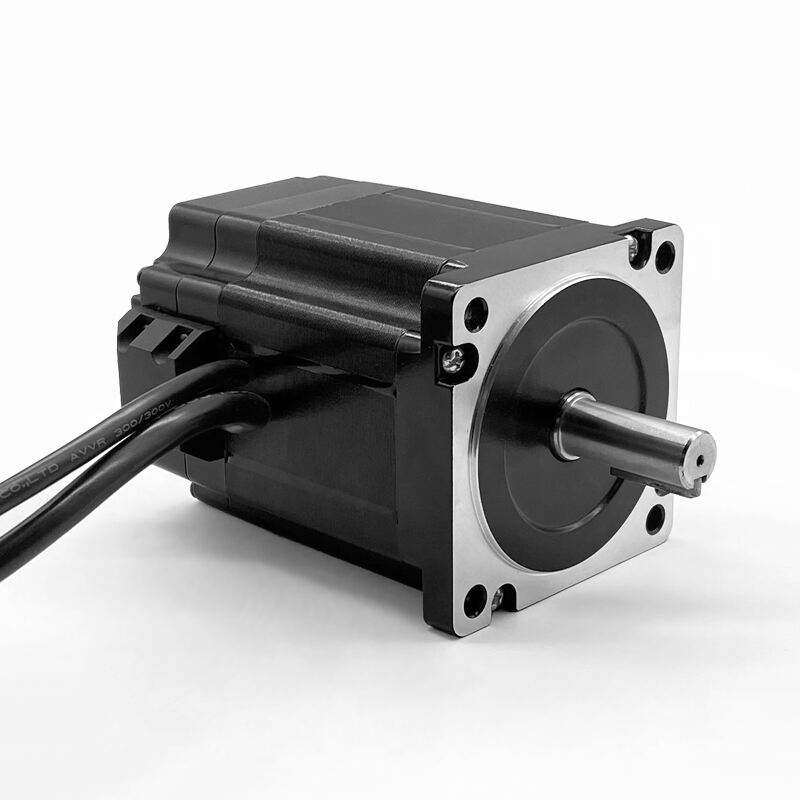
Industrial automation continues to evolve at an unprecedented pace, driving demand for more efficient and reliable motor technologies. Among the most significant advancements in this field is the widespread adoption of brushless dc motor systems, which have revolutionized how modern manufacturing facilities approach power transmission and control. These sophisticated electrical machines eliminate the mechanical brushes found in traditional motors, resulting in superior performance characteristics that meet the demanding requirements of today's industrial applications. The transformation from conventional brushed motors to brushless alternatives represents a fundamental shift toward enhanced reliability, reduced maintenance costs, and improved operational efficiency across diverse industrial sectors.
Superior Efficiency and Energy Performance
Enhanced Energy Conversion
The elimination of brush friction in brushless dc motor designs significantly improves energy conversion efficiency compared to traditional brushed alternatives. Without physical contact between brushes and commutator segments, these motors can achieve efficiency ratings exceeding 90%, substantially reducing energy consumption in industrial applications. This enhanced efficiency translates directly into lower operating costs and reduced environmental impact, making brushless motors increasingly attractive for sustainability-focused manufacturing operations.
Modern brushless dc motor controllers utilize advanced electronic switching techniques to optimize power delivery throughout the entire operating range. These sophisticated control systems monitor rotor position continuously through Hall effect sensors or encoder feedback, ensuring optimal timing of current switching for maximum efficiency. The result is consistent high-performance operation that maintains efficiency levels across varying load conditions and operating speeds.
Reduced Heat Generation
Lower internal losses in brushless dc motor systems result in significantly reduced heat generation during operation. This thermal advantage extends motor lifespan, reduces cooling requirements, and enables higher power density designs in compact applications. Industries operating in temperature-sensitive environments particularly benefit from this characteristic, as reduced thermal output minimizes the risk of overheating critical components and maintains stable operating conditions.
The improved thermal performance also enables brushless motors to operate at higher power levels without compromising reliability. This capability proves especially valuable in demanding applications such as robotics, CNC machinery, and automated production lines where consistent performance under varying thermal conditions is essential for maintaining product quality and operational uptime.
Exceptional Reliability and Durability
Elimination of Mechanical Wear Points
The absence of physical brushes in brushless dc motor designs eliminates the primary source of mechanical wear found in traditional motors. This fundamental design advantage dramatically extends service life and reduces the frequency of maintenance interventions required to maintain optimal performance. Industrial facilities benefit from significantly reduced downtime associated with brush replacement and commutator maintenance, improving overall equipment effectiveness and production continuity.
Brushless motor construction incorporates sealed bearing systems and robust rotor assemblies that withstand harsh industrial environments. The electronic commutation system operates without physical contact, ensuring consistent performance over millions of operational cycles. This reliability advantage makes brushless dc motor technology particularly suitable for critical applications where unexpected failures could result in significant production losses or safety concerns.
Extended Operational Lifespan
Typical brushless dc motor systems demonstrate operational lifespans exceeding 10,000 hours of continuous operation under normal industrial conditions. This extended service life results from the elimination of brush wear, reduced bearing stress due to smoother operation, and improved thermal management. Manufacturing facilities can significantly reduce total cost of ownership by minimizing replacement frequency and associated labor costs for motor changeouts.
The enhanced durability of brushless motors proves especially valuable in applications requiring 24/7 operation or installation in locations where access for maintenance is difficult or expensive. Remote monitoring capabilities integrated into modern brushless motor controllers enable predictive maintenance strategies that further extend service life by identifying potential issues before they result in equipment failure.
Precise Speed and Position Control
Advanced Control Capabilities
Electronic commutation in brushless dc motor systems enables precise speed regulation and position control that surpasses the capabilities of traditional brushed motors. Advanced motor controllers implement sophisticated algorithms such as field-oriented control and space vector modulation to achieve smooth torque delivery and accurate speed regulation across the entire operating range. These control techniques eliminate the speed ripple associated with mechanical commutation, resulting in smoother operation and improved product quality in precision manufacturing applications.
Modern brushless dc motor controllers incorporate multiple feedback options including encoders, resolvers, and sensorless control algorithms to provide precise position and speed information. This feedback enables closed-loop control systems that maintain accuracy within fractions of a degree for position control or within 0.1% for speed regulation. Such precision proves essential in applications such as semiconductor manufacturing, medical device production, and high-precision machining operations.
Dynamic Response Characteristics
The low rotor inertia and responsive electronic control systems in brushless dc motor designs provide exceptional dynamic response to control inputs. This characteristic enables rapid acceleration and deceleration cycles, precise speed changes, and accurate positioning movements required in modern automated systems. The improved response time enhances productivity in applications involving frequent start-stop cycles or complex motion profiles.
Superior dynamic performance also enables brushless dc motor systems to maintain stability during load disturbances and provide consistent performance under varying operating conditions. This stability proves particularly valuable in applications such as conveyor systems, robotic arms, and automated assembly equipment where maintaining precise motion control is critical for product quality and operational safety.
Reduced Maintenance Requirements
Minimal Service Interventions
Brushless dc motor technology significantly reduces maintenance requirements compared to traditional brushed alternatives. The elimination of brush replacement, commutator resurfacing, and related maintenance tasks results in substantial cost savings and improved operational availability. Typical maintenance intervals for brushless motors extend to annual inspections focusing primarily on bearing condition and electrical connections, rather than the frequent brush maintenance required by conventional motors.
The sealed construction of most brushless dc motor designs protects internal components from contamination and moisture, further reducing maintenance requirements. This protection enables reliable operation in challenging industrial environments including dusty, humid, or chemically aggressive conditions where traditional motors might require frequent service interventions to maintain performance and reliability.
Predictive Maintenance Integration
Modern brushless dc motor controllers incorporate diagnostic capabilities that enable condition monitoring and predictive maintenance strategies. These systems continuously monitor parameters such as motor temperature, vibration levels, current consumption, and performance characteristics to identify potential issues before they result in equipment failure. Early detection capabilities enable scheduled maintenance during planned downtime, minimizing the impact on production operations.
Integration with industrial IoT platforms and plant-wide maintenance management systems enables brushless motor data to contribute to comprehensive equipment health monitoring programs. This connectivity allows maintenance teams to optimize service schedules, track performance trends, and implement data-driven maintenance strategies that maximize equipment availability while minimizing maintenance costs.
Environmental and Operational Advantages
Noise Reduction Benefits
Brushless dc motor operation produces significantly lower noise levels compared to brushed alternatives due to the elimination of brush friction and mechanical commutation sparking. This acoustic advantage proves particularly valuable in applications where noise reduction is important for worker comfort, product quality, or regulatory compliance. The smoother electronic commutation process results in reduced electromagnetic noise and mechanical vibration, contributing to quieter industrial environments.
Lower operating noise also indicates reduced mechanical stress and improved operational smoothness in brushless motor systems. This characteristic contributes to enhanced precision in applications requiring minimal vibration, such as optical equipment, measuring instruments, and sensitive manufacturing processes where mechanical disturbances could affect product quality or measurement accuracy.
Electromagnetic Compatibility
Advanced brushless dc motor controllers incorporate sophisticated filtering and shielding techniques to minimize electromagnetic interference generation. Unlike brushed motors that produce significant EMI from brush arcing, brushless designs enable better electromagnetic compatibility with sensitive electronic equipment. This advantage proves essential in modern industrial environments where multiple electronic systems must operate in close proximity without interference.
Improved electromagnetic compatibility also enables brushless motors to meet stringent regulatory requirements for industrial equipment operating in environments with strict EMI limitations. This compliance capability expands the range of applications where brushless dc motor technology can be successfully implemented, including medical facilities, telecommunications installations, and precision measurement laboratories.
Cost-Effectiveness and Return on Investment
Total Cost of Ownership Analysis
While brushless dc motor systems typically require higher initial investment compared to brushed alternatives, the total cost of ownership over the equipment lifecycle demonstrates significant economic advantages. Reduced maintenance costs, extended service life, and improved energy efficiency combine to provide attractive return on investment for most industrial applications. The elimination of brush replacement costs alone can justify the initial investment premium in applications with high duty cycles or difficult access requirements.
Energy savings from improved efficiency contribute substantially to the economic benefits of brushless dc motor technology. In applications operating continuously or for extended periods, the reduced power consumption can result in significant cost savings over the motor's operational life. These savings become particularly pronounced in regions with high electricity costs or for facilities implementing energy conservation programs.
Productivity Enhancement
The improved reliability and performance characteristics of brushless dc motor systems contribute to enhanced productivity through reduced downtime, improved product quality, and increased production throughput. The precise control capabilities enable faster cycle times and more accurate positioning in automated systems, directly impacting manufacturing efficiency and output quality.
Enhanced productivity benefits extend beyond direct motor performance to include reduced maintenance-related production interruptions and improved system reliability. The predictable maintenance schedules and extended service life of brushless motors enable better production planning and reduce the risk of unexpected equipment failures that could disrupt manufacturing operations or compromise delivery schedules.
FAQ
What is the typical lifespan difference between brushless and brushed DC motors
Brushless dc motor systems typically demonstrate operational lifespans of 10,000 hours or more under continuous operation, while traditional brushed motors may require brush replacement every 1,000-3,000 hours depending on operating conditions. The elimination of physical brush wear in brushless designs results in 3-5 times longer service life, significantly reducing replacement costs and maintenance downtime over the equipment's operational period.
How do brushless DC motors achieve better speed control than brushed motors
Electronic commutation in brushless dc motor systems enables precise timing control and eliminates the speed ripple associated with mechanical brush commutation. Advanced control algorithms such as field-oriented control provide smooth torque delivery and accurate speed regulation within 0.1% accuracy. The electronic control system responds instantly to speed commands and maintains consistent performance across varying load conditions without the mechanical limitations of brush-based commutation systems.
Are brushless DC motors suitable for harsh industrial environments
Brushless dc motor designs incorporate sealed construction that protects internal components from dust, moisture, and chemical contamination common in industrial environments. The absence of brush sparking eliminates ignition risks in explosive atmospheres, and the robust electronic control systems can be housed in appropriate enclosures for specific environmental requirements. Many brushless motors meet IP65 or higher protection ratings, making them suitable for demanding industrial applications including food processing, chemical plants, and outdoor installations.
What are the main considerations when upgrading from brushed to brushless DC motors
Upgrading to brushless dc motor technology requires evaluation of control system compatibility, power supply requirements, and mechanical mounting considerations. The electronic speed controllers for brushless motors typically require different input signals and power specifications compared to brushed motor drives. However, the improved performance characteristics, reduced maintenance requirements, and enhanced reliability usually justify the upgrade costs through improved operational efficiency and reduced total cost of ownership over the equipment's service life.
Table of Contents
- Superior Efficiency and Energy Performance
- Exceptional Reliability and Durability
- Precise Speed and Position Control
- Reduced Maintenance Requirements
- Environmental and Operational Advantages
- Cost-Effectiveness and Return on Investment
-
FAQ
- What is the typical lifespan difference between brushless and brushed DC motors
- How do brushless DC motors achieve better speed control than brushed motors
- Are brushless DC motors suitable for harsh industrial environments
- What are the main considerations when upgrading from brushed to brushless DC motors