
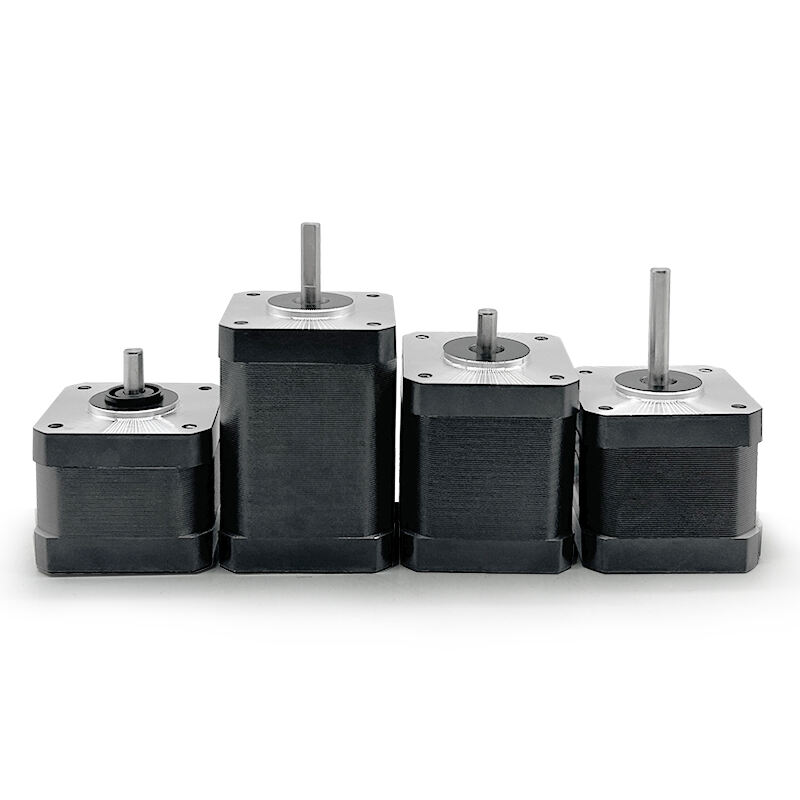
Modern automation systems demand precise motion control that delivers consistent performance across diverse industrial applications. Traditional open-loop stepper motors have long served as workhorses in manufacturing environments, but the evolution toward more sophisticated automation requirements has highlighted the need for enhanced feedback mechanisms. The integration of closed-loop technology into stepper motor systems represents a significant advancement that addresses many of the limitations associated with conventional motor configurations. This technological enhancement provides manufacturers with improved accuracy, reliability, and operational efficiency that directly translates to better product quality and reduced operational costs.
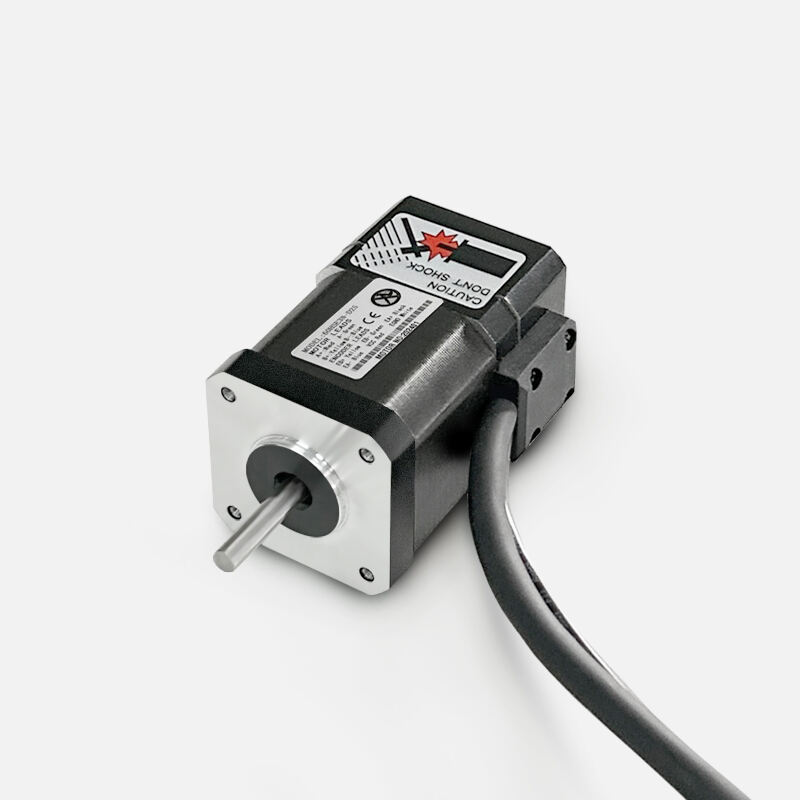
Understanding Closed Loop Stepper Motor Technology
Fundamental Operating Principles
The core distinction between open-loop and closed-loop stepper systems lies in the implementation of position feedback mechanisms that continuously monitor rotor position relative to commanded position. This feedback system typically employs encoders or resolvers that provide real-time position data to the motor controller. The controller uses this information to make immediate adjustments when any deviation from the intended position is detected. This continuous monitoring and correction process ensures that the motor maintains precise positional accuracy even when external forces or load variations attempt to disrupt the intended motion profile.
The feedback loop operates through a sophisticated control algorithm that compares the commanded position with the actual encoder-measured position. When discrepancies are identified, the system automatically adjusts the current waveforms to the motor windings to correct the positioning error. This dynamic correction capability eliminates the cumulative positioning errors that can occur in open-loop systems when steps are missed due to excessive loads or rapid acceleration profiles. The result is a motor system that maintains accuracy throughout extended operating periods without requiring manual recalibration or position correction procedures.
Key Components and Architecture
A complete closed loop stepper motor system integrates several critical components working in harmony to deliver superior performance characteristics. The motor itself maintains the traditional stepper motor construction with multiple phase windings, but incorporates a high-resolution encoder directly mounted to the motor shaft. This encoder provides position feedback with resolutions typically ranging from 1000 to 4000 counts per revolution, enabling precise position monitoring capabilities. The drive controller processes this encoder data through advanced digital signal processing algorithms that calculate position errors and generate appropriate corrective actions.
The control electronics feature sophisticated microprocessor-based systems capable of executing complex control algorithms at high frequencies. These controllers manage the precise timing of current switching to the motor windings while simultaneously processing encoder feedback signals. Modern closed loop stepper systems often incorporate additional sensors for monitoring motor temperature, vibration levels, and current consumption patterns. This comprehensive monitoring capability enables predictive maintenance strategies that can identify potential issues before they result in system failures or production disruptions.
Performance Advantages in Industrial Applications
Enhanced Positioning Accuracy
The primary benefit of implementing a closed loop stepper motor system lies in its ability to maintain exceptional positioning accuracy across varying operational conditions. Traditional open-loop systems can experience step loss when loads exceed the motor's torque capabilities or when rapid acceleration profiles are demanded. The closed-loop feedback mechanism eliminates these accuracy compromises by continuously monitoring and correcting positional deviations in real-time. This capability is particularly valuable in applications requiring precise positioning tolerances, such as semiconductor manufacturing equipment, medical device assembly systems, and precision machining operations.
The accuracy improvements extend beyond simple positioning to include enhanced repeatability and reduced settling times. Closed-loop systems can achieve positioning accuracies within a few encoder counts, typically translating to positional tolerances measured in micrometers rather than the fractional degree accuracy typical of open-loop configurations. This enhanced precision enables manufacturers to achieve tighter quality specifications and reduce waste associated with out-of-tolerance parts. The consistent accuracy performance also eliminates the need for frequent system calibration and adjustment procedures that can interrupt production schedules.
Improved Dynamic Performance
Dynamic performance characteristics represent another significant advantage of closed loop stepper motor implementations in demanding automation environments. The feedback control system enables more aggressive acceleration and deceleration profiles without risking step loss or positioning errors. This capability allows system designers to optimize cycle times and increase overall throughput while maintaining the precision required for quality production outcomes. The enhanced dynamic response is particularly beneficial in applications involving frequent direction changes or complex motion profiles that would challenge traditional open-loop systems.
The ability to operate at higher speeds while maintaining torque and accuracy represents a fundamental advantage for high-productivity manufacturing systems. Closed-loop control enables the motor to operate closer to its maximum performance envelope without compromising reliability or accuracy. This expanded operating range provides system designers with greater flexibility in optimizing machine performance for specific application requirements. The improved dynamic capabilities also contribute to reduced wear on mechanical components by enabling smoother motion profiles that minimize shock loads and vibration.
Reliability and Maintenance Benefits
Predictive Maintenance Capabilities
Modern closed loop stepper motor systems incorporate comprehensive diagnostic capabilities that enable proactive maintenance strategies rather than reactive repair approaches. The continuous monitoring of motor performance parameters provides valuable insights into system health and can identify developing issues before they result in unexpected failures. Parameters such as positioning error trends, current consumption patterns, and temperature variations can indicate bearing wear, winding degradation, or mechanical alignment issues. This diagnostic information enables maintenance teams to schedule repairs during planned downtime rather than responding to emergency failures that disrupt production schedules.
The integration of condition monitoring capabilities with plant-wide maintenance management systems creates opportunities for optimized maintenance scheduling and resource allocation. Historical performance data can be analyzed to identify patterns that predict component lifecycle stages and optimal replacement intervals. This data-driven approach to maintenance reduces both unexpected failures and premature component replacements, resulting in significant cost savings and improved equipment availability. The predictive maintenance capabilities also contribute to improved safety by identifying potential failure modes before they create hazardous operating conditions.
Extended Operating Life
The closed-loop control system contributes to extended motor operating life through several mechanisms that reduce stress on motor components and mechanical systems. The precise control of current waveforms minimizes heating effects that can degrade winding insulation and permanent magnet materials. The smooth motion profiles enabled by closed-loop control reduce shock loads on mechanical components such as bearings, couplings, and drive mechanisms. These factors combine to extend the operational life of both the motor and associated mechanical systems, reducing replacement costs and improving return on investment.
The ability to operate within optimal performance parameters while maintaining precision reduces the cumulative wear effects that typically limit open-loop stepper motor applications. The feedback system prevents the motor from operating in stall conditions that can generate excessive heat and stress motor components. Additionally, the precise control of acceleration and deceleration profiles eliminates the mechanical shock associated with abrupt motion changes that can damage mechanical components over time. These reliability improvements translate to reduced maintenance requirements and improved equipment availability for critical production applications.
Economic and Operational Impact
Total Cost of Ownership Considerations
While closed loop stepper motor systems typically require higher initial investment compared to traditional open-loop configurations, the total cost of ownership analysis reveals significant economic advantages over the system lifecycle. The improved accuracy and reliability characteristics reduce costs associated with product rework, quality control, and warranty claims. The enhanced performance capabilities often enable higher production rates that improve manufacturing efficiency and reduce per-unit production costs. These operational improvements typically provide return on investment within the first year of implementation for most industrial applications.
The reduced maintenance requirements and extended component life contribute additional cost savings that improve the long-term economic proposition of closed loop stepper motor systems. The predictive maintenance capabilities reduce emergency repair costs and minimize production disruptions associated with unexpected equipment failures. The improved energy efficiency of closed-loop systems also contributes to reduced operating costs, particularly in applications involving continuous operation or high duty cycles. These economic benefits become increasingly significant as energy costs continue to rise and environmental regulations emphasize energy efficiency improvements.
Productivity and Quality Improvements
The implementation of closed loop stepper motor technology directly contributes to improved manufacturing productivity through enhanced speed capabilities and reduced cycle times. The ability to operate at higher speeds while maintaining accuracy enables manufacturers to increase throughput without compromising product quality. The consistent accuracy performance eliminates the quality variations that can result from positioning errors in open-loop systems, reducing waste and rework requirements. These productivity improvements provide competitive advantages in markets where delivery time and product quality are critical success factors.
Quality improvements extend beyond dimensional accuracy to include enhanced surface finish and reduced variability in manufacturing processes. The smooth motion profiles and precise positioning capabilities contribute to improved process consistency that translates to higher yield rates and reduced quality control requirements. The enhanced repeatability enables manufacturers to achieve tighter specification tolerances and improve customer satisfaction through consistent product quality. These quality improvements often enable manufacturers to command premium pricing for their products while reducing costs associated with quality control and customer support.
Application-Specific Advantages
Precision Manufacturing Applications
In precision manufacturing environments, closed loop stepper motor systems provide essential capabilities for achieving the tight tolerances demanded by industries such as aerospace, medical devices, and electronics manufacturing. The sub-micron positioning accuracy enables manufacturing processes that require precise material placement, cutting operations, or assembly procedures. The consistent performance characteristics eliminate the positioning variations that can accumulate over multiple manufacturing steps, ensuring that final product dimensions remain within specification limits. This capability is particularly valuable in multi-axis applications where positioning errors can compound across coordinate systems.
The enhanced dynamic performance enables precision manufacturing systems to achieve optimal balance between speed and accuracy, maximizing productivity while maintaining quality standards. The ability to execute complex motion profiles with precision enables advanced manufacturing techniques such as contour cutting, 3D printing, and precision assembly operations. The reliable performance characteristics reduce the need for frequent calibration and adjustment procedures that can interrupt production schedules and increase manufacturing costs. These advantages make closed loop stepper motors essential components in modern precision manufacturing systems.
Automation and Robotics Integration
Modern automation and robotics systems benefit significantly from the integration of closed loop stepper motor technology in applications requiring precise positioning and reliable performance. The feedback control system enables robots to maintain accuracy even when handling varying payloads or operating in environments with external disturbances. The enhanced torque characteristics at high speeds enable robotic systems to achieve faster cycle times while maintaining the precision required for quality assembly or handling operations. The predictive maintenance capabilities contribute to improved system reliability that is essential for automated production lines.
The integration capabilities of closed loop stepper systems with modern industrial communication protocols enable seamless integration with plant-wide automation systems. The real-time performance data and diagnostic information can be accessed by supervisory control systems to optimize production schedules and identify potential issues before they impact production. This connectivity enables the implementation of Industry 4.0 concepts such as predictive maintenance, process optimization, and quality management systems. The enhanced performance capabilities also enable the development of more sophisticated robotic applications that require precise coordination between multiple axes of motion.
FAQ
What is the main difference between open loop and closed loop stepper motors?
The fundamental difference lies in the feedback mechanism. Open loop stepper motors operate without position feedback, relying on the assumption that each step command results in the expected rotor movement. Closed loop stepper motors incorporate encoders or other position feedback devices that continuously monitor actual rotor position and compare it to the commanded position. This feedback enables the system to detect and correct positioning errors in real-time, resulting in superior accuracy and reliability compared to open loop configurations.
How does closed loop control improve positioning accuracy?
Closed loop control improves positioning accuracy by continuously monitoring rotor position through high-resolution encoders and automatically correcting any deviations from the commanded position. When external forces or load variations cause the rotor to move from its intended position, the feedback system immediately detects this error and adjusts the current waveforms to the motor windings to restore proper positioning. This real-time correction capability eliminates the cumulative positioning errors that can occur in open loop systems and maintains accuracy throughout extended operating periods.
What are the typical applications where closed loop stepper motors provide the most benefit?
Closed loop stepper motors provide the greatest benefits in applications requiring high positioning accuracy, reliability, and dynamic performance. These include precision manufacturing equipment, semiconductor processing systems, medical device assembly, CNC machining centers, 3D printing systems, and automated inspection equipment. Applications involving varying loads, high-speed operation, or critical positioning requirements particularly benefit from the enhanced performance characteristics that closed loop control provides over traditional open loop configurations.
Are closed loop stepper motor systems more complex to integrate and maintain?
While closed loop stepper motor systems do require additional components such as encoders and more sophisticated drive electronics, modern systems are designed for straightforward integration and operation. The diagnostic capabilities and predictive maintenance features actually simplify long-term maintenance by providing clear indication of system health and potential issues. Most contemporary closed loop stepper systems include user-friendly configuration software and comprehensive diagnostic tools that streamline both initial setup and ongoing maintenance procedures, making them accessible to standard maintenance personnel.
Table of Contents
- Understanding Closed Loop Stepper Motor Technology
- Performance Advantages in Industrial Applications
- Reliability and Maintenance Benefits
- Economic and Operational Impact
- Application-Specific Advantages
-
FAQ
- What is the main difference between open loop and closed loop stepper motors?
- How does closed loop control improve positioning accuracy?
- What are the typical applications where closed loop stepper motors provide the most benefit?
- Are closed loop stepper motor systems more complex to integrate and maintain?