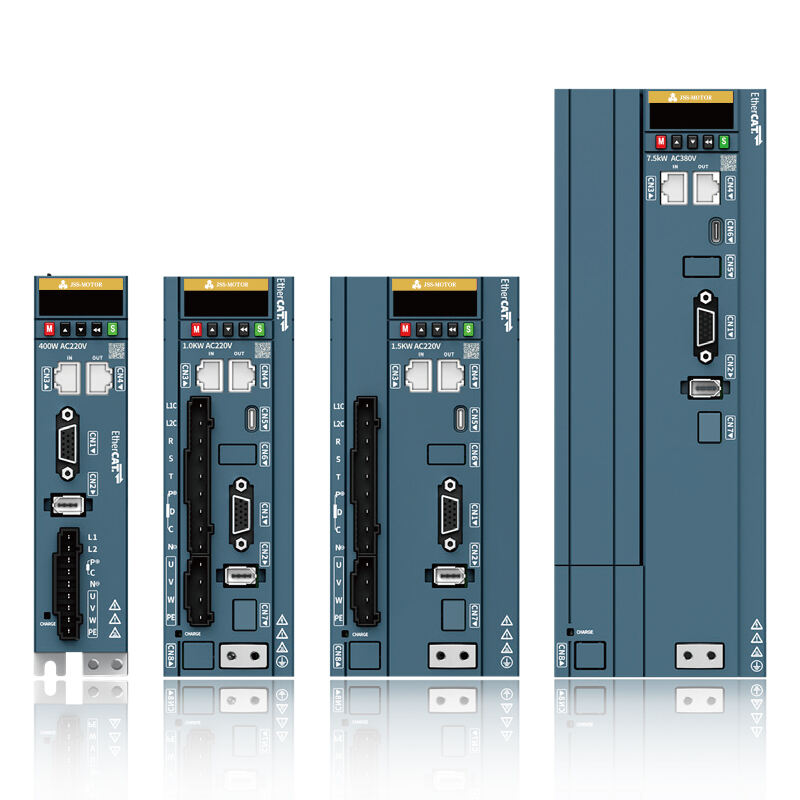
Industrial automation has revolutionized manufacturing processes across countless industries, with precision motion control serving as a cornerstone of modern production systems. At the heart of these sophisticated control mechanisms lies the servo drive, a critical component that bridges the gap between digital control signals and precise mechanical movement. These advanced systems have transformed how manufacturers approach positioning, speed control, and torque management in applications ranging from robotics to CNC machining. The integration of servo drive technology has enabled unprecedented levels of accuracy and repeatability, making it possible to achieve manufacturing tolerances that were once considered impossible.
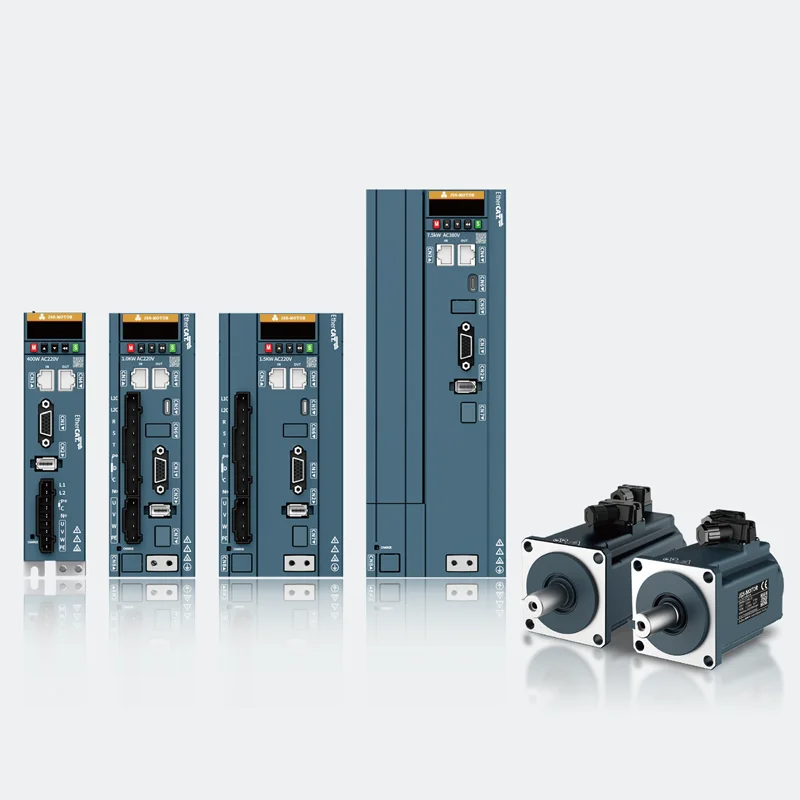
Understanding Servo Drive Technology Fundamentals
Core Operating Principles
The fundamental operation of a servo drive system relies on closed-loop feedback control, where the actual position or speed of a motor is continuously compared to the desired command signal. This comparison generates an error signal that the servo drive uses to adjust the motor's performance in real-time. The feedback mechanism typically employs encoders, resolvers, or other position sensing devices to provide accurate information about the motor's current state. This continuous monitoring and adjustment process ensures that the system maintains precise control even under varying load conditions or external disturbances.
Modern servo drives incorporate sophisticated control algorithms, including proportional-integral-derivative (PID) control, adaptive control strategies, and advanced filtering techniques. These algorithms process the feedback signals and generate appropriate output commands to the motor, ensuring optimal performance across a wide range of operating conditions. The digital signal processing capabilities of contemporary servo drives allow for real-time parameter adjustments and fine-tuning of control responses.
Key Components and Architecture
A complete servo drive system consists of several interconnected components working in harmony to deliver precise motion control. The servo amplifier serves as the power conversion unit, transforming low-level control signals into high-power drive signals capable of operating industrial servo motors. This amplification process involves sophisticated power electronics, including insulated-gate bipolar transistors (IGBTs) and advanced switching circuits that provide efficient power delivery while minimizing electromagnetic interference.
The control interface represents another crucial element, facilitating communication between the servo drive and higher-level control systems such as programmable logic controllers (PLCs) or motion controllers. Modern servo drives support various communication protocols, including EtherCAT, PROFINET, and CANopen, enabling seamless integration into existing automation architectures. The feedback system completes the control loop, providing real-time position, velocity, and sometimes torque information back to the drive controller.
Industrial Applications and Use Cases
Manufacturing and Assembly Systems
Manufacturing environments demand exceptional precision and reliability, making servo drives indispensable for numerous production applications. In assembly line operations, these systems control robotic arms that perform tasks such as component placement, welding, and quality inspection with sub-millimeter accuracy. The ability to program complex motion profiles allows manufacturers to optimize cycle times while maintaining consistent quality standards across high-volume production runs.
CNC machining represents another critical application where servo drive technology excels. Multi-axis machining centers rely on synchronized servo systems to coordinate the movement of cutting tools and workpieces, enabling the production of complex geometries with exceptional surface finish quality. The high-speed response capabilities of modern servo drives support rapid acceleration and deceleration cycles, reducing machining time while maintaining dimensional accuracy.
Packaging and Material Handling
The packaging industry has embraced servo drive technology to meet increasing demands for flexibility and efficiency in packaging operations. Variable speed control allows packaging machinery to handle different product sizes and packaging formats without mechanical adjustments, significantly reducing changeover times. Servo drives enable precise registration control in printing and labeling applications, ensuring consistent placement of graphics and text on packaging materials.
Conveyor systems equipped with servo drive technology provide enhanced control over product flow and positioning. These systems can implement complex motion profiles, including acceleration ramping and synchronized stopping, to prevent product damage during transport. The ability to coordinate multiple servo drives across interconnected conveyor sections enables sophisticated material handling strategies that optimize throughput while minimizing energy consumption.
Performance Benefits and Advantages
Precision and Accuracy Improvements
The exceptional precision achievable with servo drive systems stems from their closed-loop control architecture and high-resolution feedback devices. Modern servo drives can maintain positioning accuracy within micrometers, making them suitable for applications requiring extremely tight tolerances. This level of precision translates directly into improved product quality and reduced waste in manufacturing processes, where even small deviations from specified dimensions can result in costly rework or scrap.
Repeatability represents another significant advantage, as servo drive systems can return to the same position with remarkable consistency over millions of cycles. This characteristic is particularly valuable in automated assembly operations where consistent component placement is critical for product reliability. The combination of high precision and excellent repeatability enables manufacturers to achieve six-sigma quality levels in their production processes.
Energy Efficiency and Environmental Benefits
Modern servo drive technology incorporates advanced energy management features that significantly reduce power consumption compared to traditional motor control methods. Regenerative braking capabilities allow servo drives to recover energy during deceleration phases, feeding it back into the electrical supply system. This energy recovery can result in substantial power savings, particularly in applications involving frequent start-stop cycles or rapid direction changes.
Variable speed operation eliminates the energy waste associated with mechanical speed reduction methods such as gearboxes and clutches. By precisely matching motor speed to application requirements, servo drives minimize unnecessary energy consumption while providing superior performance characteristics. The reduced energy consumption translates into lower operating costs and decreased environmental impact, supporting corporate sustainability initiatives.
Selection Criteria and Implementation Considerations
Technical Specifications and Requirements
Selecting the appropriate servo drive for a specific application requires careful analysis of performance requirements and operating conditions. Key specifications include power rating, voltage compatibility, speed range, and torque characteristics. The power rating must accommodate both continuous and peak torque demands, including safety margins for unexpected load variations. Voltage compatibility ensures proper integration with existing electrical infrastructure while considering any special requirements such as isolated power supplies or specific grounding arrangements.
Environmental factors play a crucial role in servo drive selection, particularly in harsh industrial environments. Temperature ranges, humidity levels, and exposure to contaminants must be evaluated to ensure reliable long-term operation. Some applications may require specialized enclosures or cooling systems to maintain optimal operating conditions for the servo drive electronics.
Integration and Installation Best Practices
Proper installation and setup procedures are essential for achieving optimal servo drive performance and longevity. Cable routing and shielding requirements must be carefully observed to minimize electromagnetic interference and ensure reliable communication signals. Power and control cables should be separated and properly shielded to prevent noise coupling that could affect system performance or cause erratic behavior.
Commissioning procedures involve parameter tuning and system optimization to match the servo drive characteristics to the specific application requirements. This process typically includes setting acceleration and deceleration limits, adjusting control loop gains, and configuring protection parameters. Proper commissioning ensures that the servo drive operates within safe limits while delivering the required performance characteristics for the intended application.
Future Trends and Technology Developments
Advanced Control Algorithms and AI Integration
The evolution of servo drive technology continues to incorporate increasingly sophisticated control algorithms and artificial intelligence capabilities. Machine learning algorithms can analyze system performance data to automatically optimize control parameters and predict maintenance requirements. These advanced capabilities enable servo drives to adapt to changing operating conditions and provide predictive maintenance alerts that minimize unexpected downtime.
Neural network-based control strategies are being developed to handle complex, non-linear system dynamics that traditional control methods struggle to manage effectively. These intelligent control systems can learn from operational experience and continuously improve their performance over time, potentially achieving better results than manually tuned systems.
Connectivity and Industry 4.0 Integration
The integration of servo drives into Industry 4.0 frameworks emphasizes enhanced connectivity and data exchange capabilities. Advanced communication protocols enable real-time monitoring of servo drive performance parameters, allowing for comprehensive system diagnostics and optimization. Cloud-based analytics platforms can process this data to identify trends and patterns that support continuous improvement initiatives.
Remote monitoring and control capabilities allow maintenance personnel to access servo drive systems from anywhere in the world, facilitating rapid response to system issues and reducing downtime. These connectivity features also enable centralized control of multiple servo drive systems across different production facilities, supporting coordinated manufacturing strategies and resource optimization.
FAQ
What are the main differences between servo drives and variable frequency drives
Servo drives provide closed-loop precision control with position feedback, enabling exact positioning and speed control with high accuracy. Variable frequency drives (VFDs) primarily control motor speed through frequency variation but typically lack the precision feedback mechanisms found in servo systems. Servo drives excel in applications requiring precise positioning, while VFDs are better suited for applications where speed control is the primary requirement without the need for exact positioning.
How do I determine the correct servo drive size for my application
Proper servo drive sizing requires analysis of several factors including continuous torque requirements, peak torque demands, speed range, and duty cycle characteristics. Calculate the total system inertia, including the motor and connected load, then determine acceleration and deceleration torque requirements based on desired motion profiles. Add safety margins of typically 20-30% to account for variations in operating conditions and ensure reliable performance throughout the system's operational life.
What maintenance is required for servo drive systems
Regular maintenance includes periodic inspection of electrical connections, cleaning of cooling fans and heat sinks, and monitoring of system performance parameters. Check encoder cables and connections for wear or damage, as feedback signal integrity is critical for proper operation. Monitor system temperatures and vibration levels, and maintain logs of operational parameters to identify trends that might indicate developing problems. Most modern servo drives include diagnostic capabilities that can alert operators to potential issues before they cause system failures.
Can servo drives operate in harsh industrial environments
Yes, many servo drives are specifically designed for harsh industrial environments with features such as conformal coating on circuit boards, sealed enclosures with appropriate IP ratings, and extended temperature operating ranges. However, proper selection based on environmental conditions is crucial, including consideration of factors such as ambient temperature, humidity, dust levels, and exposure to chemicals or corrosive substances. Additional protection measures such as environmental enclosures or cooling systems may be necessary for extreme conditions.