
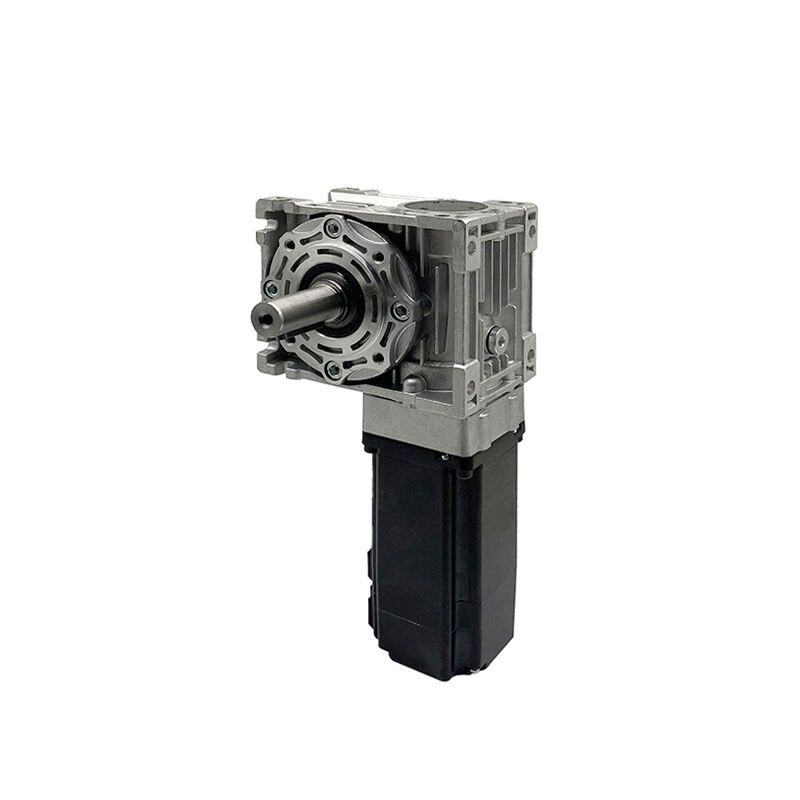
Modern industrial applications increasingly demand precise motion control, efficiency, and reliability from their drive systems. The choice between a brushless DC motor and a traditional brushed motor can significantly impact performance, maintenance costs, and operational longevity. Understanding the fundamental differences between these motor technologies helps engineers and procurement professionals make informed decisions for their specific applications. Both motor types serve critical roles in automation, robotics, and various industrial processes, yet their underlying design principles create distinct advantages and limitations that must be carefully evaluated.
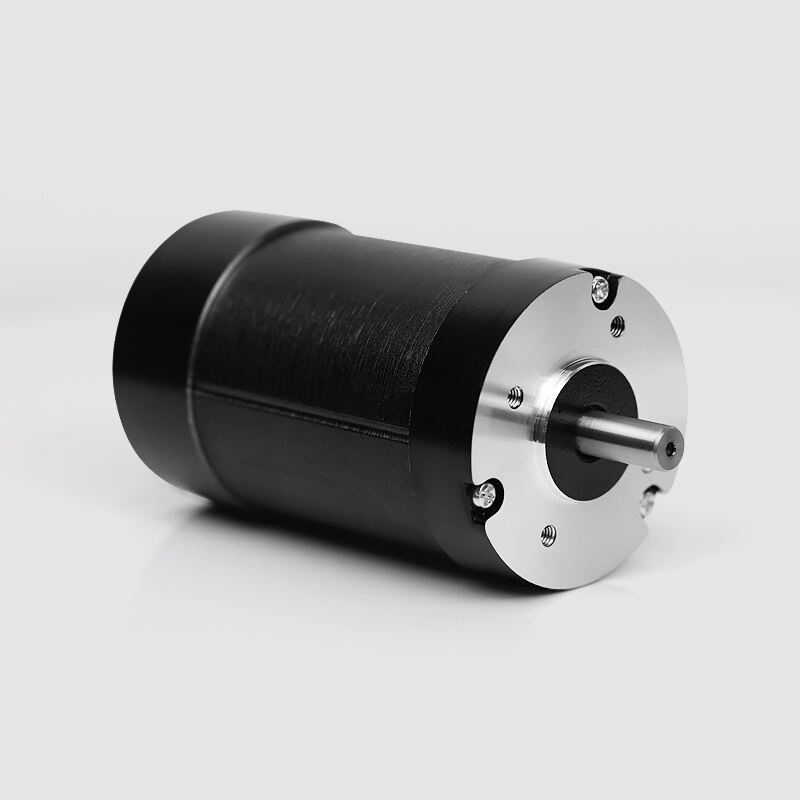
Fundamental Design Architecture
Construction Elements and Components
The primary distinction between brushless DC motors and brushed motors lies in their commutation mechanisms. Brushed motors utilize physical carbon brushes that maintain contact with a rotating commutator, creating the necessary switching of current direction in the rotor windings. This mechanical switching system has been the foundation of DC motor operation for over a century. The stator contains permanent magnets or electromagnets, while the rotor features windings connected to commutator segments. As the rotor turns, the brushes slide across different commutator segments, ensuring continuous torque production through proper current timing.
In contrast, brushless dc motor systems eliminate physical contact components entirely. The rotor typically contains permanent magnets, while the stator houses multiple windings that receive electronically controlled current switching. Electronic speed controllers or motor drives manage the precise timing of current flow to each stator winding based on rotor position feedback from sensors such as Hall effect devices or encoders. This electronic commutation system requires more sophisticated control electronics but eliminates the wear points associated with mechanical brushing systems.
Operational Principles and Control Methods
Brushed motor control remains relatively straightforward, requiring only voltage regulation to adjust speed and current direction changes for rotation reversal. The self-commutating nature of brushed designs means that once power is applied, the motor naturally maintains rotation without additional control complexity. Speed regulation typically involves pulse width modulation or linear voltage control, making these motors suitable for applications where simple control interfaces are preferred. The mechanical commutation automatically maintains proper timing between rotor position and current flow.
Brushless systems demand more sophisticated control algorithms but offer superior precision and efficiency in return. Electronic commutation requires real-time rotor position information to properly time current switching in the stator windings. Modern brushless dc motor controllers utilize advanced algorithms such as six-step commutation, sinusoidal control, or field-oriented control to optimize performance characteristics. These control methods enable precise speed regulation, torque control, and even sensorless operation in certain applications where external position feedback may be impractical or cost-prohibitive.
Performance Characteristics and Efficiency
Speed Range and Torque Capabilities
Speed range capabilities differ significantly between motor technologies due to their inherent design limitations and advantages. Brushed motors typically operate effectively across moderate speed ranges, with performance limitations arising from brush friction, commutator wear, and heat generation at higher speeds. The mechanical contact between brushes and commutator creates increasing losses as rotational velocity rises, leading to reduced efficiency and accelerated component wear. Maximum speeds are often constrained by brush bounce phenomena and commutator surface integrity at elevated rotational frequencies.
Brushless dc motor designs excel in both low-speed precision and high-speed applications due to the absence of mechanical friction components. Electronic commutation enables operation from zero speed with full torque capability up to very high rotational velocities limited primarily by bearing systems and rotor balance rather than electrical constraints. The smooth electronic switching provides consistent torque output across the entire speed range, making these motors ideal for applications requiring wide speed variation or precise low-speed control. Dynamic response characteristics also benefit from the elimination of brush friction and the ability to rapidly switch current timing.
Efficiency and Energy Consumption
Energy efficiency represents one of the most significant differentiators between motor technologies. Brushed motors experience continuous power losses through brush resistance, friction heating, and voltage drops across the mechanical commutation interface. These losses increase with motor loading and speed, resulting in efficiency ratings typically ranging from 75% to 85% in most industrial applications. The constant physical contact generates heat that must be dissipated, further reducing overall system efficiency and requiring additional cooling considerations in enclosed installations.
Modern brushless dc motor systems achieve efficiency ratings exceeding 90% and often reaching 95% or higher in optimized designs. The elimination of brush losses, combined with precise electronic control of current timing, minimizes energy waste and heat generation. Variable frequency drives can optimize current waveforms to match load requirements, further enhancing efficiency across different operating conditions. This superior efficiency translates directly into reduced operating costs, smaller cooling requirements, and improved battery life in portable applications where energy conservation is critical.
Maintenance Requirements and Service Life
Scheduled Maintenance and Component Replacement
Maintenance schedules for brushed motors center primarily around brush and commutator service intervals. Carbon brushes gradually wear during operation, requiring periodic replacement based on running hours, duty cycles, and environmental conditions. Typical brush life ranges from 1,000 to 5,000 hours depending on application severity, with some specialized brushes extending service intervals in favorable conditions. Commutator surfaces also require periodic cleaning, resurfacing, or replacement as brush wear creates grooves and deposits that can affect performance and reliability.
Regular maintenance procedures include brush inspection, spring tension verification, commutator surface evaluation, and bearing lubrication according to manufacturer specifications. Dust accumulation from brush wear requires periodic cleaning to prevent insulation breakdown and ensure proper heat dissipation. These maintenance requirements necessitate scheduled downtime and skilled technician involvement, contributing to total cost of ownership considerations that must be factored into equipment selection decisions.
Brushless dc motor maintenance requirements are minimal due to the absence of wearing contact components. Primary maintenance focuses on bearing lubrication, electronic controller inspections, and environmental protection system checks. The elimination of brush wear debris significantly reduces cleaning requirements and extends service intervals. Most brushless systems require only bearing maintenance and occasional sensor cleaning or recalibration, resulting in maintenance schedules measured in years rather than months or hundreds of hours typical of brushed alternatives.
Environmental Resistance and Durability
Environmental factors significantly impact motor longevity and reliability across different technologies. Brushed motors face challenges in dusty, humid, or corrosive environments where contaminants can interfere with brush-commutator contact or accelerate wear rates. Brush arcing during normal operation can ignite explosive atmospheres, limiting brushed motor applications in hazardous locations without specialized explosion-proof enclosures. Humidity and chemical exposure can corrode commutator surfaces and degrade brush materials, requiring enhanced environmental protection measures.
The sealed construction possible with brushless dc motor designs provides superior environmental resistance and safety characteristics. Without internal arcing components, these motors can operate safely in potentially explosive atmospheres with appropriate certifications. Solid-state electronic controllers can be environmentally sealed and located remotely from the motor if necessary, providing flexibility in harsh installation environments. The absence of ventilation requirements for brush cooling also enables completely sealed motor constructions that resist moisture, dust, and chemical contamination more effectively than brushed alternatives.
Cost Considerations and Economic Analysis
Initial Investment and System Complexity
Initial acquisition costs typically favor brushed motor systems due to their simpler construction and control requirements. Basic brushed motors require minimal external components beyond power switching devices, making them attractive for cost-sensitive applications with straightforward performance requirements. The manufacturing processes for brushed motors are well-established and can leverage existing production tooling and techniques, contributing to lower per-unit costs in many size ranges and power levels.
Brushless dc motor systems require higher initial investments due to the sophisticated electronic controllers, position sensors, and advanced manufacturing processes involved in permanent magnet rotor construction. However, the cost differential has decreased significantly as production volumes have increased and electronic component costs have fallen. System-level considerations often reveal that the higher initial investment can be justified through reduced maintenance costs, improved efficiency, and enhanced reliability over the equipment lifecycle.
Total Cost of Ownership Evaluation
Long-term economic analysis reveals different cost profiles between motor technologies. Brushed motor systems incur ongoing expenses for brush replacement, maintenance labor, scheduled downtime, and potential productivity losses due to unexpected failures. Energy consumption costs also accumulate over time due to lower efficiency characteristics, particularly in applications with extended operating hours or high duty cycles. These recurring costs can exceed the initial motor investment multiple times over typical equipment lifecycles.
Brushless dc motor economics benefit from minimal maintenance requirements, superior energy efficiency, and extended service life. While initial costs are higher, the absence of regular component replacement and reduced energy consumption often result in lower total ownership costs within the first few years of operation. Additional benefits include reduced spare parts inventory, simplified maintenance training requirements, and improved system availability due to enhanced reliability characteristics that contribute to overall economic advantages.
Application Suitability and Selection Criteria
Industrial and Commercial Applications
Application requirements significantly influence motor selection decisions beyond simple technical specifications. Brushed motors remain suitable for applications with limited budgets, simple control requirements, and moderate performance expectations. Examples include basic conveyor systems, simple positioning applications, and equipment where maintenance access is readily available and downtime costs are minimal. The simplicity of brushed motor control makes them appropriate for retrofit applications or situations where existing control systems cannot accommodate advanced motor drive requirements.
High-performance applications increasingly favor brushless dc motor solutions where precision, reliability, and efficiency are paramount. Robotics, CNC machinery, medical equipment, and aerospace applications benefit from the superior control characteristics and reliability offered by electronic commutation. Applications requiring variable speed operation, precise positioning, or operation in challenging environments typically justify the additional investment in brushless technology through improved performance and reduced operating costs.
Emerging Technology Integration
Modern industrial automation trends favor technologies that integrate well with digital control systems and Industry 4.0 initiatives. Brushless dc motor systems naturally align with these requirements through their electronic control interfaces and ability to provide detailed operational feedback. Integration with programmable logic controllers, industrial networks, and predictive maintenance systems is straightforward with appropriate motor drive selection and configuration.
The future trajectory of motor technology development strongly favors brushless solutions as semiconductor costs continue declining and system integration requirements become more sophisticated. Advanced control algorithms, integrated sensors, and communication capabilities are becoming standard features that enhance the value proposition of brushless dc motor systems across an expanding range of applications previously dominated by simpler motor technologies.
FAQ
What is the main advantage of a brushless DC motor over a brushed motor
The primary advantage of a brushless DC motor is the elimination of physical brush contact, which results in significantly reduced maintenance requirements, longer service life, and higher efficiency. Without brushes wearing against a commutator, these motors can operate for thousands of hours without requiring component replacement or regular maintenance beyond bearing lubrication. Additionally, the electronic commutation system provides precise control over motor timing, enabling superior speed regulation and torque characteristics across a wider operating range.
How much more efficient are brushless DC motors compared to brushed motors
Brushless DC motors typically achieve 90-95% efficiency compared to 75-85% efficiency for brushed motors. This 10-15% efficiency improvement translates directly into reduced energy consumption and lower operating costs, particularly in applications with extended operating hours. The efficiency advantage becomes more pronounced under varying load conditions, where electronic control can optimize current waveforms to match demand, while brushed motors maintain relatively constant losses regardless of load requirements.
Are brushless DC motors worth the higher initial cost
The higher initial investment in brushless DC motors is typically justified within 2-3 years through reduced maintenance costs, lower energy consumption, and improved reliability. Applications with high duty cycles, difficult maintenance access, or critical uptime requirements often see return on investment in less than one year. The total cost of ownership analysis should include energy savings, maintenance labor reduction, spare parts inventory, and productivity improvements from enhanced reliability when evaluating the economic justification.
Can I replace a brushed motor with a brushless DC motor in existing equipment
Replacing a brushed motor with a brushless DC motor requires upgrading the motor drive system to provide electronic commutation and position feedback capabilities. While the mechanical mounting may be compatible, the electrical interface will require a modern motor controller capable of managing electronic switching. The investment in both the motor and control system often provides significant performance improvements and long-term cost savings that justify the upgrade in many industrial applications.