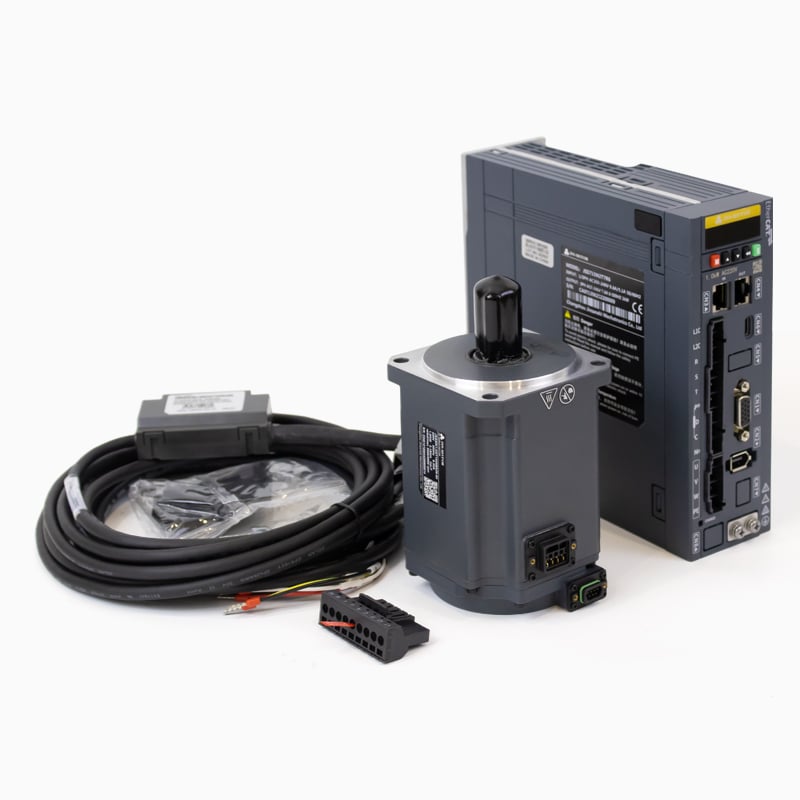
In modern industrial automation, the demand for faster, more precise, and more reliable machine performance has never been higher. At the heart of this performance leap are servo motors and drives, which work together as a tightly integrated system to deliver the kind of dynamic responsiveness that conventional motor technologies simply cannot match. Whether the application involves high-speed pick-and-place robotics, precision CNC machining, or multi-axis coordinated motion, the ability of a system to react quickly and accurately to changing commands is what separates competitive machinery from outdated equipment.
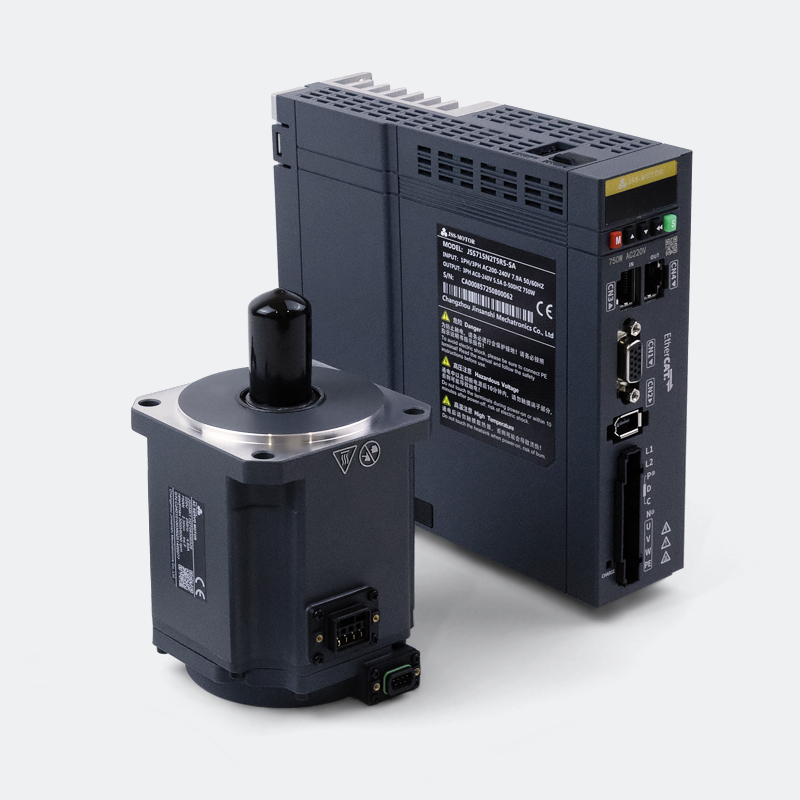
Understanding how servo motors and drives improve system responsiveness requires looking beyond simple speed ratings. Responsiveness is a multi-dimensional quality that encompasses how quickly a system detects a change in command, how accurately it executes that change, how well it suppresses disturbances, and how consistently it maintains target performance over time. Servo motors and drives address every one of these dimensions through a combination of hardware design, feedback architecture, and intelligent drive control algorithms. This article breaks down the mechanisms behind that responsiveness and explains why it matters for real-world industrial applications.
The Closed-Loop Architecture That Makes Responsiveness Possible
How Feedback Transforms Motor Behavior
The foundational reason servo motors and drives outperform open-loop systems in responsiveness is the closed-loop feedback architecture. In an open-loop system, the controller sends a command and assumes the motor executed it correctly. There is no verification, no correction, and no awareness of disturbances. In contrast, servo motors and drives continuously monitor actual motor position, velocity, and in some configurations torque, then compare that real-time data against the commanded target.
This comparison happens at extremely high sampling rates, often thousands of times per second. When a deviation is detected between the commanded state and the actual state, the drive immediately calculates a corrective output and adjusts the current delivered to the motor. The result is a system that does not just react to commands but actively hunts for and eliminates errors in real time. This continuous correction loop is what gives servo motors and drives their characteristic precision and speed of response.
The quality of the feedback device plays a critical role here. High-resolution encoders, such as 17-bit absolute encoders, provide far more positional data per revolution than lower-resolution alternatives. More data means finer error detection, which translates directly into tighter control and faster correction cycles. When the drive can see smaller deviations sooner, it can act before those deviations grow into noticeable errors.
The Role of the Servo Drive in Processing Speed
The servo drive is not simply a power amplifier. It is an intelligent controller that executes the feedback loop, manages current regulation, and interprets high-level motion commands from a PLC or motion controller. The processing speed of the drive's internal control loops directly determines how quickly the system can respond to both command changes and external disturbances.
Modern servo motors and drives typically operate with current control loops running at frequencies of 10 kHz or higher, velocity loops at several kilohertz, and position loops at hundreds of hertz. This hierarchical loop structure ensures that the most time-critical corrections, those involving current and torque, happen at the fastest possible rate, while higher-level position corrections build on that stable foundation.
When a machine tool encounters unexpected cutting resistance or a robotic arm experiences a sudden load change, the drive's fast current loop responds within microseconds to maintain torque output. This rapid torque response is what prevents the motor from stalling, overshooting, or losing synchronization with the commanded trajectory. It is a core mechanism through which servo motors and drives deliver superior system responsiveness.
Dynamic Performance Characteristics That Define Responsiveness
Acceleration and Deceleration Capability
One of the most visible ways servo motors and drives improve system responsiveness is through their exceptional acceleration and deceleration capability. High responsiveness in motion systems is not just about top speed. It is about how quickly the system can reach that speed from rest and how quickly it can stop or reverse direction. This is quantified as acceleration rate, typically expressed in radians per second squared or as a multiple of gravitational acceleration.
Servo motors are designed with low rotor inertia relative to their torque output. A low inertia-to-torque ratio means the motor can accelerate its own rotor very quickly before the load inertia becomes the limiting factor. When the drive delivers a sharp torque command, the motor responds almost instantaneously, producing the rapid velocity changes that high-speed automation demands. This is why servo motors and drives are the preferred choice for applications with short move distances and high cycle rates.
The drive contributes to this by managing the current profile during acceleration. Rather than simply applying maximum current and hoping for the best, the drive shapes the torque output to match the mechanical system's capabilities, preventing resonance excitation while still achieving the fastest possible acceleration. This balance between speed and stability is a hallmark of well-tuned servo motors and drives.
Bandwidth and Following Error
System bandwidth is a technical measure of how quickly a control system can respond to changing inputs without significant lag or distortion. For servo motors and drives, higher bandwidth means the system can follow faster command profiles with less following error. Following error is the instantaneous difference between the commanded position and the actual position during motion, and minimizing it is essential for applications like synchronized multi-axis machining or electronic gearing.
Servo motors and drives achieve high bandwidth through a combination of fast feedback processing, optimized control loop tuning, and low mechanical compliance in the drivetrain. When the drive's position loop bandwidth is high, the motor tracks the commanded trajectory closely even during rapid direction changes or velocity transitions. This tight tracking is what allows CNC machines to produce smooth contoured surfaces at high feed rates without dimensional errors.
Drive manufacturers invest heavily in control algorithms such as feedforward compensation, which predicts the required torque based on the commanded acceleration profile rather than waiting for an error to develop. By anticipating the needed output, feedforward control effectively reduces following error to near zero during predictable motion profiles, further enhancing the responsiveness that servo motors and drives deliver.
Communication Protocols and Their Impact on System Responsiveness
Real-Time Fieldbus Technologies
The responsiveness of servo motors and drives is not determined solely by the motor and drive hardware. The communication link between the motion controller and the drive is equally important. Traditional analog command interfaces introduced latency and noise that limited how quickly the controller could update the drive's target. Modern digital fieldbus protocols have largely eliminated these limitations.
Protocols such as EtherCAT have become the standard for high-performance motion control because they offer deterministic, low-latency communication with cycle times as short as 125 microseconds. When a motion controller sends updated position or velocity commands to servo motors and drives over EtherCAT, those commands arrive at the drive with microsecond-level precision and without the jitter that plagued older communication methods. This determinism is essential for coordinating multiple axes in synchronized motion applications.
The practical effect on system responsiveness is significant. With fast, deterministic communication, the motion controller can update drive commands at rates that match the drive's own control loop frequencies. This tight synchronization means the entire system, from the PLC command down to the motor shaft, operates as a cohesive unit rather than a chain of loosely coupled components. Servo motors and drives equipped with EtherCAT or similar real-time protocols are therefore capable of system-level responsiveness that older architectures cannot replicate.
Encoder Feedback Resolution and Data Latency
The resolution and update rate of the encoder feedback signal directly affect how quickly servo motors and drives can detect and correct positional errors. A 17-bit absolute encoder, for example, provides 131,072 unique positions per revolution. This fine resolution means the drive receives highly granular position data, enabling it to detect very small deviations from the commanded trajectory and initiate corrections before those deviations accumulate.
Absolute encoders offer an additional responsiveness advantage over incremental encoders in that they retain position information even after a power cycle. This eliminates the need for homing routines at startup, reducing machine downtime and allowing servo motors and drives to resume operation immediately after a power interruption. In production environments where uptime is critical, this capability contributes meaningfully to overall system responsiveness.
The latency of the encoder data path, meaning the time between a physical position change and the drive receiving updated feedback, also matters. Low-latency encoder interfaces ensure that the drive's control loop is always working with the most current position data available. When encoder data latency is minimized, the effective bandwidth of the servo loop increases, and servo motors and drives can respond to disturbances and command changes more quickly.
Application Scenarios Where Responsiveness Delivers Measurable Value
High-Speed Packaging and Assembly
In packaging machinery, servo motors and drives enable the rapid, precise motion profiles that high-throughput production demands. A packaging line might require a servo axis to accelerate, position, dwell, and return hundreds of times per minute. Each cycle must be completed within a tight time window, and any lag in responsiveness directly reduces throughput or causes product misalignment.
The fast acceleration capability and high bandwidth of servo motors and drives allow packaging machines to execute these short, rapid moves with consistent accuracy. The drive's ability to quickly adapt to load variations, such as changes in product weight or friction, ensures that cycle times remain stable even as operating conditions fluctuate. This consistency is what allows packaging lines to run at rated speed without frequent adjustments or stoppages.
Electronic cam and gearing functions, implemented through the drive's motion control software, allow servo motors and drives to synchronize multiple axes dynamically without mechanical linkages. This software-defined synchronization is inherently more responsive than mechanical coupling because it can be adjusted in real time to compensate for phase errors or speed variations in the master axis.
Robotics and Multi-Axis Coordinated Motion
Robotic applications place some of the most demanding responsiveness requirements on servo motors and drives. A six-axis industrial robot must coordinate the motion of all six joints simultaneously to move the end effector along a smooth, precise path. Any lag or error in one axis propagates through the kinematic chain and degrades path accuracy. The responsiveness of each axis's servo motors and drives therefore directly determines the robot's overall path performance.
Collision avoidance and force control in collaborative robots add another layer of responsiveness requirements. When a collaborative robot detects unexpected contact, it must stop or redirect within milliseconds to ensure operator safety. This requires servo motors and drives with extremely fast torque response and a communication architecture that can transmit safety-critical commands without delay. The combination of high-bandwidth drives, fast fieldbus communication, and high-resolution feedback makes this level of responsiveness achievable.
In multi-axis gantry systems used for laser cutting or additive manufacturing, the coordinated responsiveness of servo motors and drives determines the quality of the finished part. When the X and Y axes must follow a complex contour at high speed, any mismatch in their dynamic response produces geometric errors in the output. Matched servo motors and drives with consistent bandwidth characteristics are therefore specified to ensure that all axes respond identically to the same command inputs.
Tuning and Configuration for Optimal Responsiveness
Gain Tuning and Its Effect on Response Speed
The responsiveness of servo motors and drives is not fixed at the hardware level. It is significantly influenced by how the drive's control loops are tuned. Proportional, integral, and derivative gains in the position and velocity loops determine how aggressively the drive responds to errors. Higher proportional gains increase responsiveness but can introduce oscillation if set too high relative to the mechanical system's stiffness and inertia.
Proper gain tuning requires understanding the mechanical load connected to the servo motors and drives. The ratio of load inertia to motor inertia is a key parameter. When this ratio is high, the drive must be tuned more conservatively to avoid exciting mechanical resonances, which limits achievable bandwidth. When the ratio is low, higher gains are stable and the system can be tuned for maximum responsiveness. Selecting servo motors and drives with appropriate torque and inertia ratings for the application is therefore a prerequisite for achieving optimal tuning.
Many modern servo drives include auto-tuning functions that measure the mechanical system's frequency response and automatically calculate optimal gain settings. These functions reduce commissioning time and help engineers achieve near-optimal responsiveness without extensive manual iteration. Notch filters can be applied to suppress specific resonant frequencies, allowing higher overall gains and better responsiveness without sacrificing stability.
Feedforward and Predictive Control Strategies
Beyond feedback gain tuning, advanced control strategies implemented in the drive's firmware can substantially improve the responsiveness of servo motors and drives. Velocity feedforward adds a component to the drive output that is proportional to the commanded velocity, effectively pre-loading the motor to overcome friction and inertia before the feedback loop detects an error. This reduces following error during constant-velocity motion segments without requiring higher feedback gains.
Acceleration feedforward extends this concept by adding a torque component proportional to the commanded acceleration. During rapid acceleration phases, the drive anticipates the required torque and delivers it proactively, rather than waiting for a position error to develop and then reacting. The result is dramatically reduced following error during dynamic motion profiles, which is one of the most direct ways servo motors and drives improve system responsiveness in practice.
Model-based predictive control, available in some advanced servo drives, takes this further by using a mathematical model of the mechanical system to predict future states and optimize the control output accordingly. While more complex to implement, these strategies push the responsiveness of servo motors and drives to levels that are difficult to achieve with conventional PID-based approaches alone.
FAQ
What is the main difference between servo motors and drives and standard AC induction motors in terms of responsiveness?
Standard AC induction motors operate in open-loop mode without continuous position or velocity feedback, which means they cannot self-correct for errors or disturbances. Servo motors and drives use closed-loop feedback with high-resolution encoders and fast control loops to continuously monitor and correct motor behavior. This architecture gives servo motors and drives response times and accuracy levels that open-loop induction motors fundamentally cannot achieve, making them the appropriate choice for any application where precise, dynamic motion control is required.
How does encoder resolution affect the responsiveness of servo motors and drives?
Higher encoder resolution provides the drive with finer positional data, allowing it to detect smaller deviations from the commanded trajectory sooner. When errors are detected earlier and with greater precision, the drive can initiate corrections before those errors grow, resulting in tighter position control and faster disturbance rejection. A 17-bit absolute encoder, for example, provides over 130,000 counts per revolution, giving servo motors and drives the granular feedback needed for high-bandwidth control in demanding applications.
Why does fieldbus communication protocol matter for the responsiveness of servo motors and drives?
The fieldbus protocol determines how quickly and reliably the motion controller can update the drive's command targets. Protocols like EtherCAT offer cycle times as short as 125 microseconds with deterministic timing, meaning commands arrive at the drive at precise, predictable intervals without jitter. This allows the motion controller and servo motors and drives to operate in tight synchronization, which is essential for multi-axis coordinated motion and for achieving the full responsiveness that the drive hardware is capable of delivering.
Can servo motors and drives maintain responsiveness under varying load conditions?
Yes. The closed-loop architecture of servo motors and drives is specifically designed to maintain consistent performance under varying loads. When the load changes, the feedback loop detects the resulting velocity or position deviation and adjusts the drive output to compensate. Features like load inertia estimation and adaptive gain tuning in modern drives allow servo motors and drives to automatically adjust their control parameters as load conditions change, preserving responsiveness across a wide range of operating scenarios without requiring manual retuning.
Table of Contents
- The Closed-Loop Architecture That Makes Responsiveness Possible
- Dynamic Performance Characteristics That Define Responsiveness
- Communication Protocols and Their Impact on System Responsiveness
- Application Scenarios Where Responsiveness Delivers Measurable Value
- Tuning and Configuration for Optimal Responsiveness
-
FAQ
- What is the main difference between servo motors and drives and standard AC induction motors in terms of responsiveness?
- How does encoder resolution affect the responsiveness of servo motors and drives?
- Why does fieldbus communication protocol matter for the responsiveness of servo motors and drives?
- Can servo motors and drives maintain responsiveness under varying load conditions?