

Precision positioning in industrial automation demands more than just powerful motors—it requires sophisticated control systems that can deliver repeatable accuracy within micrometers. An ac servo motor achieves this exceptional positioning accuracy through an integrated control loop system that continuously monitors position, velocity, and torque parameters. This closed-loop feedback mechanism enables the motor to make real-time adjustments, ensuring that the actual position matches the commanded position with remarkable precision.
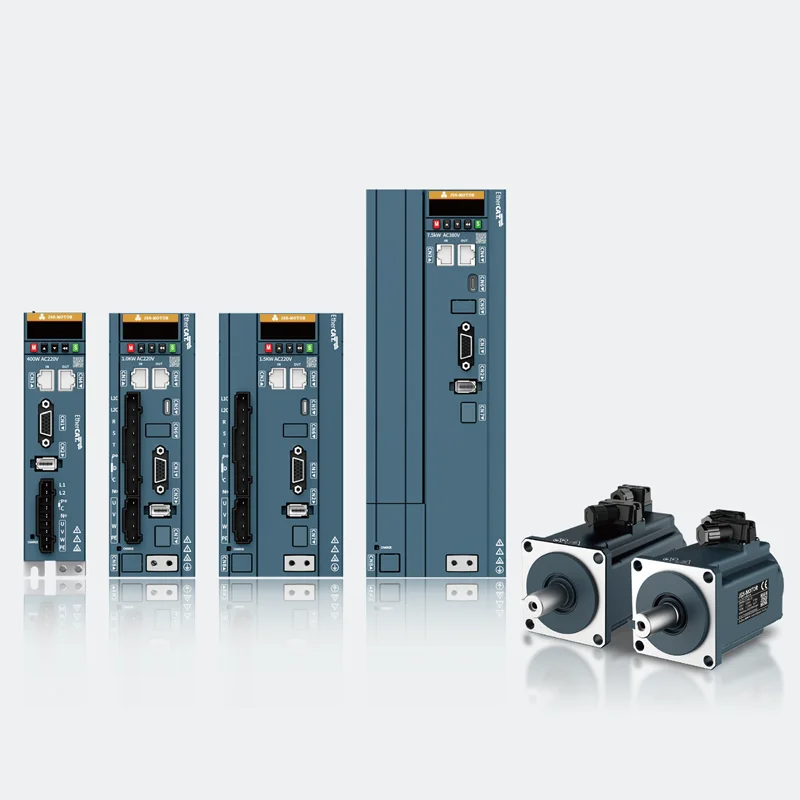
The control architecture of an ac servo motor incorporates multiple feedback sensors, digital signal processors, and advanced algorithms that work together to eliminate positioning errors. Unlike open-loop stepper motors that can lose steps under load, an ac servo motor constantly verifies its position and automatically corrects any deviations. This fundamental difference in control methodology explains why servo systems are preferred in applications where positioning accuracy directly impacts product quality and manufacturing efficiency.
Closed-Loop Feedback Control Architecture
Position Feedback Systems
The foundation of ac servo motor positioning accuracy lies in its sophisticated position feedback system. High-resolution encoders, typically optical or magnetic types, provide precise position data to the servo drive controller. These encoders can achieve resolutions of several thousand counts per revolution, translating to positioning accuracies of fractions of a degree. The encoder continuously transmits position information to the controller, creating a real-time position reference that forms the basis of the control loop.
Modern ac servo motor systems often employ absolute encoders that retain position information even during power loss, eliminating the need for homing sequences after startup. This capability ensures consistent positioning accuracy from the moment the system becomes operational. The encoder feedback signal is processed by high-speed digital signal processors that can detect and respond to position errors within microseconds, maintaining tight control over motor positioning throughout the entire operating range.
Velocity and Acceleration Control
Beyond position feedback, ac servo motor control systems incorporate velocity feedback to optimize motion profiles and enhance positioning accuracy. The velocity control loop operates at a higher frequency than the position loop, typically updating several times faster to provide smooth acceleration and deceleration curves. This multi-loop control structure prevents overshooting and reduces settling time, critical factors in achieving precise final positioning.
The acceleration control component of the ac servo motor system manages the rate of velocity change to minimize mechanical stress and vibration. By controlling acceleration profiles, the system can approach target positions more smoothly while reducing the likelihood of position overshoot. This controlled approach to motion ensures that the final positioning accuracy is not compromised by dynamic effects during the motion sequence.
Digital Signal Processing and Control Algorithms
PID Control Implementation
The core control algorithm in most ac servo motor systems is the Proportional-Integral-Derivative (PID) controller, which processes position error signals and generates appropriate motor commands. The proportional component provides immediate response to position errors, while the integral component eliminates steady-state positioning errors over time. The derivative component anticipates future errors based on the rate of change, providing predictive control that enhances system stability and reduces overshoot.
Advanced ac servo motor controllers employ adaptive PID algorithms that automatically adjust control parameters based on operating conditions. These self-tuning capabilities ensure optimal positioning performance across different load conditions, speeds, and environmental factors. The digital implementation of PID control allows for precise parameter adjustment and sophisticated filtering techniques that further improve positioning accuracy and system response.
Feed-Forward Control Compensation
Modern ac servo motor control systems incorporate feed-forward compensation to improve tracking accuracy during dynamic motion. Feed-forward control anticipates the required motor torque based on the commanded motion profile, reducing the burden on the feedback control loop. This predictive approach significantly improves following accuracy during complex motion sequences, ensuring that positioning errors remain minimal even during high-speed operations.
The feed-forward compensation in an ac servo motor system includes velocity and acceleration feed-forward terms that pre-compensate for known system dynamics. This approach reduces tracking errors and improves overall positioning accuracy by providing the correct motor commands before position errors develop. The result is smoother motion and more precise final positioning, particularly important in high-precision manufacturing applications.
Motor Design Features Supporting Precision Control
Low Inertia and High Torque Density
The mechanical design of an ac servo motor directly impacts its ability to achieve precise positioning. Low rotor inertia allows for rapid acceleration and deceleration, enabling quick response to position commands without overshooting the target. High torque density ensures sufficient force generation across the entire speed range, maintaining positioning accuracy even under varying load conditions. These design characteristics work together to create a motor that can respond quickly and accurately to control commands.
The electromagnetic design of ac servo motor systems optimizes magnetic flux distribution and minimizes cogging torque, which can cause positioning irregularities. Smooth torque production across all rotor positions ensures consistent positioning accuracy without the periodic variations that can affect final position repeatability. Advanced magnet configurations and stator winding designs contribute to the uniform torque characteristics essential for precision positioning applications.
Temperature Stability and Compensation
Temperature variations can affect ac servo motor positioning accuracy through thermal expansion of mechanical components and changes in magnetic properties. Modern servo systems incorporate temperature sensors and compensation algorithms that adjust control parameters based on operating temperature. This thermal compensation ensures that positioning accuracy remains consistent across the full operating temperature range of the motor.
The thermal design of ac servo motor systems includes efficient heat dissipation features and thermal monitoring to maintain stable operating conditions. Consistent temperature control prevents thermal drift in positioning accuracy and extends the operational life of precision components. Temperature compensation algorithms in the servo drive automatically adjust encoder scaling factors and control parameters to maintain positioning accuracy despite thermal effects.
System Integration and Calibration Factors
Mechanical Coupling and Backlash Elimination
The mechanical interface between an ac servo motor and the driven load significantly impacts overall positioning accuracy. High-quality couplings that minimize backlash and torsional compliance are essential for translating the motor's precise rotation into accurate load positioning. Rigid mechanical connections ensure that the position feedback from the motor encoder accurately represents the actual load position.
Advanced ac servo motor applications often employ direct-drive configurations that eliminate intermediate mechanical components like gearboxes and belts. This direct connection approach maximizes positioning accuracy by removing potential sources of backlash and mechanical compliance. When reduction gearing is necessary, precision gear systems with minimal backlash are selected to preserve the inherent accuracy of the servo motor control system.
Environmental Factors and Vibration Control
Environmental conditions such as vibration, electromagnetic interference, and mechanical resonances can degrade ac servo motor positioning accuracy. Proper system design includes vibration isolation, electromagnetic shielding, and mechanical damping to minimize external disturbances. The servo control algorithms can also incorporate vibration suppression filters that actively counteract mechanical resonances that might otherwise cause positioning errors.
The installation and mounting of ac servo motor systems requires careful attention to mechanical rigidity and alignment. Proper mounting ensures that external forces and vibrations do not introduce positioning errors, while precise alignment between the motor and load prevents binding and uneven loading that could affect accuracy. Regular calibration and maintenance procedures help maintain optimal positioning performance over the system's operational lifetime.
FAQ
What level of positioning accuracy can an ac servo motor typically achieve?
Modern ac servo motor systems can achieve positioning accuracies ranging from ±0.01 to ±0.001 degrees, depending on the encoder resolution and system design. With high-resolution encoders and proper system setup, repeatability within micrometers is achievable in linear motion applications. The actual accuracy depends on factors such as mechanical coupling quality, environmental conditions, and the specific control algorithms implemented.
How does encoder resolution affect ac servo motor positioning accuracy?
Encoder resolution directly determines the smallest position increment that an ac servo motor can detect and control. Higher resolution encoders, such as 17-bit or 20-bit systems, provide finer position feedback and enable more precise positioning control. However, the overall system accuracy also depends on mechanical factors, control loop performance, and environmental stability, not just encoder resolution alone.
Can ac servo motor positioning accuracy degrade over time?
Positioning accuracy can gradually degrade due to mechanical wear, encoder contamination, or thermal effects on system components. Regular maintenance including encoder cleaning, mechanical inspection, and system recalibration helps maintain optimal accuracy. Modern ac servo motor systems often include diagnostic features that monitor positioning performance and alert operators to potential accuracy degradation before it affects production quality.
What factors can negatively impact ac servo motor positioning accuracy?
Several factors can reduce positioning accuracy including mechanical backlash, vibration, temperature variations, electromagnetic interference, and improper system tuning. External loads that exceed the motor's specifications, worn mechanical components, and inadequate power supply stability can also degrade accuracy. Proper system design, regular maintenance, and appropriate environmental controls help minimize these negative impacts on positioning performance.