
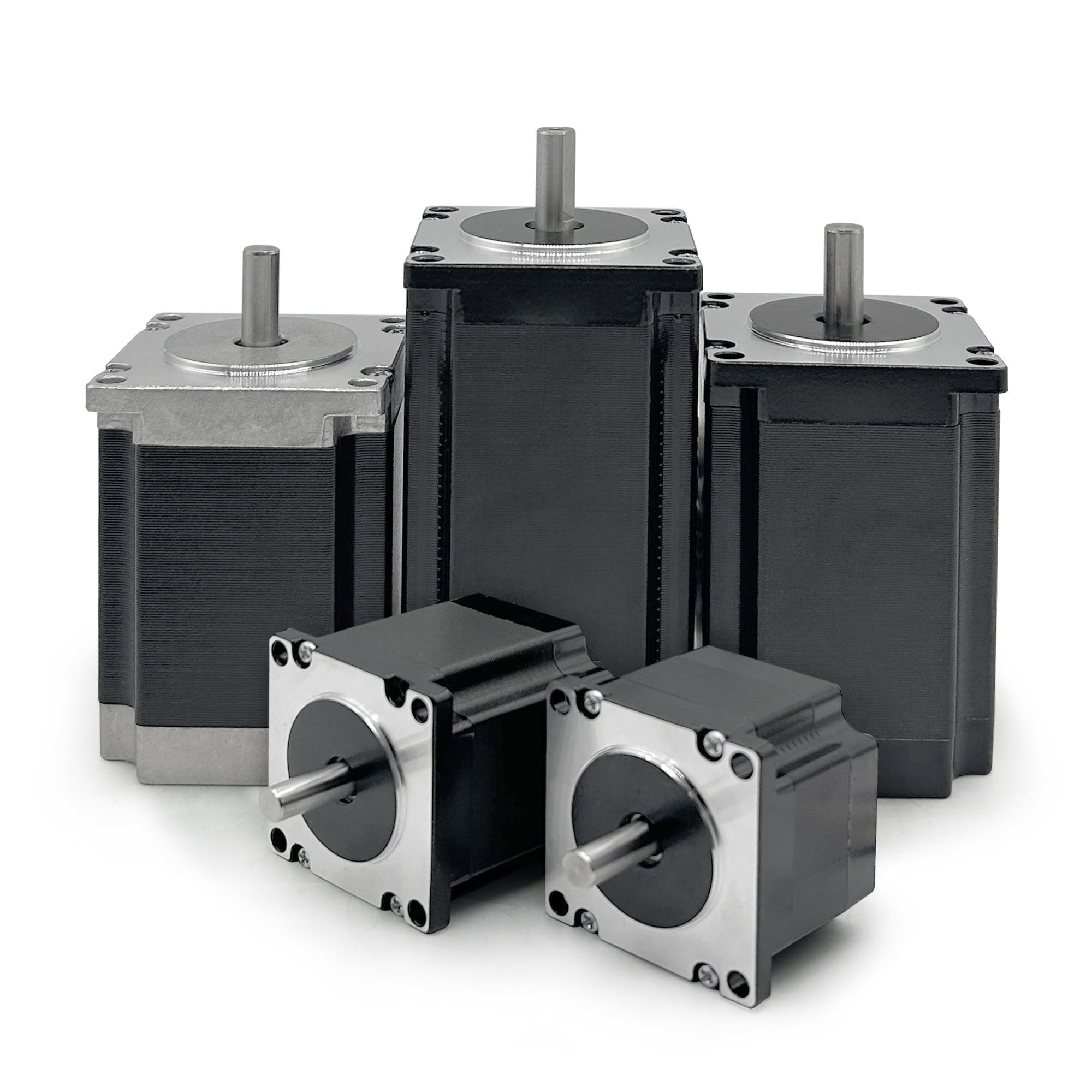
The precision of automated positioning systems hinges critically on the accuracy characteristics of their driving components, particularly when examining how a nema 23 stepper motor translates electrical pulses into precise mechanical movement. Understanding the relationship between motor accuracy specifications and actual positioning outcomes becomes essential for engineers designing applications where repeatability and precision directly impact product quality, operational efficiency, and system reliability.
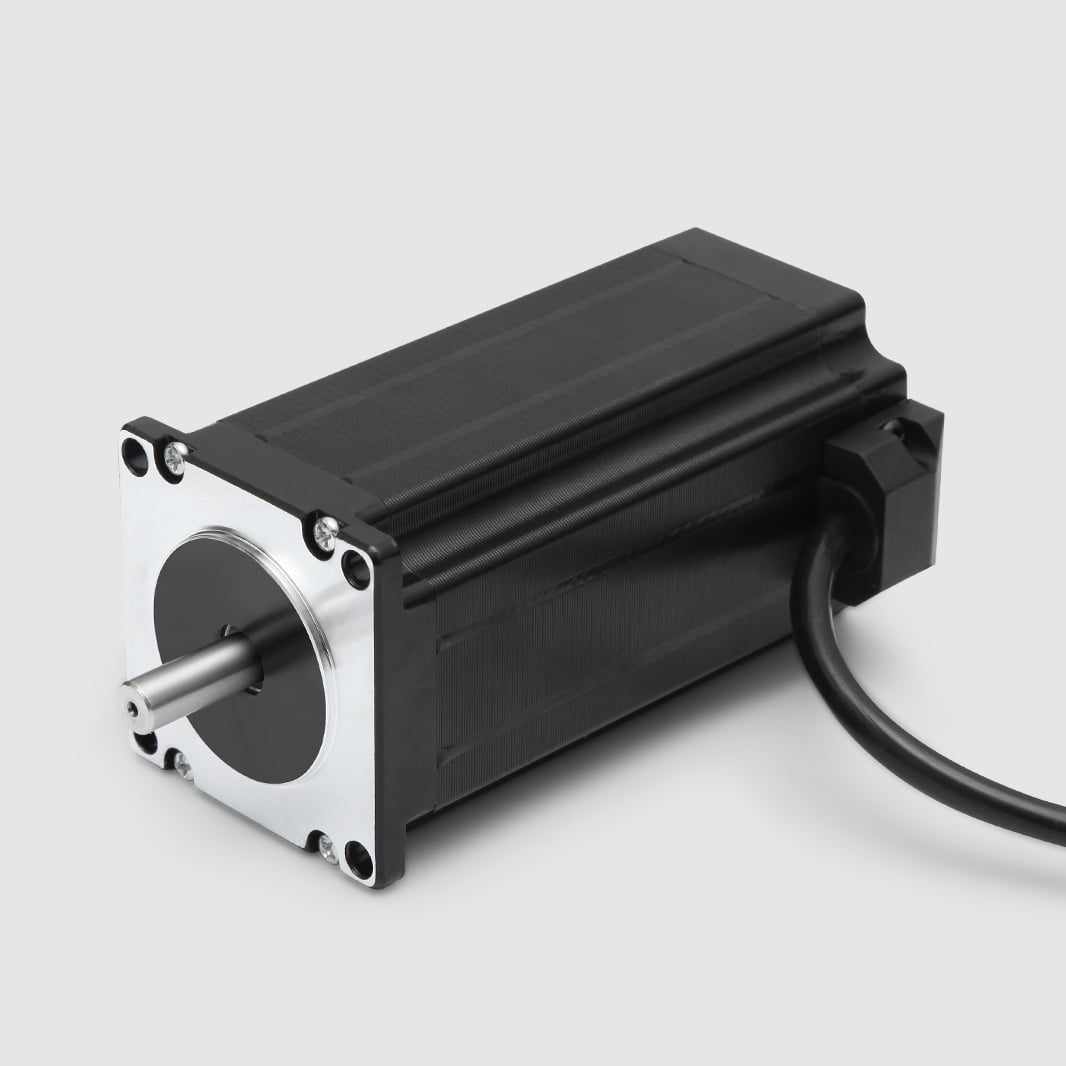
Multiple factors within a nema 23 stepper motor directly influence positioning accuracy, creating a complex interplay between mechanical tolerances, electrical characteristics, and thermal behaviors that ultimately determines whether your system achieves its intended positioning specifications. The accuracy performance affects everything from CNC machining operations to 3D printing quality, making it crucial to understand how these motors translate their inherent precision limitations into real-world positioning results.
Fundamental Accuracy Parameters in NEMA 23 Stepper Motors
Step Angle Precision and Its Direct Impact
The step angle accuracy of a nema 23 stepper motor represents the foundation of all positioning calculations, typically specified as 1.8 degrees per full step with tolerances ranging from ±3% to ±5% depending on manufacturing quality. This fundamental parameter directly translates to positioning errors that accumulate across multiple steps, where a motor with ±5% step angle tolerance can introduce positioning errors of up to 0.09 degrees per step in worst-case scenarios.
Manufacturing variations in rotor magnetization, stator tooth geometry, and air gap consistency contribute to step angle deviations that manifest as non-uniform step sizes throughout a complete rotation. These variations create positioning errors that are not randomly distributed but follow predictable patterns based on the motor's magnetic pole arrangement, allowing for compensation strategies in critical applications.
The cumulative effect of step angle errors becomes particularly pronounced in applications requiring multiple revolutions or precise angular positioning, where individual step errors compound to create significant positioning deviations. A nema 23 stepper motor operating through 1000 steps with consistent ±3% step angle errors can accumulate positioning errors exceeding several degrees without proper compensation or feedback correction.
Resolution Limitations and Mechanical Constraints
Standard nema 23 stepper motor configurations provide 200 full steps per revolution, resulting in 1.8-degree resolution that may prove insufficient for high-precision positioning applications without microstepping or gear reduction. The mechanical resolution limitation means that positioning accuracy cannot exceed the fundamental step size, regardless of control system sophistication or driving techniques employed.
Microstepping techniques can theoretically improve positioning resolution by subdividing full steps into smaller increments, but the actual positioning accuracy improvement depends heavily on the motor's magnetic uniformity and the precision of current control in the drive system. While microstepping can provide smoother motion and reduced vibration, it does not necessarily improve absolute positioning accuracy beyond the motor's inherent mechanical tolerances.
The relationship between theoretical microstepping resolution and achievable positioning accuracy becomes particularly complex when considering that a nema 23 stepper motor experiences non-linear magnetic characteristics that prevent perfectly uniform subdivisions of full steps. Real-world positioning accuracy with microstepping typically achieves only 10-30% of the theoretical resolution improvement due to these magnetic non-linearities.
Environmental and Operating Factors Affecting Accuracy
Temperature Effects on Positioning Performance
Temperature variations significantly impact nema 23 stepper motor accuracy through multiple mechanisms, including changes in magnetic strength, mechanical expansion of components, and altered electrical characteristics of windings. Permanent magnet strength in the rotor decreases with temperature at approximately 0.2% per degree Celsius, directly affecting the motor's ability to maintain precise step positions under varying thermal conditions.
Mechanical thermal expansion affects the critical air gap between rotor and stator, with differential expansion rates between aluminum housing and steel magnetic components creating positioning errors that can exceed several arcminutes over typical industrial temperature ranges. These thermal effects are particularly problematic in applications where the nema 23 stepper motor operates in environments with significant temperature fluctuations or elevated operating temperatures.
Winding resistance changes with temperature affect the current distribution and magnetic field uniformity, creating temperature-dependent positioning errors that may not be immediately apparent but accumulate over time as operating conditions vary. The interaction between thermal effects and magnetic performance creates complex positioning error patterns that require careful consideration in precision applications.
Load and Speed Dependencies
The positioning accuracy of a nema 23 stepper motor varies significantly with applied load and operating speed, as increased load creates greater susceptibility to step loss and reduced holding torque at individual step positions. High inertial loads can cause step position overshoot due to the motor's limited damping characteristics, while excessive loads may prevent the motor from completing individual steps entirely.
Speed-dependent positioning errors arise from the motor's inductance limitations, which prevent rapid current changes necessary for maintaining precise magnetic field control during fast stepping sequences. Higher stepping rates reduce the effective torque available for positioning accuracy, creating a trade-off between motion speed and positioning precision that must be carefully balanced in system design.
Resonance phenomena in nema 23 stepper motor systems can create severe positioning accuracy degradation at specific speed ranges, where mechanical resonances amplify small positioning errors into significant oscillations that persist after motion commands complete. Understanding and avoiding these resonant frequencies becomes critical for maintaining consistent positioning performance across varying operational parameters.
Measurement and Quantification of Positioning Errors
Accuracy Specification Standards and Interpretation
Industry standards for nema 23 stepper motor accuracy specifications include step angle accuracy, concentricity, and shaft runout measurements that directly correlate to positioning performance in practical applications. Step angle accuracy typically appears as a percentage tolerance specification, while concentricity and runout measurements provide absolute dimensional tolerances that affect positioning repeatability.
Understanding the difference between accuracy and repeatability becomes crucial when evaluating nema 23 stepper motor positioning performance, as a motor may demonstrate excellent repeatability while maintaining consistent positioning errors due to systematic inaccuracies in magnetic pole placement or mechanical dimensions. These distinctions affect system design decisions regarding the need for feedback correction or calibration procedures.
Manufacturer specifications may not fully capture real-world positioning accuracy under varying operational conditions, making it essential to understand how laboratory measurement conditions differ from actual application environments. The gap between specified accuracy and achieved positioning performance often requires additional characterization and compensation strategies to meet system requirements.
Practical Measurement Techniques and Error Analysis
Measuring actual positioning accuracy of nema 23 stepper motor systems requires precise angular measurement equipment such as optical encoders, laser interferometers, or rotary tables with resolution significantly exceeding the motor's theoretical accuracy. The measurement system accuracy must be at least five times better than the expected motor accuracy to provide meaningful characterization of positioning performance.
Error analysis techniques must account for both systematic and random error components, where systematic errors follow predictable patterns related to magnetic pole positions while random errors result from manufacturing tolerances and environmental variations. Systematic errors can often be compensated through software correction, while random errors establish the fundamental accuracy limitation of the motor system.
Long-term accuracy testing reveals how nema 23 stepper motor positioning performance changes with operating time, temperature cycling, and mechanical wear, providing insight into system reliability and maintenance requirements. These extended characterization studies help establish realistic accuracy expectations and appropriate maintenance intervals for critical positioning applications.
Optimization Strategies for Enhanced Positioning Performance
Drive System Configuration and Control Methods
Advanced drive systems can significantly improve nema 23 stepper motor positioning accuracy through precise current control, anti-resonance algorithms, and closed-loop feedback integration. Current control accuracy directly affects the uniformity of magnetic field generation, with high-resolution current regulation improving step-to-step consistency and reducing positioning errors caused by current ripple or regulation inaccuracies.
Microstepping with sinusoidal current profiles provides smoother motion and potentially improved positioning accuracy compared to traditional square-wave current control, particularly when combined with encoder feedback for closed-loop verification of step completion. The effectiveness of these advanced control methods depends heavily on the magnetic uniformity of the specific nema 23 stepper motor and the precision of the drive system's current regulation.
Anti-resonance features in modern stepper motor drives can eliminate positioning errors caused by mechanical resonances, automatically adjusting driving parameters to avoid problematic frequency ranges. These sophisticated control algorithms require careful tuning to match the specific mechanical characteristics of the motor and load combination for optimal positioning accuracy improvement.
Mechanical System Design Considerations
Mechanical coupling methods between the nema 23 stepper motor and driven load significantly affect positioning accuracy, with rigid couplings providing better accuracy transfer but potentially increasing system resonances and vibration transmission. Flexible couplings can reduce vibration and accommodate minor misalignments but may introduce backlash or compliance that degrades positioning accuracy under varying load conditions.
Gear reduction systems can improve effective positioning resolution but introduce additional error sources including backlash, gear tooth accuracy, and assembly tolerances that may offset the theoretical accuracy improvement. The selection of appropriate gear ratios requires balancing improved resolution against increased complexity and potential additional error sources in the mechanical transmission path.
Proper mounting and alignment procedures ensure that mechanical installation errors do not compromise the inherent accuracy of the nema 23 stepper motor, with mounting surface flatness, shaft alignment, and coupling concentricity all contributing to overall positioning performance. Even high-accuracy motors can exhibit poor positioning performance when improperly installed or mechanically constrained.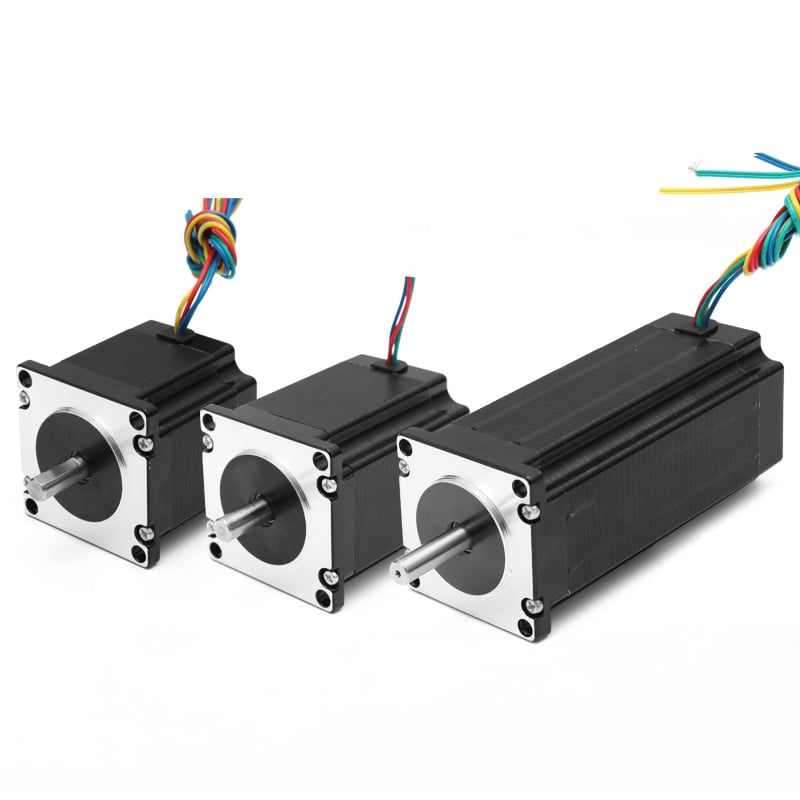
FAQ
What is the typical positioning accuracy achievable with a NEMA 23 stepper motor?
Most quality NEMA 23 stepper motors achieve positioning accuracy of ±3 to ±5% of the step angle, which translates to approximately ±0.054 to ±0.09 degrees per step under ideal conditions. However, real-world accuracy depends significantly on environmental factors, load conditions, and drive system quality, with practical accuracy often ranging from ±0.1 to ±0.3 degrees depending on application requirements and system design.
How does microstepping affect the positioning accuracy of NEMA 23 stepper motors?
Microstepping can improve positioning resolution but does not necessarily improve absolute accuracy beyond the motor's inherent tolerances. While microstepping may provide 256 or more subdivisions per full step, the actual positioning accuracy improvement typically ranges from 10-30% due to magnetic non-linearities and current control limitations. The primary benefits of microstepping include smoother motion and reduced vibration rather than significant accuracy enhancement.
Can environmental temperature changes significantly affect NEMA 23 stepper motor positioning accuracy?
Yes, temperature variations can substantially impact positioning accuracy through multiple mechanisms including reduced magnet strength (approximately 0.2% per degree Celsius), thermal expansion of mechanical components, and changes in electrical characteristics. In applications with temperature swings of 50°C or more, positioning errors due to thermal effects can exceed several arcminutes, making temperature compensation or environmental control necessary for high-precision applications.
What measurement equipment is required to verify NEMA 23 stepper motor positioning accuracy?
Accurate measurement requires precision angular measurement equipment with resolution at least five times better than the expected motor accuracy, such as high-resolution optical encoders (typically 10,000+ counts per revolution), laser interferometer systems, or precision rotary tables. The measurement system must also account for mounting accuracy, shaft runout, and environmental stability to provide meaningful characterization of actual positioning performance under operational conditions.
Table of Contents
- Fundamental Accuracy Parameters in NEMA 23 Stepper Motors
- Environmental and Operating Factors Affecting Accuracy
- Measurement and Quantification of Positioning Errors
- Optimization Strategies for Enhanced Positioning Performance
-
FAQ
- What is the typical positioning accuracy achievable with a NEMA 23 stepper motor?
- How does microstepping affect the positioning accuracy of NEMA 23 stepper motors?
- Can environmental temperature changes significantly affect NEMA 23 stepper motor positioning accuracy?
- What measurement equipment is required to verify NEMA 23 stepper motor positioning accuracy?