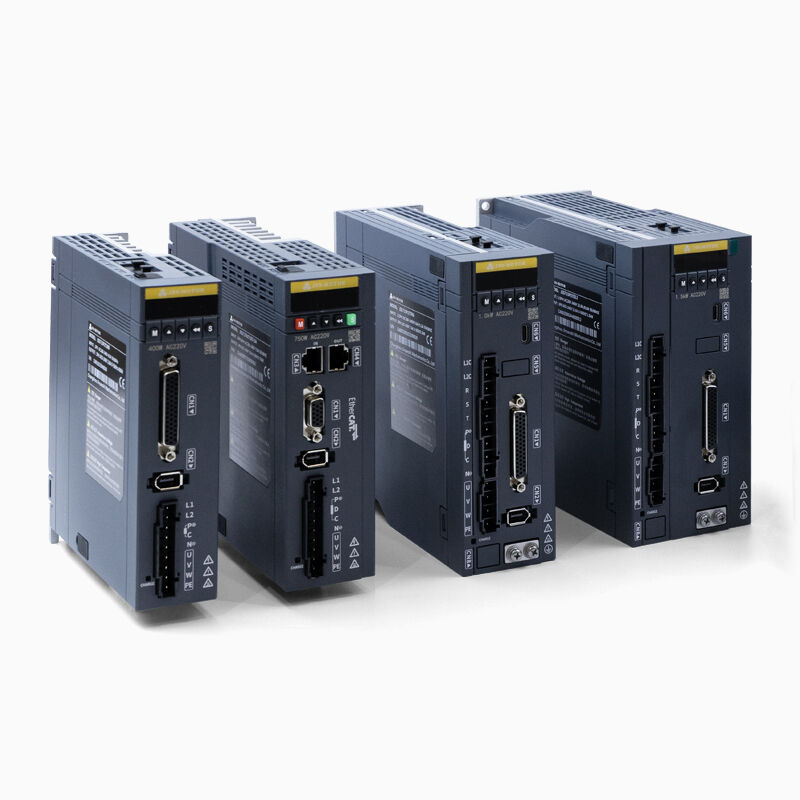
Modern industrial automation demands precision control systems that can deliver exceptional accuracy and repeatability in motion applications. A servo motor driver serves as the critical interface between control systems and servo motors, transforming digital commands into precise electrical signals that govern motor performance. This sophisticated electronic component has revolutionized manufacturing processes by enabling micron-level positioning accuracy and dynamic response characteristics that were previously unattainable with conventional motor control systems.
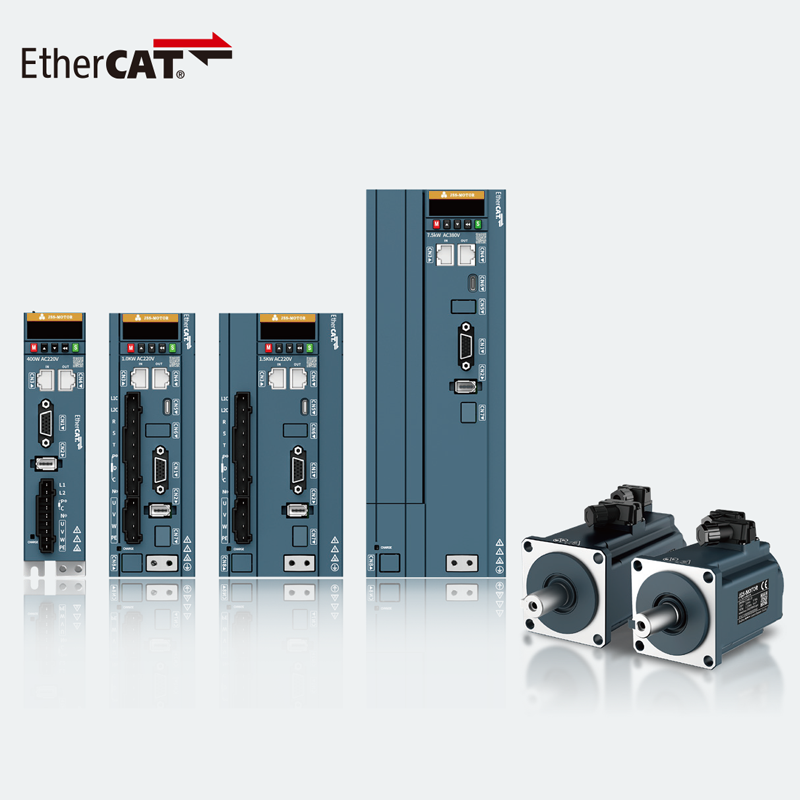
The integration of advanced servo motor driver technology in automated systems has transformed industries ranging from semiconductor manufacturing to precision machining. These intelligent control devices incorporate sophisticated algorithms, high-resolution feedback systems, and adaptive control mechanisms that continuously optimize motor performance. Understanding the fundamental principles and advanced capabilities of servo motor driver systems is essential for engineers and technicians working with modern automation equipment.
Understanding Servo Motor Driver Fundamentals
Core Architecture and Signal Processing
The servo motor driver operates as a sophisticated power amplifier and control processor that interprets position, velocity, and torque commands from higher-level controllers. Internal processing units execute complex control algorithms at high frequencies, typically ranging from 8kHz to 32kHz, ensuring rapid response to command changes. The driver continuously compares commanded positions with actual motor positions using feedback from encoders or resolvers, generating error signals that drive corrective actions.
Advanced servo motor driver designs incorporate multiple control loops operating simultaneously to achieve optimal performance. The position loop manages long-term accuracy and settling characteristics, while the velocity loop controls dynamic response and acceleration profiles. The innermost current loop regulates torque output and provides overload protection. This multi-loop architecture enables precise control over all aspects of motor behavior while maintaining system stability under varying load conditions.
Power Electronics and Switching Technology
Modern servo motor driver systems utilize advanced power semiconductor technologies, including IGBT and MOSFET switching devices, to achieve high efficiency and precise current control. Pulse width modulation techniques generate smooth current waveforms that minimize motor heating and acoustic noise while maximizing torque output. High-frequency switching operations, typically exceeding 20kHz, ensure that current ripple remains below levels that could affect motor performance or generate electromagnetic interference.
The power stage design incorporates sophisticated protection mechanisms that monitor voltage, current, and temperature parameters continuously. These systems can detect fault conditions within microseconds and implement protective actions to prevent damage to both the servo motor driver and connected motor. Advanced diagnostics capabilities provide detailed information about system performance and potential maintenance requirements, enabling predictive maintenance strategies.
Precision Control Mechanisms and Algorithms
Advanced Feedback Processing
High-resolution feedback processing represents a cornerstone of servo motor driver performance, with modern systems supporting encoder resolutions exceeding one million counts per revolution. The servo motor driver employs sophisticated interpolation algorithms to achieve sub-count resolution, enabling positioning accuracy that surpasses the native encoder resolution. Real-time processing of quadrature signals, index pulses, and absolute position data ensures reliable operation even in challenging industrial environments.
Adaptive feedback processing algorithms within the servo motor driver automatically compensate for mechanical variations, thermal effects, and aging components. Machine learning capabilities enable these systems to optimize control parameters based on historical performance data and operating conditions. This intelligent adaptation ensures consistent performance throughout the system lifecycle while reducing the need for manual tuning and calibration procedures.
Dynamic Response Optimization
The servo motor driver implements sophisticated motion planning algorithms that optimize acceleration and deceleration profiles based on load characteristics and performance requirements. S-curve motion profiles minimize mechanical stress and reduce settling time while maintaining smooth operation. Advanced feed-forward control techniques predict system behavior and provide corrective actions before errors occur, significantly improving tracking accuracy during high-speed operations.
Resonance suppression algorithms within the servo motor driver automatically detect and compensate for mechanical resonances that could compromise system stability. Notch filters and adaptive control techniques eliminate problematic frequencies while preserving system bandwidth and response characteristics. These capabilities enable reliable operation with various mechanical loads and configurations without extensive manual tuning procedures.
Communication Protocols and Integration
Industrial Network Compatibility
Contemporary servo motor driver systems support multiple industrial communication protocols, enabling seamless integration with diverse automation architectures. EtherCAT, PROFINET, and Ethernet/IP protocols provide high-speed, deterministic communication capabilities that support coordinated motion control applications. Real-time data exchange between the servo motor driver and control systems ensures synchronized operation across multiple axes while maintaining precise timing relationships.
The servo motor driver incorporates advanced networking features including automatic device discovery, configuration management, and diagnostic reporting capabilities. Embedded web servers provide remote access to system parameters and performance data, facilitating efficient maintenance and troubleshooting procedures. These connectivity features enable integration with modern Industry 4.0 manufacturing systems and support data-driven optimization strategies.
Programming and Configuration Tools
Sophisticated software tools accompany modern servo motor driver systems, providing intuitive interfaces for parameter configuration, motion programming, and system optimization. Graphical programming environments enable engineers to develop complex motion sequences without extensive coding experience. Auto-tuning functions automatically optimize control parameters based on mechanical system characteristics, significantly reducing commissioning time and improving performance consistency.
Advanced simulation capabilities within servo motor driver software tools enable virtual testing and optimization before physical implementation. These features allow engineers to evaluate system performance under various operating conditions and identify potential issues before deployment. Comprehensive documentation and application examples facilitate rapid system development and reduce learning curves for new users.
Performance Enhancement Technologies
Adaptive Control Systems
Modern servo motor driver systems incorporate adaptive control algorithms that automatically adjust operating parameters based on changing load conditions and environmental factors. These intelligent systems continuously monitor performance metrics and implement optimization strategies that maintain consistent accuracy and response characteristics. Machine learning algorithms analyze historical data patterns to predict optimal control settings for different operating scenarios.
The adaptive capabilities extend to automatic gain scheduling, where the servo motor driver modifies control loop parameters based on operating speed, load torque, and position within the motion profile. This dynamic optimization ensures optimal performance across the entire operating range while maintaining system stability. Advanced systems can even compensate for mechanical wear and component aging, extending system lifespan and maintaining performance standards.
Predictive Maintenance Integration
Contemporary servo motor driver designs incorporate comprehensive monitoring capabilities that track key performance indicators and component health parameters. Vibration analysis, temperature monitoring, and current signature analysis provide early warning signs of potential maintenance issues. These systems generate detailed maintenance reports and recommendations based on operating history and component condition assessments.
Integration with enterprise maintenance management systems enables automated scheduling of preventive maintenance activities based on actual system usage and condition data. The servo motor driver continuously logs performance metrics and generates alerts when parameters exceed predetermined thresholds. This proactive approach significantly reduces unplanned downtime and extends equipment lifespan while optimizing maintenance costs.
Application-Specific Optimization
High-Precision Positioning Applications
In applications requiring exceptional positioning accuracy, the servo motor driver employs specialized algorithms and hardware features designed to minimize positioning errors. Sub-micron positioning capabilities are achieved through high-resolution feedback processing, thermal compensation, and mechanical backlash elimination techniques. Advanced systems incorporate external measurement devices, such as linear scales or laser interferometers, to provide absolute position feedback independent of motor-mounted encoders.
The servo motor driver optimizes settling characteristics for precision positioning applications by implementing specialized control algorithms that minimize overshoot and reduce settling time. Friction compensation techniques ensure consistent performance regardless of mechanical loading conditions. These systems can maintain positioning accuracy within nanometer ranges in controlled environments, making them suitable for semiconductor manufacturing and precision measurement applications.
High-Speed Dynamic Control
For applications requiring rapid acceleration and high-speed operation, the servo motor driver implements specialized control strategies that maximize dynamic performance while maintaining system stability. Advanced current control techniques enable rapid torque changes without compromising motor efficiency or generating excessive heat. High-bandwidth control loops ensure rapid response to command changes while maintaining precise trajectory following.
The servo motor driver incorporates sophisticated motion planning algorithms that optimize acceleration profiles based on mechanical constraints and performance requirements. These systems can achieve acceleration rates exceeding 50 G while maintaining precise position control throughout the motion profile. Advanced feed-forward control techniques predict system behavior and provide corrective actions that eliminate tracking errors during high-speed operations.
System Integration and Coordination
Multi-Axis Coordination
Advanced servo motor driver systems support coordinated motion control across multiple axes, enabling complex manufacturing operations such as contouring, interpolation, and synchronized positioning. Distributed control architectures allow individual servo motor driver units to communicate directly with each other, reducing system latency and improving coordination accuracy. Real-time synchronization protocols ensure that multiple axes maintain precise timing relationships throughout complex motion sequences.
The servo motor driver incorporates advanced path planning algorithms that optimize multi-axis trajectories for maximum efficiency and accuracy. These systems can execute complex three-dimensional motion profiles while maintaining precise speed and acceleration coordination between axes. Automatic optimization features adjust motion parameters based on mechanical constraints and performance requirements, ensuring optimal system performance across diverse applications.
Safety and Protection Systems
Contemporary servo motor driver designs incorporate comprehensive safety features that comply with international safety standards including SIL2 and PLd requirements. Functional safety implementations include redundant monitoring systems, safe torque-off capabilities, and integrated emergency stop functions. These safety features operate independently of main control systems and provide reliable protection for personnel and equipment.
Advanced diagnostic capabilities within the servo motor driver continuously monitor system health and provide early warning of potential safety issues. Predictive safety algorithms analyze operating patterns and component conditions to identify potential hazards before they occur. Comprehensive logging and reporting features provide detailed documentation of safety-related events and system responses for compliance and analysis purposes.
Future Developments and Technology Trends
Artificial Intelligence Integration
Emerging servo motor driver technologies incorporate artificial intelligence and machine learning capabilities that enable autonomous optimization and predictive control strategies. These systems can learn from operational data to predict optimal control parameters for different operating conditions and automatically implement performance improvements. AI-powered diagnostics provide sophisticated fault detection and isolation capabilities that exceed traditional threshold-based monitoring systems.
The integration of AI technologies enables servo motor driver systems to adapt to changing manufacturing requirements and optimize performance based on production goals and quality metrics. Predictive algorithms can anticipate maintenance requirements and automatically schedule service activities to minimize production disruptions. These intelligent systems represent the future of industrial automation, where equipment becomes increasingly autonomous and self-optimizing.
Edge Computing and IoT Connectivity
Next-generation servo motor driver systems incorporate edge computing capabilities that enable local data processing and decision-making without relying on central control systems. These distributed intelligence architectures reduce system latency and improve reliability while enabling real-time optimization based on local conditions. IoT connectivity features provide seamless integration with cloud-based analytics platforms and remote monitoring systems.
Advanced connectivity features enable servo motor driver systems to participate in smart manufacturing ecosystems where equipment communicates automatically to optimize overall production efficiency. Real-time data sharing between devices enables system-wide optimization strategies that improve quality, reduce energy consumption, and maximize throughput. These connected systems represent the foundation of Industry 4.0 manufacturing environments.
FAQ
What factors determine the positioning accuracy of a servo motor driver system
Positioning accuracy depends on several key factors including encoder resolution, control loop performance, mechanical system characteristics, and environmental conditions. The servo motor driver processes feedback signals at high frequencies and implements sophisticated control algorithms to minimize position errors. Mechanical factors such as backlash, compliance, and thermal expansion also affect overall system accuracy. Modern systems achieve sub-micron accuracy through advanced compensation techniques and high-resolution feedback processing.
How does a servo motor driver handle varying load conditions
Advanced servo motor driver systems incorporate adaptive control algorithms that automatically adjust operating parameters based on load conditions. Load torque estimation techniques enable the system to predict required motor output and optimize control parameters accordingly. Feed-forward control strategies provide immediate response to load changes while feedback control maintains long-term accuracy. These adaptive capabilities ensure consistent performance across varying operational requirements without manual intervention.
What communication protocols are commonly supported by modern servo motor driver systems
Contemporary servo motor driver systems support multiple industrial communication protocols including EtherCAT, PROFINET, Ethernet/IP, and Modbus TCP. These protocols provide high-speed, deterministic communication capabilities essential for coordinated motion control applications. Many systems offer multiple protocol support through software configuration, enabling flexibility in system design and integration. Advanced networking features include automatic device discovery, configuration management, and comprehensive diagnostic reporting capabilities.
How do servo motor driver systems contribute to energy efficiency in industrial applications
Modern servo motor driver systems incorporate advanced power electronics and control algorithms that maximize energy efficiency while maintaining performance requirements. Regenerative braking capabilities recover energy during deceleration phases and return it to the power supply system. Intelligent power management features optimize motor operating points for maximum efficiency and minimize power consumption during idle periods. These efficiency improvements can reduce overall energy consumption by 30-50% compared to conventional motor control systems.
Table of Contents
- Understanding Servo Motor Driver Fundamentals
- Precision Control Mechanisms and Algorithms
- Communication Protocols and Integration
- Performance Enhancement Technologies
- Application-Specific Optimization
- System Integration and Coordination
- Future Developments and Technology Trends
-
FAQ
- What factors determine the positioning accuracy of a servo motor driver system
- How does a servo motor driver handle varying load conditions
- What communication protocols are commonly supported by modern servo motor driver systems
- How do servo motor driver systems contribute to energy efficiency in industrial applications