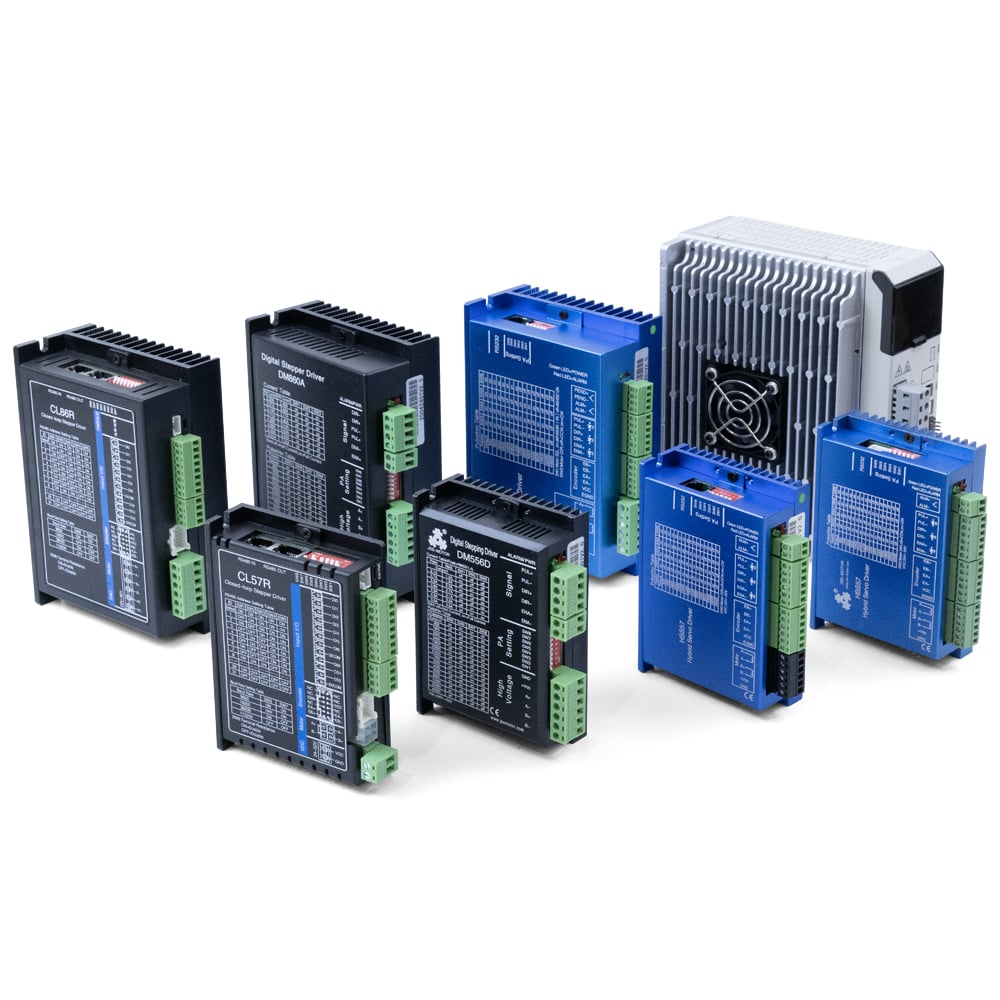
Motion precision in automated systems depends heavily on the compatibility and optimization between critical components. The relationship between a stepper motor and driver forms the foundation of accurate positioning in countless industrial applications, from CNC machines to 3D printers. Understanding how proper pairing influences overall system performance can mean the difference between achieving micron-level accuracy and experiencing frustrating positioning errors. Modern manufacturing demands require precise control over mechanical movement, making the selection and integration of compatible stepper motor and driver combinations essential for success.
Understanding Stepper Motor and Driver Fundamentals
Basic Operating Principles
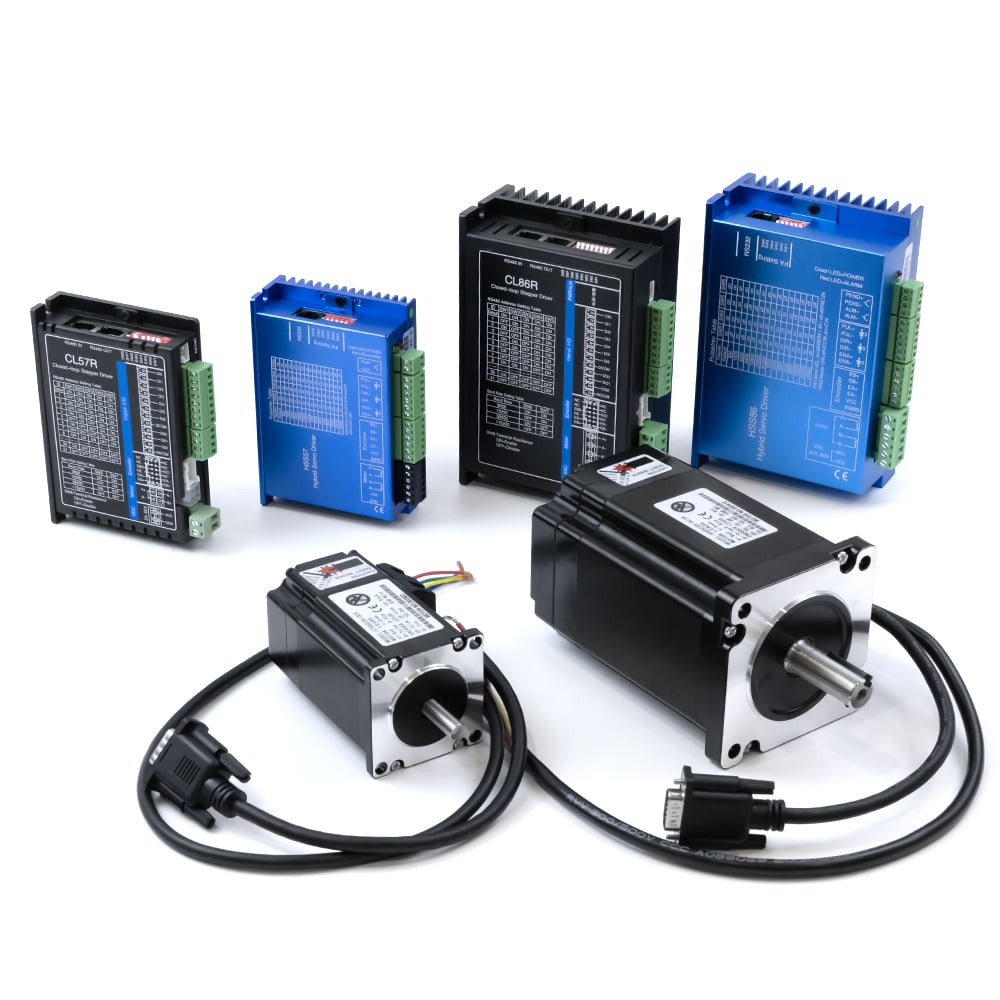
Stepper motors operate on the principle of electromagnetic field switching, where the rotor moves in discrete angular increments called steps. Each step represents a precise angular displacement, typically ranging from 0.9 to 3.6 degrees per step depending on the motor design. The driver circuit controls the timing and sequence of current pulses sent to the motor windings, determining both the speed and direction of rotation. This digital control method enables precise positioning without the need for feedback sensors in open-loop applications.
The accuracy of each step depends on several factors including the motor's construction quality, the driver's current regulation capabilities, and the load characteristics. When a stepper motor and driver combination is properly matched, the system can achieve repeatability within a fraction of a step angle. However, mismatched components can introduce errors such as step loss, resonance issues, or inadequate torque delivery at critical operating points.
Driver Circuit Technologies
Modern stepper motor drivers employ various circuit topologies to optimize performance and efficiency. Constant current chopper circuits maintain steady current flow through the motor windings regardless of winding resistance variations due to temperature changes. This regulation ensures consistent torque output and prevents overheating that could compromise positioning accuracy. Advanced drivers incorporate features such as microstepping, anti-resonance algorithms, and adaptive current control to further enhance precision.
Microstepping technology subdivides each full step into smaller increments, typically 2, 4, 8, 16, or even 256 microsteps per full step. While microstepping provides smoother motion and reduced vibration, the actual positioning accuracy improvement depends on the quality of both the stepper motor and driver implementation. High-quality drivers use sophisticated current control algorithms to maintain accurate intermediate positions, while lower-quality implementations may suffer from non-linearity and reduced holding torque at microstep positions.
Critical Matching Parameters for Optimal Performance
Current Rating Compatibility
The current rating match between a stepper motor and driver directly impacts torque production and thermal performance. Each stepper motor has a rated current specification that represents the maximum safe continuous current per phase. The driver must be capable of supplying this current accurately while maintaining proper regulation under varying load conditions. Undersized drivers result in reduced torque and potential step loss, while oversized drivers may cause unnecessary power consumption and heat generation.
Current regulation accuracy becomes particularly important in applications requiring consistent performance across different operating conditions. Temperature variations, supply voltage fluctuations, and load changes can affect the actual current delivered to the motor windings. A well-matched stepper motor and driver combination compensates for these variations through active current sensing and feedback control, maintaining precision throughout the operational envelope.
Voltage and Power Considerations
Supply voltage selection significantly influences the high-speed performance characteristics of stepper motor and driver systems. Higher supply voltages enable faster current rise times in the motor windings, resulting in improved torque at higher step rates. However, the voltage must remain within the safe operating limits of both the motor insulation and the driver's switching components. The relationship between supply voltage, motor inductance, and driver switching frequency determines the maximum usable step rate for a given application.
Power dissipation considerations affect both component longevity and positioning stability. Excessive power dissipation in either the motor or driver can cause thermal drift, changing the electrical characteristics and potentially degrading precision over time. Proper thermal management through heatsinking, enclosure design, and current optimization helps maintain consistent performance. The stepper motor and driver pairing should account for worst-case operating conditions including maximum ambient temperature, continuous duty cycles, and peak torque requirements.
Precision Enhancement Through Advanced Control Techniques
Microstepping Implementation Quality
The quality of microstepping implementation varies significantly among different stepper motor and driver combinations. High-resolution microstepping requires precise current control in both motor phases simultaneously, with the current waveforms following sinusoidal patterns to achieve smooth intermediate positions. The driver's digital-to-analog conversion accuracy, current sensing precision, and control loop bandwidth all contribute to the achievable microstepping performance.
Motor design characteristics also influence microstepping effectiveness. Motors with better magnetic linearity and lower cogging torque provide more accurate intermediate positions when driven with quality microstepping drivers. The interaction between the motor's magnetic design and the driver's current control algorithms determines whether microstepping actually improves positioning accuracy or merely provides smoother motion without precision benefits.
Resonance Suppression Methods
Stepper motor and driver systems can experience resonance phenomena that degrade positioning accuracy and cause vibration. These resonances occur when the step frequency matches the natural mechanical frequency of the motor-load system. Advanced drivers incorporate anti-resonance features such as current waveform shaping, damping algorithms, and adaptive control strategies to minimize these effects.
The effectiveness of resonance suppression depends on the compatibility between the motor's mechanical characteristics and the driver's control capabilities. Some drivers offer adjustable parameters for fine-tuning the anti-resonance algorithms to specific motor and load combinations. Proper parameter optimization requires understanding both the mechanical system dynamics and the driver's available control features.
Load Matching and Torque Optimization
Inertial Load Considerations
The relationship between motor torque capability and load inertia significantly affects positioning accuracy in stepper motor and driver applications. High inertia loads require more time to accelerate and decelerate, potentially causing overshoot or undershoot if the motion profile is not properly designed. The driver's acceleration and deceleration control features must be matched to both the motor's torque characteristics and the load requirements.
Inertia matching also influences the system's ability to maintain position during external disturbances. A properly matched stepper motor and driver combination provides sufficient holding torque to resist position drift while avoiding excessive current consumption. The torque safety margin should account for worst-case load conditions, including friction variations, external forces, and temperature effects on motor performance.
Dynamic Torque Requirements
Dynamic torque requirements vary throughout a typical motion sequence, with peak demands occurring during acceleration and deceleration phases. The stepper motor and driver pairing must provide adequate torque at all required step rates while maintaining current regulation accuracy. Torque falloff at higher speeds is a natural characteristic of stepper motors, requiring careful analysis of the speed-torque curve relative to application requirements.
Advanced drivers offer features such as current boosting during acceleration phases and optimized current profiles for different operating modes. These features can help maintain positioning accuracy even when operating near the motor's torque limits. The key is ensuring that the driver's control capabilities are well-matched to the motor's electrical and mechanical characteristics throughout the entire operating range.
Environmental and Thermal Factors
Temperature Stability Impact
Temperature variations affect both stepper motor and driver performance in ways that can compromise positioning accuracy. Motor winding resistance increases with temperature, altering the current regulation requirements and potentially affecting torque output. Similarly, driver components may experience parameter drift with temperature changes, influencing the accuracy of current control and timing circuits.
Thermal management strategies must consider the heat generation characteristics of both the motor and driver components. Proper cooling ensures that both components operate within their specified temperature ranges, maintaining consistent performance over time. The stepper motor and driver combination should be evaluated under realistic thermal conditions to ensure precision requirements are met throughout the expected operating temperature range.
Environmental Interference Protection
Industrial environments often contain electrical noise sources that can interfere with the precise timing and current control required for accurate positioning. The stepper motor and driver interface must include adequate protection against electromagnetic interference, power supply noise, and ground loops that could introduce positioning errors.
Shielded cables, proper grounding techniques, and driver circuits with good noise immunity help maintain precision in challenging environments. The physical separation between power and signal circuits, along with appropriate filtering, prevents interference from affecting the critical control signals between the driver and motor windings.
System Integration and Calibration
Parameter Optimization Process
Achieving optimal precision from a stepper motor and driver combination requires systematic parameter optimization tailored to the specific application. This process involves adjusting current levels, microstepping resolution, acceleration profiles, and various driver-specific settings to maximize accuracy while maintaining adequate performance margins.
The optimization process should consider the complete motion profile including positioning accuracy requirements, speed specifications, and duty cycle characteristics. Test procedures should evaluate performance under various operating conditions to ensure consistent precision across the full range of expected use cases.
Feedback Integration Options
While stepper motors traditionally operate in open-loop mode, adding position feedback can significantly enhance precision by detecting and correcting positioning errors. Encoders or other position sensors provide real-time feedback that allows the control system to verify actual position against commanded position.
The integration of feedback devices with stepper motor and driver systems requires careful consideration of resolution, accuracy, and response time characteristics. The feedback system must be capable of detecting positioning errors smaller than the acceptable tolerance while providing fast enough response for real-time correction.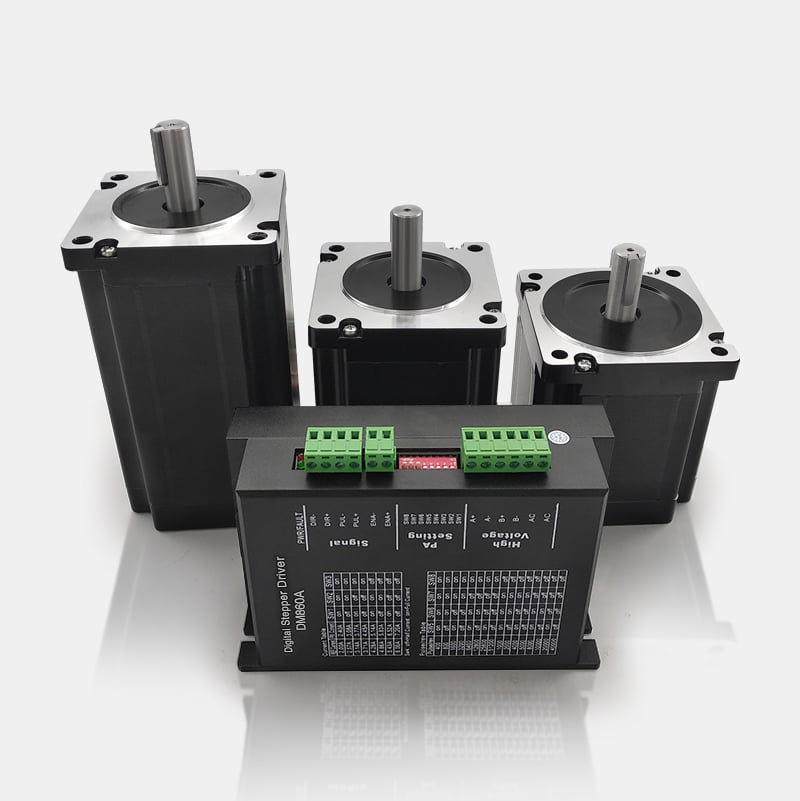
FAQ
What happens when a stepper motor and driver are mismatched in current ratings
When current ratings are mismatched, several performance issues can occur. If the driver cannot supply sufficient current, the motor will produce less torque than rated, potentially causing step loss under load and reduced positioning accuracy. Conversely, if the driver supplies excessive current, it can cause motor overheating, leading to thermal drift and potential damage to the windings. The optimal approach is matching the driver's current output capability to the motor's rated current specification, ensuring both components operate within their design parameters for maximum precision and reliability.
How does microstepping resolution affect actual positioning accuracy
Microstepping resolution and actual positioning accuracy are related but not identical concepts. While higher microstepping ratios provide smoother motion and reduce vibration, the actual positioning accuracy depends on the quality of both the motor and driver implementation. High-quality stepper motor and driver combinations can achieve improved accuracy with microstepping, but lower-quality systems may only provide smoother motion without significant precision improvements. The motor's magnetic linearity and the driver's current control accuracy determine whether increased microstepping resolution translates to better positioning performance.
Can environmental temperature changes affect stepper motor precision
Yes, temperature changes can significantly impact stepper motor precision through multiple mechanisms. As temperature increases, motor winding resistance rises, which can affect current regulation and torque output if the driver doesn't compensate properly. Thermal expansion of mechanical components can introduce dimensional changes that affect positioning accuracy. Additionally, both motor and driver electronic components may experience parameter drift with temperature variations. Proper thermal management and using stepper motor and driver combinations with good temperature compensation help maintain precision across varying environmental conditions.
What role does supply voltage play in high-speed positioning accuracy
Supply voltage critically affects high-speed positioning accuracy because it determines how quickly current can rise in the motor windings. Higher supply voltages enable faster current transitions, allowing the motor to maintain torque at higher step rates. This improved high-speed torque directly translates to better positioning accuracy during rapid movements and reduces the likelihood of step loss. However, the voltage must remain within safe limits for both the motor insulation and driver components. The stepper motor and driver pairing should optimize supply voltage selection based on the required speed range and positioning accuracy specifications.