
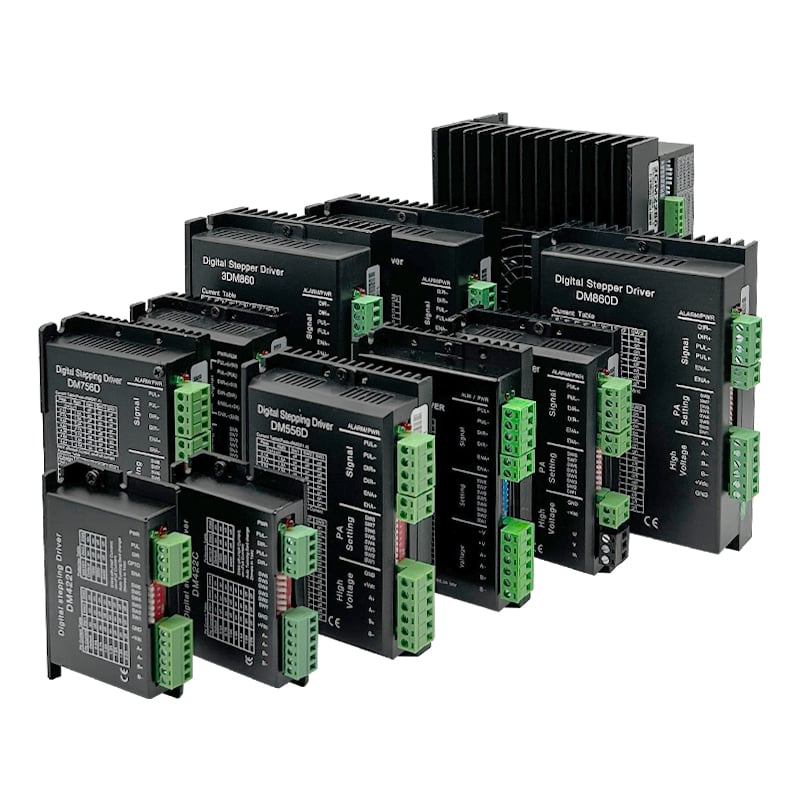
Achieving precise and smooth motor operation requires more than just selecting the right stepper motor. The key to unlocking optimal performance lies in proper stepper driver tuning, a critical process that determines how effectively your motor responds to control signals. A well-tuned stepper driver ensures seamless motion control, eliminates unwanted vibrations, and maximizes the efficiency of your entire automation system. Understanding the intricacies of stepper driver configuration can mean the difference between a system that operates flawlessly and one that struggles with positioning errors and mechanical stress.
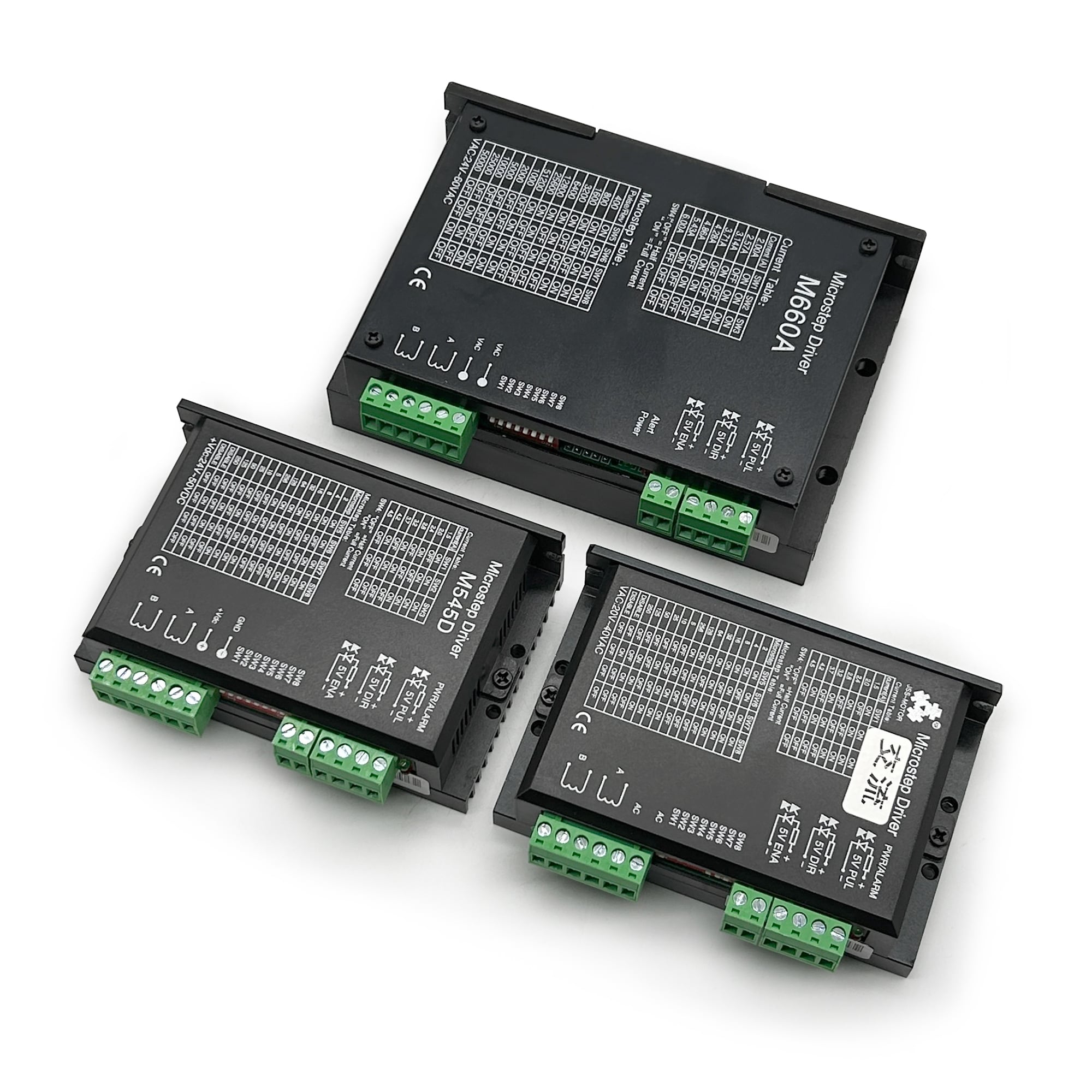
The relationship between stepper motors and their drivers is symbiotic, with the driver serving as the intelligent interface that translates digital control signals into precise mechanical movement. Without proper tuning, even the highest quality stepper motor will underperform, leading to reduced accuracy, increased heat generation, and premature wear. Industrial applications demand consistent performance, making stepper driver optimization essential for maintaining competitive advantages in manufacturing and automation environments.
Understanding Stepper Driver Fundamentals
Core Components and Operating Principles
A stepper driver functions as a sophisticated power management system that converts low-power control signals into high-current pulses needed to energize stepper motor windings. The driver's internal circuitry includes current regulation systems, microstepping capabilities, and protection mechanisms that safeguard both the motor and the driver itself. Modern stepper driver designs incorporate advanced switching technologies that minimize power losses while delivering precise current control to each motor phase.
The switching frequency and current modulation patterns directly influence motor performance characteristics. High-frequency switching reduces audible noise and improves torque smoothness, while sophisticated current regulation algorithms ensure consistent holding torque across varying load conditions. Understanding these fundamental operations helps engineers make informed decisions about driver selection and configuration parameters that will optimize their specific application requirements.
Signal Processing and Control Logic
Contemporary stepper driver architectures employ digital signal processing to interpret step and direction commands with exceptional accuracy. The control logic manages timing sequences, ensures proper phase relationships, and coordinates microstepping algorithms that divide full steps into smaller increments. This digital approach allows for real-time adjustments to motor behavior without hardware modifications, providing flexibility that analog systems cannot match.
Advanced stepper driver models feature programmable parameters that enable customization of acceleration profiles, current decay modes, and resonance suppression techniques. These configurable options allow engineers to fine-tune motor response characteristics to match specific load dynamics and performance requirements. The ability to modify these parameters through software interfaces significantly reduces development time and enables rapid prototyping of motion control systems.
Critical Tuning Parameters for Optimal Performance
Current Setting and Regulation
Proper current setting represents the most fundamental aspect of stepper driver tuning, directly impacting motor torque output, heat generation, and overall system efficiency. Setting the current too low results in insufficient torque and potential step loss under load, while excessive current causes unnecessary heating and reduced component lifespan. The optimal current setting typically ranges from 70% to 85% of the motor's rated current, depending on the specific application requirements and thermal management capabilities.
Current regulation algorithms within the stepper driver maintain consistent torque delivery by adjusting the applied voltage to compensate for resistance changes due to temperature variations. Advanced drivers employ chopper circuits that precisely control the current waveform shape, minimizing ripple and reducing electromagnetic interference. This level of current control ensures predictable motor behavior across varying environmental conditions and load scenarios.
Microstepping Configuration and Resolution
Microstepping technology divides each full step into multiple smaller increments, dramatically improving positioning resolution and reducing mechanical vibrations. The choice of microstepping resolution affects system performance in complex ways, with higher resolutions providing smoother motion at the cost of reduced holding torque per microstep. Engineers must balance resolution requirements against torque needs to achieve optimal performance for their specific application.
Different microstepping modes offer varying levels of current smoothness and positional accuracy. Standard configurations include half-step, quarter-step, and higher resolution options up to 256 microsteps per full step. The stepper driver selection should align with the application's precision requirements while considering the trade-offs between resolution and effective torque delivery at each microstepping level.
Impact on Motor Performance and System Reliability
Vibration Reduction and Noise Control
Proper stepper driver tuning significantly reduces mechanical vibrations that can propagate throughout the entire machine structure. Vibration control is achieved through careful adjustment of current decay modes, microstepping resolution, and acceleration profiles that minimize excitation of natural resonant frequencies. Advanced stepper driver designs include active damping features that detect and suppress resonance conditions in real-time.
Noise reduction benefits extend beyond mechanical considerations to include electromagnetic interference suppression. Well-tuned drivers generate cleaner current waveforms that reduce high-frequency noise emissions, improving overall system electromagnetic compatibility. This is particularly important in sensitive applications where electronic interference must be minimized to maintain proper operation of adjacent equipment and sensors.
Thermal Management and Efficiency Optimization
Efficient stepper driver tuning directly impacts thermal performance by optimizing power dissipation in both the driver and motor components. Proper current setting prevents excessive heating while maintaining adequate torque margins for reliable operation. Advanced thermal management features include automatic current reduction during idle periods and temperature-based current derating to prevent overheating conditions.
Energy efficiency improvements through driver tuning can result in significant cost savings in high-duty-cycle applications. Modern stepper driver technologies incorporate intelligent power management that reduces standby current consumption and optimizes switching losses. These efficiency gains translate to reduced operating costs and improved system reliability through lower component stress levels.
Advanced Tuning Techniques and Best Practices
Load Matching and Torque Optimization
Matching stepper driver characteristics to specific load requirements involves analyzing the mechanical system's inertia, friction, and dynamic response characteristics. Load matching ensures that the stepper driver can deliver sufficient torque throughout the required speed range while maintaining stable operation. This analysis includes consideration of acceleration requirements, maximum operating speeds, and the need for holding torque during stationary periods.
Torque optimization techniques involve adjusting current profiles to maximize available torque at critical operating points while minimizing power consumption during less demanding phases of operation. Advanced stepper driver systems allow for dynamic torque adjustment based on real-time feedback from encoders or other position sensing devices. This capability enables adaptive control strategies that optimize performance based on actual operating conditions rather than worst-case scenarios.
Speed Control and Acceleration Profiling
Sophisticated speed control algorithms within modern stepper driver systems enable smooth acceleration and deceleration profiles that minimize mechanical stress and improve positioning accuracy. Proper acceleration profiling prevents step loss at startup and ensures reliable stopping performance without overshoot. The stepper driver must be configured with appropriate ramping parameters that consider the system's mechanical characteristics and performance requirements.
Variable speed operation requires careful consideration of the motor's torque-speed characteristics and the stepper driver's ability to maintain adequate current at different step rates. High-speed operation may require specialized tuning to maintain sufficient torque while managing the increased switching frequencies and associated power losses. Advanced stepper driver designs include automatic parameter adjustment features that optimize performance across the entire operating speed range.
Troubleshooting Common Issues Through Proper Tuning
Step Loss Prevention and Detection
Step loss represents one of the most critical failure modes in stepper motor systems, often resulting from inadequate stepper driver tuning or inappropriate parameter selection. Prevention strategies include ensuring adequate torque margins, proper acceleration limits, and current settings that account for load variations and environmental factors. Monitoring systems can detect step loss conditions through position feedback comparison and load current analysis.
Detection techniques for step loss include encoder feedback comparison, current signature analysis, and vibration monitoring. Early detection allows for corrective action before significant positioning errors accumulate. Some advanced stepper driver systems include built-in step loss detection algorithms that can automatically adjust parameters or trigger alarm conditions when problems are detected.
Resonance Suppression and Stability Enhancement
Mechanical resonance can severely impact stepper motor performance, causing position instability and increased vibration levels. Stepper driver tuning techniques for resonance suppression include microstepping adjustment, current decay mode selection, and active damping parameter configuration. Understanding the system's natural frequencies enables targeted tuning approaches that avoid excitation of problematic resonant modes.
Stability enhancement through driver tuning involves optimizing the closed-loop characteristics of the motor-driver system to ensure consistent performance under varying load conditions. This includes adjustment of control loop gains, filtering parameters, and feedback compensation techniques. Proper stability tuning prevents oscillations and hunting behaviors that can compromise positioning accuracy and system reliability.
Integration Considerations and System Optimization
Communication Interface Configuration
Modern stepper driver systems offer various communication interfaces that enable integration with higher-level control systems and real-time parameter adjustment capabilities. Interface selection impacts system response time, diagnostic capabilities, and the ability to implement advanced control strategies. Common interfaces include pulse/direction, analog voltage control, and digital communication protocols such as Modbus, CANbus, and Ethernet-based systems.
Configuration of communication parameters affects the stepper driver's ability to respond to control commands and provide feedback information to the host system. Proper interface tuning ensures reliable data transmission and minimizes communication delays that could impact system performance. Advanced stepper driver models provide extensive diagnostic information through their communication interfaces, enabling proactive maintenance and system optimization strategies.
Environmental Adaptation and Robustness
Environmental factors such as temperature variations, humidity, and electromagnetic interference can significantly impact stepper driver performance. Tuning parameters must account for these environmental conditions to ensure reliable operation across the expected operating range. Temperature compensation features automatically adjust current settings and other parameters to maintain consistent performance as ambient conditions change.
Robustness enhancement through proper tuning includes configuration of protection features, fault detection thresholds, and recovery procedures. Advanced stepper driver systems include comprehensive protection mechanisms against overcurrent, overvoltage, and thermal overload conditions. Proper configuration of these protection features prevents damage while minimizing false alarms that could disrupt normal operation.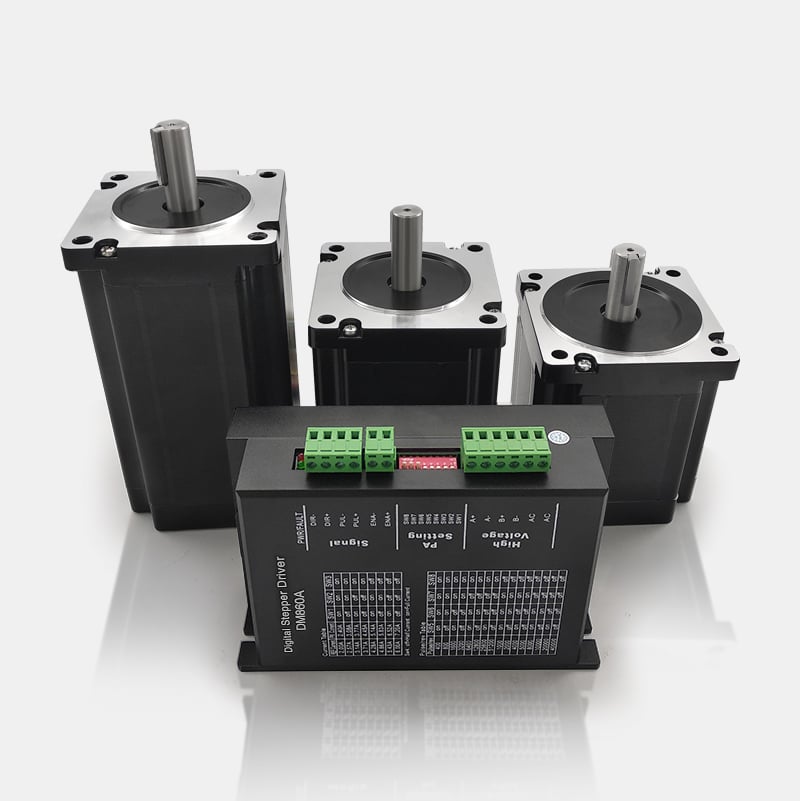
FAQ
How often should stepper driver parameters be adjusted during system operation?
Stepper driver parameters should be initially tuned during system commissioning and then monitored for any required adjustments based on performance feedback. In most industrial applications, parameters remain stable once properly configured, though periodic review is recommended to account for component aging and changes in operating conditions. Systems with varying load conditions may benefit from adaptive tuning algorithms that automatically adjust parameters based on real-time feedback.
What are the most common signs that indicate a stepper driver needs retuning?
Common indicators that suggest stepper driver retuning include increased vibration or noise levels, positioning errors or step loss, excessive heating of motor or driver components, and unstable operation at certain speeds. Changes in system performance, such as reduced acceleration capabilities or hunting behavior during positioning moves, also indicate the need for parameter adjustment. Regular monitoring of these performance indicators helps maintain optimal system operation.
Can improper stepper driver tuning damage the motor or other system components?
Yes, improper stepper driver tuning can potentially damage motors and other system components. Excessive current settings can cause motor overheating and premature bearing failure, while inadequate current may result in step loss and mechanical stress on coupling components. Poor tuning can also lead to resonance conditions that increase wear on mechanical components and reduce overall system lifespan. Proper protection features and conservative tuning approaches help prevent damage during commissioning and operation.
What tools and equipment are needed for effective stepper driver tuning?
Effective stepper driver tuning typically requires oscilloscopes for waveform analysis, current probes for measuring motor currents, and vibration analysis equipment for resonance detection. Digital multimeters, thermal imaging cameras, and positioning measurement devices also support the tuning process. Many modern stepper driver systems include built-in diagnostic features and software tools that simplify the tuning process and provide real-time performance monitoring capabilities.
Table of Contents
- Understanding Stepper Driver Fundamentals
- Critical Tuning Parameters for Optimal Performance
- Impact on Motor Performance and System Reliability
- Advanced Tuning Techniques and Best Practices
- Troubleshooting Common Issues Through Proper Tuning
- Integration Considerations and System Optimization
-
FAQ
- How often should stepper driver parameters be adjusted during system operation?
- What are the most common signs that indicate a stepper driver needs retuning?
- Can improper stepper driver tuning damage the motor or other system components?
- What tools and equipment are needed for effective stepper driver tuning?