
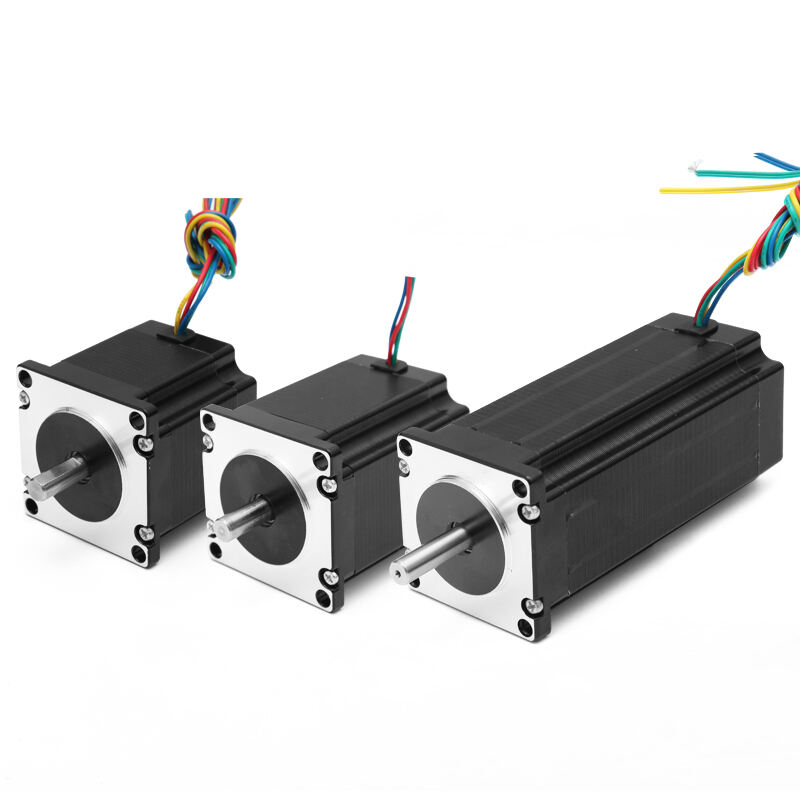
Understanding the relationship between torque and speed in stepper motor applications is crucial for engineers and designers seeking optimal performance in their automated systems. The stepper motor exhibits distinct torque characteristics that vary significantly across different operating speeds, making this knowledge essential for proper motor selection and system design. As rotational velocity increases, the available torque from a stepper motor decreases in a predictable pattern that directly impacts application performance and precision.
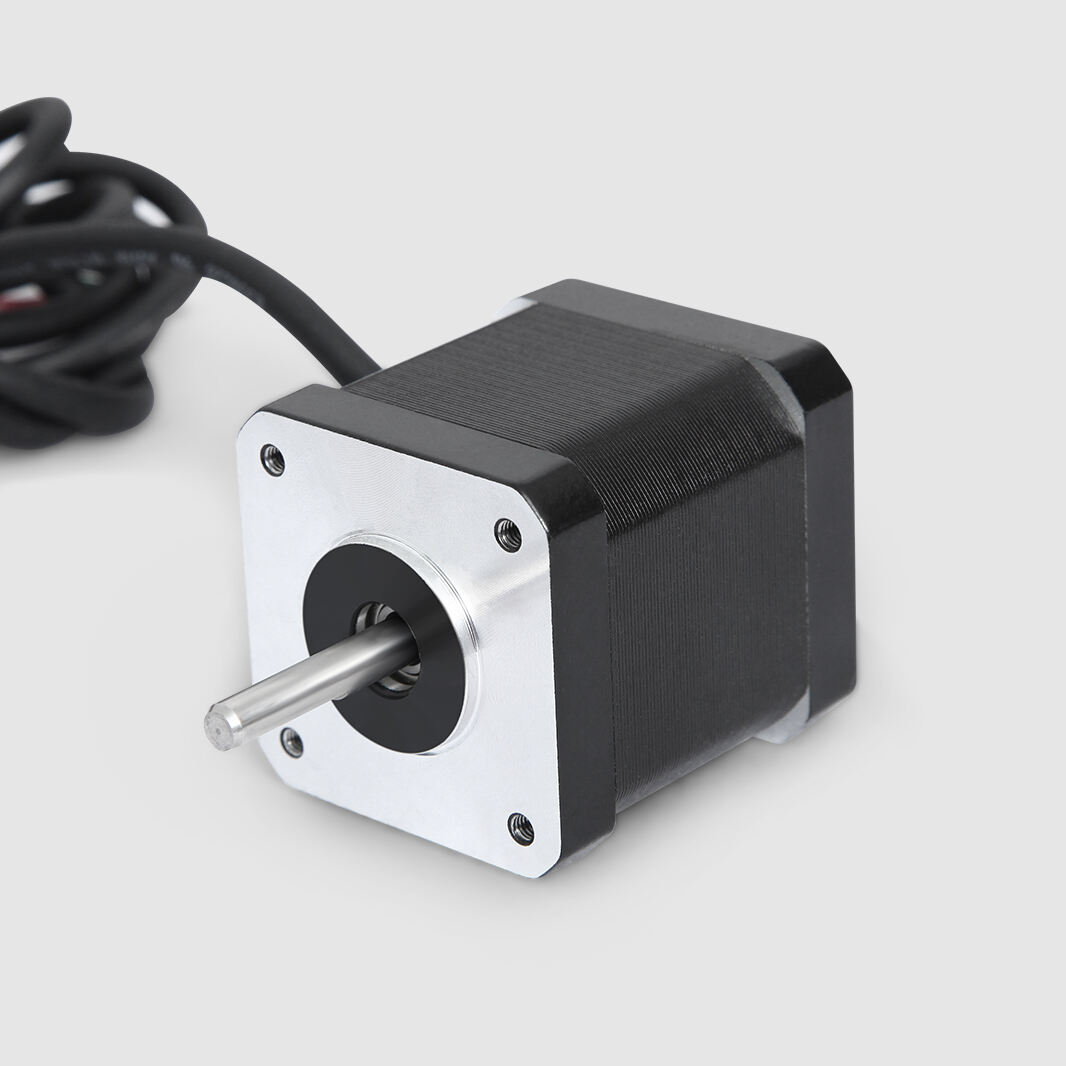
Fundamental Torque Characteristics in Stepper Motors
Static Holding Torque Properties
The static holding torque represents the maximum torque a stepper motor can maintain when stationary and energized. This fundamental characteristic serves as the baseline measurement for all torque specifications and typically occurs at zero speed conditions. A properly designed stepper motor system maintains full holding torque when the rotor remains locked in position, providing exceptional positional stability for precision applications.
Static torque values depend heavily on the motor's construction, winding configuration, and magnetic circuit design. The interaction between permanent magnet rotor strength and electromagnetic field intensity determines the maximum static torque output. Engineers must consider this baseline torque when calculating safety margins for applications requiring precise positioning under varying load conditions.
Dynamic Torque Behavior Patterns
Dynamic torque behavior in stepper motor applications differs dramatically from static conditions as rotational speed increases. The available torque begins decreasing immediately when the motor starts rotating, following a characteristic curve that reflects the motor's electrical and mechanical limitations. This torque reduction occurs due to back-EMF generation and inductance effects that limit current rise time in the motor windings.
The rate of torque decline varies based on drive circuit design, supply voltage, and motor characteristics. Modern stepper motor controllers implement sophisticated current control algorithms to optimize torque delivery across the speed range, but fundamental physical limitations still govern overall performance boundaries.
Speed-Torque Relationship Fundamentals
Low Speed Torque Maintenance
At low operating speeds, a stepper motor maintains torque levels very close to its static holding torque specification. This region, typically extending from zero to several hundred steps per second, represents the optimal operating zone for applications requiring maximum force output. The minimal torque degradation in this speed range makes stepper motors ideal for precision positioning and heavy-load applications.
Current regulation within the motor windings remains highly effective at low speeds, allowing complete energization of the electromagnetic circuits. The extended time available for current rise and fall during each step enables full magnetic field development, resulting in consistent torque production throughout the rotation cycle.
Mid-Range Speed Characteristics
As rotational speed increases into the mid-range, stepper motor torque begins declining more rapidly due to electrical time constant limitations. The inductance of motor windings prevents instantaneous current changes, creating a lag between commanded current and actual current flow. This phenomenon becomes increasingly significant as step rates increase beyond the motor's natural electrical response capabilities.
Drive circuit topology plays a crucial role in mid-range torque performance, with higher supply voltages and advanced current regulation techniques helping maintain torque at elevated speeds. Microstepping drive systems often demonstrate superior mid-range torque characteristics compared to full-step operation modes.
High-Speed Operation Limitations
Back-EMF Impact on Torque
At high rotational speeds, back-EMF generation becomes the dominant factor limiting stepper motor torque output. The rotating permanent magnet rotor generates a counter-voltage that opposes the applied drive voltage, effectively reducing the net voltage available for current generation. This back-EMF increases linearly with speed, creating an inverse relationship between rotational velocity and available torque.
The back-EMF limitation represents a fundamental physical constraint that cannot be overcome through improved drive electronics alone. Engineers must carefully balance speed requirements against torque demands when selecting stepper motor systems for high-velocity applications.
Resonance Effects and Torque Variations
Mechanical resonance phenomena can significantly impact stepper motor torque characteristics at specific speed ranges. These resonant frequencies occur when the step rate coincides with natural mechanical oscillations in the motor-load system, potentially causing torque irregularities or complete loss of synchronization. Identifying and avoiding resonant speeds becomes critical for maintaining consistent stepper motor performance.
Advanced drive systems incorporate resonance damping techniques and frequency avoidance algorithms to minimize these effects. Microstepping operation modes often help reduce resonance sensitivity by providing smoother rotation and distributing energy across multiple step positions.
Drive Circuit Influence on Torque Performance
Voltage and Current Regulation Impact
The drive circuit design significantly influences stepper motor torque characteristics across the entire speed range. Higher supply voltages enable faster current rise times, extending the speed range over which full torque remains available. Current regulation accuracy also affects torque consistency, with precise current control maintaining more uniform torque output during operation.
Modern stepper motor drives implement constant current regulation that automatically adjusts voltage to maintain commanded current levels despite changing motor impedance. This approach optimizes torque production while protecting the motor from overcurrent conditions during various operating scenarios.
Chopping Frequency Effects
The switching frequency used in pulse-width modulated drive circuits affects stepper motor torque smoothness and efficiency. Higher chopping frequencies reduce current ripple and associated torque variations, resulting in smoother operation and reduced acoustic noise. However, excessive switching frequencies can increase drive circuit losses and electromagnetic interference generation.
Optimal chopping frequency selection requires balancing multiple performance factors including torque ripple, efficiency, electromagnetic compatibility, and thermal management. Most modern stepper motor drives employ adaptive frequency control that automatically adjusts switching rates based on operating conditions.
Practical Applications and Design Considerations
Application-Specific Torque Requirements
Different applications demand varying torque characteristics from stepper motor systems, requiring careful analysis of speed-torque relationships during the design phase. Positioning applications typically prioritize high torque at low speeds for accurate positioning under load, while scanning or printing applications may require sustained torque at moderate speeds for consistent motion control.
Load characteristics also influence stepper motor selection, with constant torque loads requiring different considerations than variable or inertial loads. Understanding the complete load profile across the operating speed range enables optimal motor sizing and drive system configuration.
Motor Sizing and Selection Criteria
Proper stepper motor selection requires detailed analysis of the speed-torque curve relative to application requirements. Engineers must account for torque margins, acceleration requirements, and load variations when determining motor specifications. The intersection of required torque and operating speed defines the minimum motor capabilities needed for successful implementation.
Safety factors should be incorporated into motor selection calculations to account for component tolerances, environmental conditions, and aging effects. Typical safety margins range from 25% to 50% depending on application criticality and operating environment severity.
Advanced Control Techniques for Torque Optimization
Microstepping Implementation Benefits
Microstepping control techniques offer significant advantages for stepper motor torque optimization across different speed ranges. By energizing motor windings with intermediate current levels, microstepping reduces torque ripple and enables smoother rotation characteristics. This approach particularly benefits applications requiring consistent torque output at varying speeds.
The increased resolution provided by microstepping also enables more precise speed control and reduced resonance sensitivity. However, microstepping typically results in slightly reduced maximum torque compared to full-step operation, requiring careful trade-off analysis during system design.
Closed-Loop Feedback Integration
Implementing closed-loop feedback systems enhances stepper motor torque utilization by providing real-time performance monitoring and correction capabilities. Encoder feedback enables detection of missed steps or torque inadequacy, allowing the control system to adjust operating parameters or implement recovery procedures.
Advanced closed-loop stepper motor systems can automatically optimize drive parameters based on actual performance feedback, maximizing torque efficiency across varying operating conditions. This approach bridges the gap between traditional open-loop stepper motor operation and servo motor performance characteristics.
FAQ
Why does stepper motor torque decrease with increasing speed?
Stepper motor torque decreases with speed due to electrical limitations in the motor windings and drive circuit. As speed increases, the inductance of the motor windings prevents current from reaching full levels during each step, reducing the magnetic field strength and available torque. Additionally, back-EMF generated by the rotating rotor opposes the applied voltage, further limiting current flow at higher speeds.
What is the typical torque curve shape for a stepper motor?
A typical stepper motor torque curve shows relatively flat torque from zero speed up to a certain point, then begins declining. The curve generally exhibits a sharp drop-off at higher speeds where back-EMF becomes dominant. The exact shape depends on motor design, drive voltage, and current regulation characteristics, but most stepper motors show usable torque extending to several thousand steps per second.
How can I maximize torque at higher speeds in my stepper motor application?
To maximize high-speed torque, increase the drive circuit supply voltage to overcome back-EMF effects and enable faster current rise times. Use drives with sophisticated current regulation and consider microstepping operation modes. Select motors with lower inductance windings when high-speed operation is critical, and ensure proper thermal management to prevent performance degradation due to excessive heating.
What factors should I consider when selecting a stepper motor for variable speed applications?
Consider the complete speed-torque curve relative to your application requirements, not just static torque specifications. Evaluate load characteristics across the operating speed range, including acceleration and deceleration requirements. Factor in environmental conditions, required positioning accuracy, and desired safety margins. Also consider drive circuit capabilities and whether advanced features like microstepping or closed-loop feedback are necessary for optimal performance.