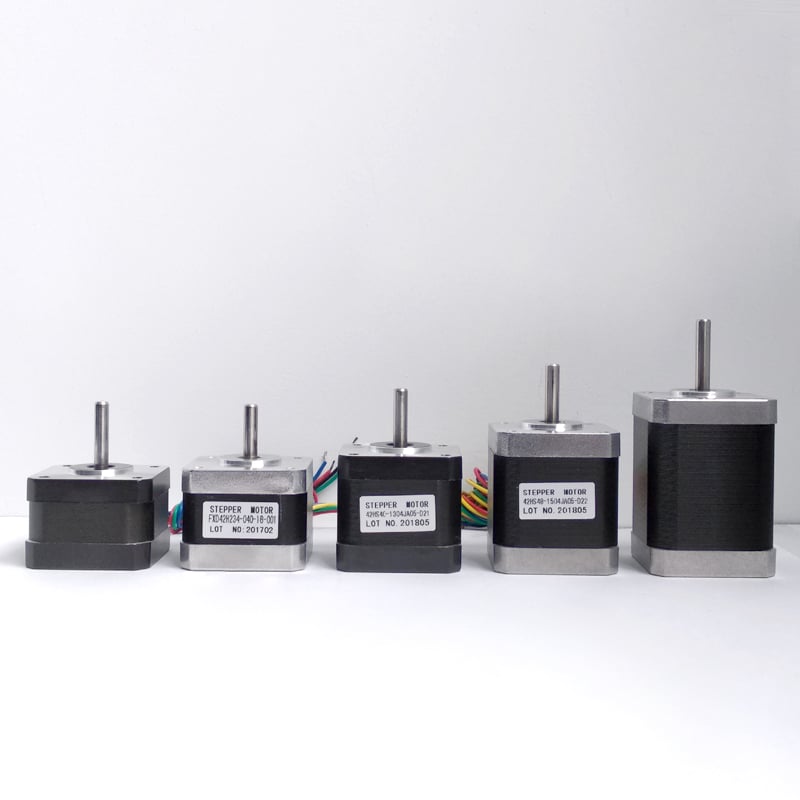
When precision matters most in automated systems, the nema 17 stepper motor stands as a cornerstone component across numerous industrial and commercial applications. These motors deliver exceptional positioning accuracy through their ability to divide a full rotation into precise steps, typically 200 steps per revolution, enabling precise angular control down to 1.8 degrees per step. Understanding which applications depend on this level of accuracy helps engineers and designers select the right motion control solution for their specific requirements.
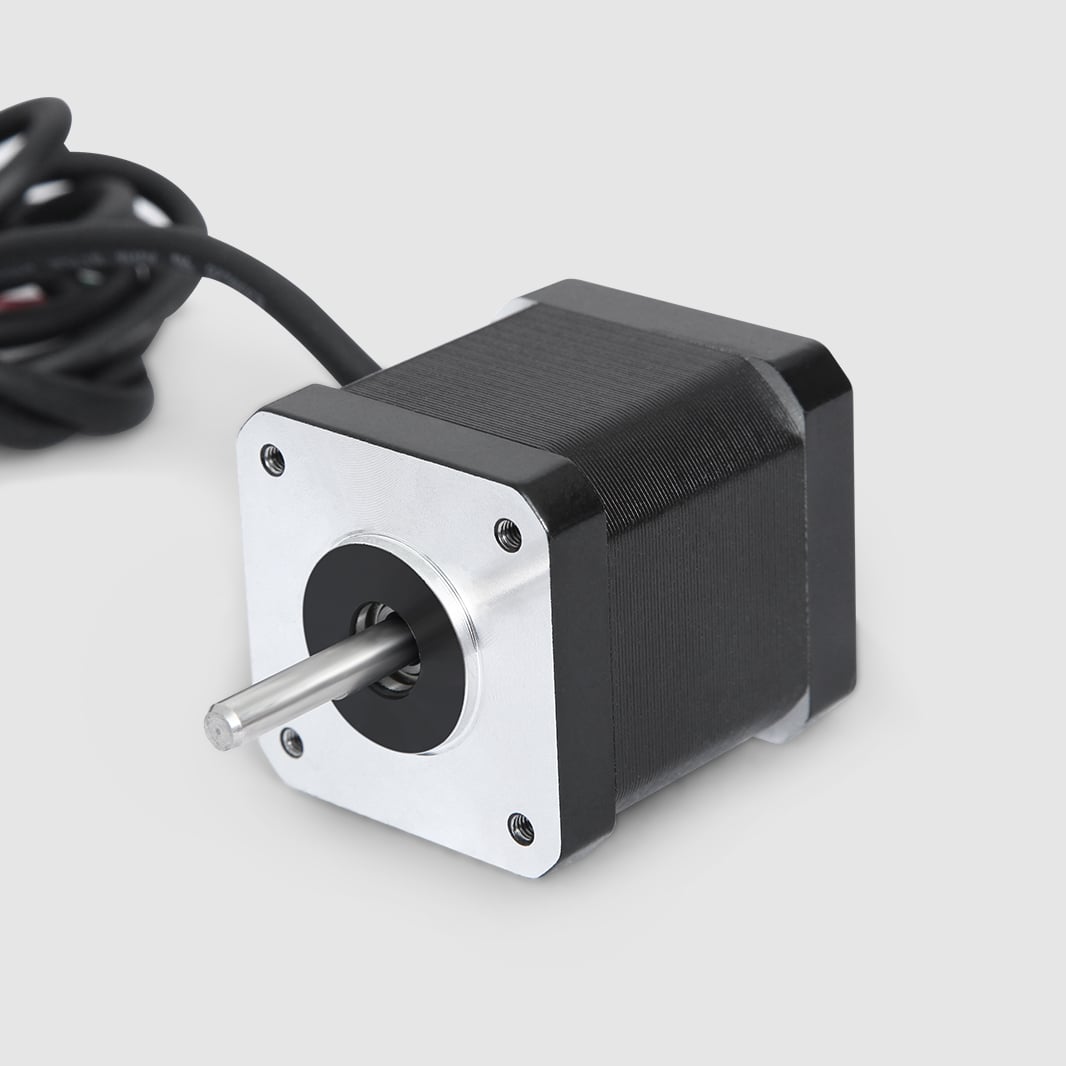
The positioning accuracy of a nema 17 stepper motor makes it indispensable in applications where repeatability and precise control are non-negotiable. From 3D printing systems that must place material with micrometer precision to medical devices that require exact positioning for patient safety, these motors provide the reliability and accuracy that critical applications demand. This exploration examines the specific applications that rely on nema 17 stepper motor positioning accuracy and explains why this motor size has become the standard choice for precision motion control.
3D Printing and Additive Manufacturing Applications
Layer-by-Layer Positioning Requirements
In 3D printing applications, the nema 17 stepper motor serves as the backbone of precise layer positioning and filament control. These motors control the X, Y, and Z axes movement with exceptional accuracy, ensuring that each layer of material deposits exactly where intended. The typical layer height in FDM printing ranges from 0.1mm to 0.3mm, requiring the nema 17 stepper motor to maintain positioning accuracy within these tight tolerances throughout the entire print job.
The extruder mechanism in most desktop 3D printers relies on a nema 17 stepper motor to control filament feed rates with precision. This motor must accurately advance the filament through the hot end at speeds that match the print head movement, preventing under-extrusion or over-extrusion that would compromise print quality. The motor's ability to hold position when not moving also prevents filament from backing up or oozing during print pauses.
Multi-axis coordination in 3D printing demands that multiple nema 17 stepper motors work in perfect synchronization. The positioning accuracy of each motor directly affects the final dimensional accuracy of printed parts, making these motors essential for applications requiring tight tolerances in prototyping, manufacturing fixtures, and end-use parts production.
Print Quality and Surface Finish Control
Surface finish quality in 3D printed parts depends heavily on the positioning accuracy of the nema 17 stepper motor controlling print head movement. Variations in motor positioning create visible layer lines, dimensional inaccuracies, and surface irregularities that compromise part functionality and appearance. The motor's step resolution and microstepping capabilities determine the smoothness of curved surfaces and the precision of geometric features.
Speed consistency provided by the nema 17 stepper motor ensures uniform material deposition across varying print speeds. When printing complex geometries with changing acceleration and deceleration patterns, the motor must maintain accurate positioning throughout speed transitions to prevent artifacts like ringing or ghosting in the final print.
Laboratory Automation and Scientific Instrumentation
Sample Positioning and Analysis Equipment
Laboratory automation systems extensively utilize nema 17 stepper motors for precise sample positioning in analytical instruments. Spectrophotometers, microscopes, and chromatography systems require exact positioning of samples, detectors, and optical components to ensure measurement accuracy and repeatability. The motor's ability to return to precise positions enables automated sample changers to place specimens in exact locations for consistent analysis results.
Liquid handling systems in laboratory automation depend on nema 17 stepper motor positioning accuracy for precise pipetting operations. These motors control syringe pumps, valve positioning, and robotic arm movements that must deliver exact volumes of reagents and samples. Positioning errors of even fractions of a millimeter can result in significant volumetric errors that affect experimental results and reproducibility.
Microscopy applications require the nema 17 stepper motor to position specimens and optical components with sub-micrometer accuracy. Focus mechanisms, stage positioning, and objective lens turrets all rely on precise motor control to maintain optical alignment and enable reproducible imaging results across multiple samples and experimental sessions.
Automated Testing and Measurement Systems
Coordinate measuring machines and dimensional inspection equipment utilize nema 17 stepper motors to position probes and sensors with high accuracy. These applications require the motor to move measurement devices to specific coordinates while maintaining positional accuracy that meets or exceeds the measurement resolution requirements of the system.
Environmental testing chambers employ nema 17 stepper motors to control sample positioning during thermal cycling, humidity exposure, and mechanical stress testing. The motor must maintain accurate positioning throughout temperature variations and environmental changes that could affect motor performance and positioning accuracy.
Medical Device and Healthcare Applications
Diagnostic Equipment Positioning
Medical diagnostic equipment relies heavily on nema 17 stepper motor positioning accuracy for patient safety and diagnostic precision. CT scanners, MRI machines, and X-ray systems use these motors to position patients, detectors, and imaging components with millimeter-level accuracy. Positioning errors in medical imaging can lead to misdiagnosis, repeated procedures, and increased radiation exposure for patients.
Blood analyzers and clinical chemistry instruments depend on precise sample positioning controlled by nema 17 stepper motors. These systems must accurately position sample tubes, reagent dispensers, and optical sensors to ensure reliable test results. The motor's positioning accuracy directly affects the precision of fluid handling operations and the reliability of diagnostic measurements.
Surgical robots and minimally invasive surgical instruments require nema 17 stepper motors for precise tool positioning during procedures. These applications demand exceptional accuracy and reliability, as positioning errors can have serious consequences for patient outcomes. The motor's ability to provide smooth, precise movement enables surgeons to perform delicate procedures with enhanced precision and control.
Therapeutic Device Control
Radiation therapy equipment uses nema 17 stepper motors to position treatment heads and patient positioning systems with extraordinary precision. These applications require positioning accuracy measured in fractions of millimeters to ensure therapeutic radiation targets cancerous tissue while sparing healthy surrounding tissue. The motor's reliability and positioning accuracy are critical for treatment efficacy and patient safety.
Drug delivery systems and infusion pumps rely on nema 17 stepper motor accuracy to control medication dosing with precision. These motors drive syringe mechanisms and valve controls that must deliver exact medication volumes over extended periods. Positioning accuracy directly affects dosing accuracy, making these motors essential for patient safety in critical care applications.
Industrial Manufacturing and Assembly Systems
Pick and Place Operations
Electronic assembly lines extensively use nema 17 stepper motors in pick and place machines that position components on printed circuit boards. These applications require positioning accuracy of 0.05mm or better to ensure proper component placement and electrical connections. The motor must repeatedly return to exact positions thousands of times per day while maintaining accuracy throughout extended operation cycles.
Component orientation and rotation during pick and place operations depend on nema 17 stepper motor accuracy to ensure proper alignment before placement. The motor's step resolution enables precise angular positioning of components, preventing placement errors that could cause assembly defects or electrical failures in finished products.
Vision system alignment in automated assembly relies on nema 17 stepper motors to position cameras and lighting for component inspection. These systems require accurate positioning to maintain consistent imaging conditions and ensure reliable defect detection throughout production runs.
Precision Machining and Tool Control
CNC machines and precision machining centers utilize nema 17 stepper motors for tool positioning and workpiece clamping systems. While larger motors typically drive main axes, nema 17 stepper motors control auxiliary functions like tool changers, coolant nozzles, and part probes that require precise positioning for optimal machining performance.
Quality control systems in manufacturing environments depend on nema 17 stepper motor positioning accuracy for dimensional inspection and measurement operations. These motors position measurement probes, optical sensors, and scanning devices that must maintain accuracy throughout production shifts to ensure consistent product quality.
Optical and Imaging System Applications
Camera and Lens Positioning Systems
Professional photography and videography equipment uses nema 17 stepper motors for precise focus control and lens positioning. These motors enable smooth, accurate focus pulls and zoom operations that are essential for high-quality image and video production. The motor's positioning accuracy determines the precision of focus adjustments and the repeatability of camera movements in automated systems.
Surveillance and security camera systems rely on nema 17 stepper motor accuracy for pan, tilt, and zoom operations. These motors must position cameras precisely to specific viewing angles and zoom levels while maintaining accuracy throughout continuous operation cycles. Positioning accuracy affects the system's ability to return to preset positions and track subjects accurately.
Telescopes and astronomical equipment depend on nema 17 stepper motors for precise tracking and positioning of optical components. These applications require exceptional positioning accuracy to maintain celestial objects in view during long exposure photography and observation sessions. The motor's accuracy directly affects the quality of astronomical imaging and measurement results.
Laser System Beam Control
Laser cutting and engraving systems utilize nema 17 stepper motors for precise beam positioning and material handling. These motors control galvanometer mirrors, beam steering mechanisms, and workpiece positioning systems that must maintain accuracy throughout cutting operations. Positioning errors can result in cut quality variations, dimensional inaccuracies, and material waste.
Laser scanning and measurement systems depend on nema 17 stepper motor positioning accuracy for precise beam control during data collection operations. These applications require accurate positioning to ensure measurement repeatability and data quality in applications ranging from reverse engineering to quality inspection.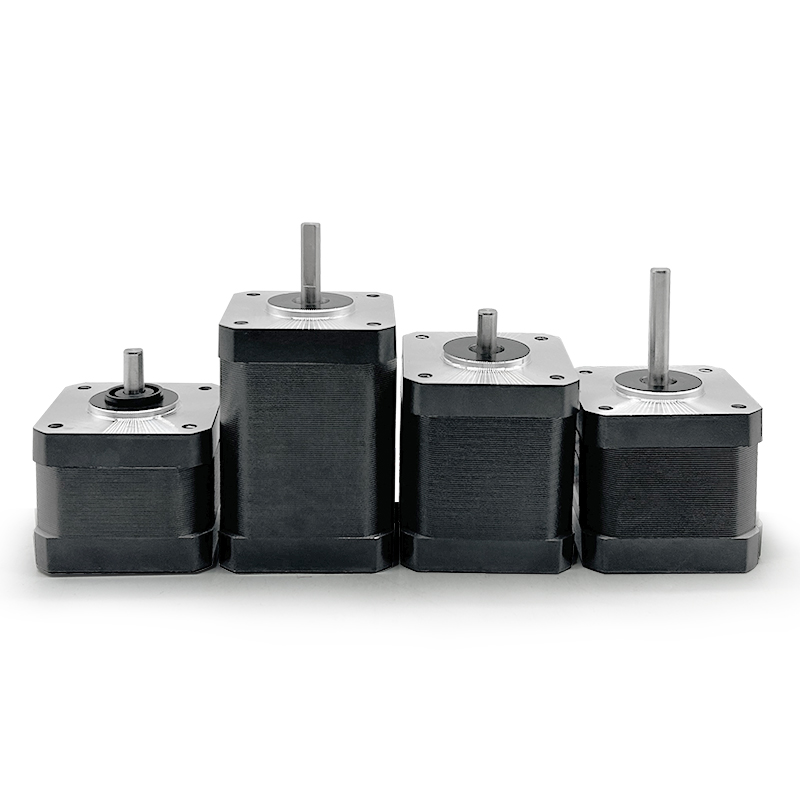
FAQ
What level of positioning accuracy can nema 17 stepper motors achieve?
Nema 17 stepper motors typically achieve positioning accuracy of 1.8 degrees per full step, which translates to 200 steps per full rotation. With microstepping drivers, positioning resolution can be increased to fractions of a degree, enabling positioning accuracy down to 0.1 degrees or better depending on the drive system and mechanical load characteristics.
How does positioning accuracy affect application performance in critical systems?
In critical applications like medical devices and precision manufacturing, nema 17 stepper motor positioning accuracy directly affects system performance, product quality, and safety outcomes. Positioning errors can result in defective products, measurement inaccuracies, and in medical applications, potential patient safety issues. The motor's accuracy must meet or exceed application requirements to ensure reliable operation.
What factors can affect nema 17 stepper motor positioning accuracy over time?
Several factors can impact nema 17 stepper motor positioning accuracy including mechanical wear, temperature variations, electrical noise, inadequate power supply regulation, and mechanical resonance. Proper motor sizing, appropriate driver selection, regular maintenance, and environmental control help maintain positioning accuracy throughout the motor's operational life in precision applications.
Can nema 17 stepper motors maintain accuracy in high-speed applications?
Nema 17 stepper motors can maintain positioning accuracy at moderate speeds, but accuracy may decrease at very high speeds due to torque limitations and potential step loss. Applications requiring both high speed and high accuracy may benefit from microstepping drivers, proper acceleration profiles, and closed-loop control systems to maintain positioning accuracy throughout the speed range.
Table of Contents
- 3D Printing and Additive Manufacturing Applications
- Laboratory Automation and Scientific Instrumentation
- Medical Device and Healthcare Applications
- Industrial Manufacturing and Assembly Systems
- Optical and Imaging System Applications
-
FAQ
- What level of positioning accuracy can nema 17 stepper motors achieve?
- How does positioning accuracy affect application performance in critical systems?
- What factors can affect nema 17 stepper motor positioning accuracy over time?
- Can nema 17 stepper motors maintain accuracy in high-speed applications?