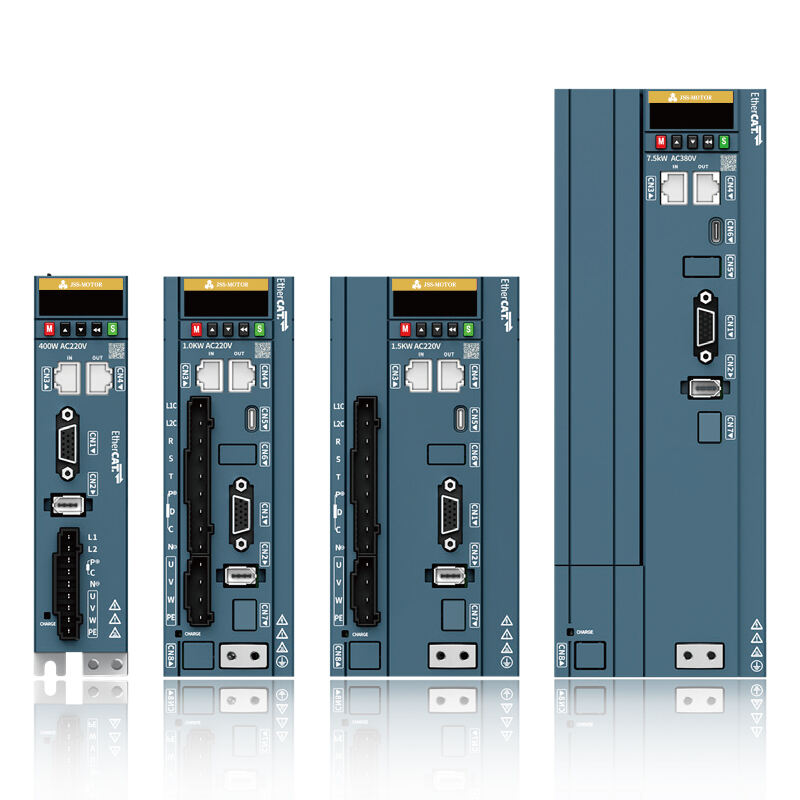
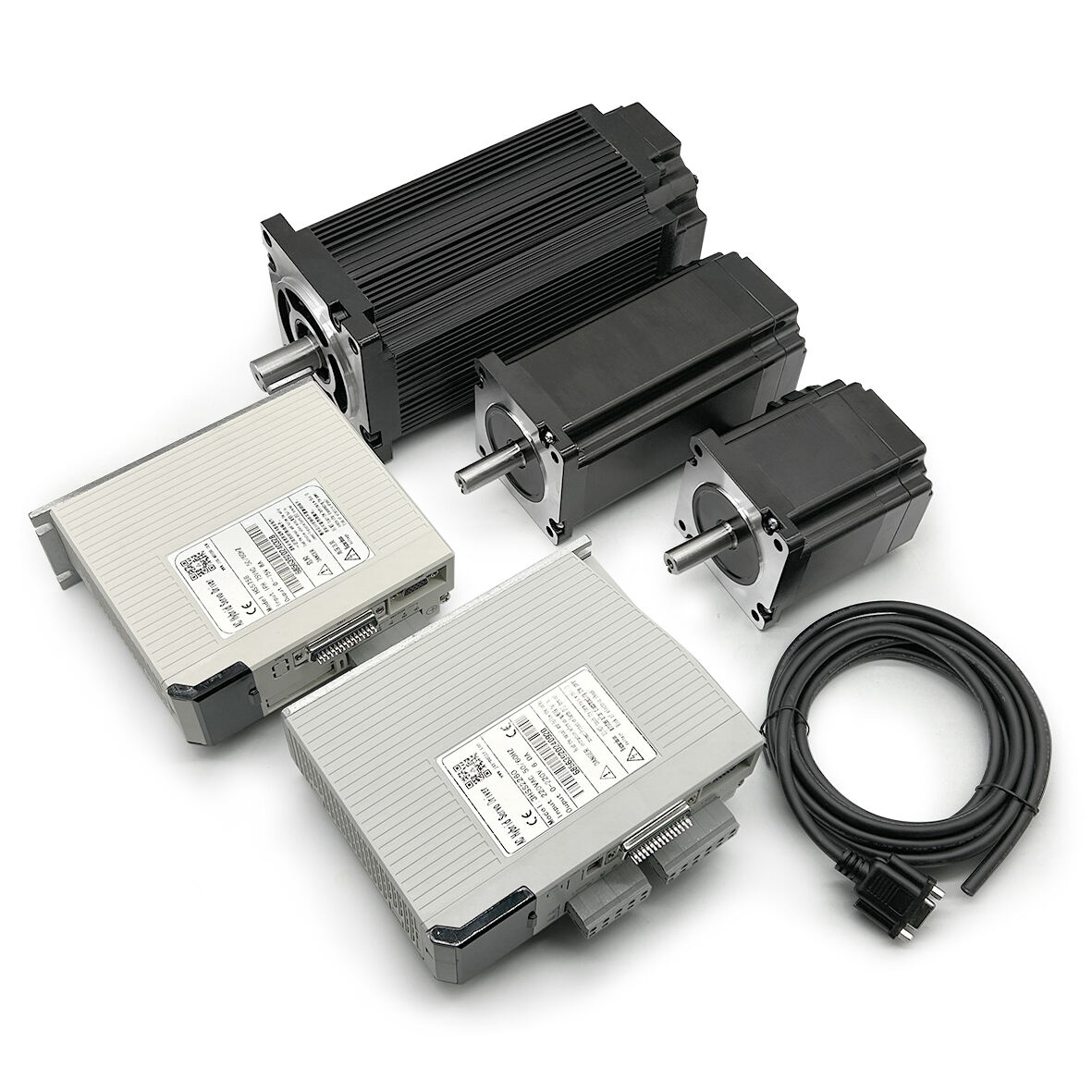
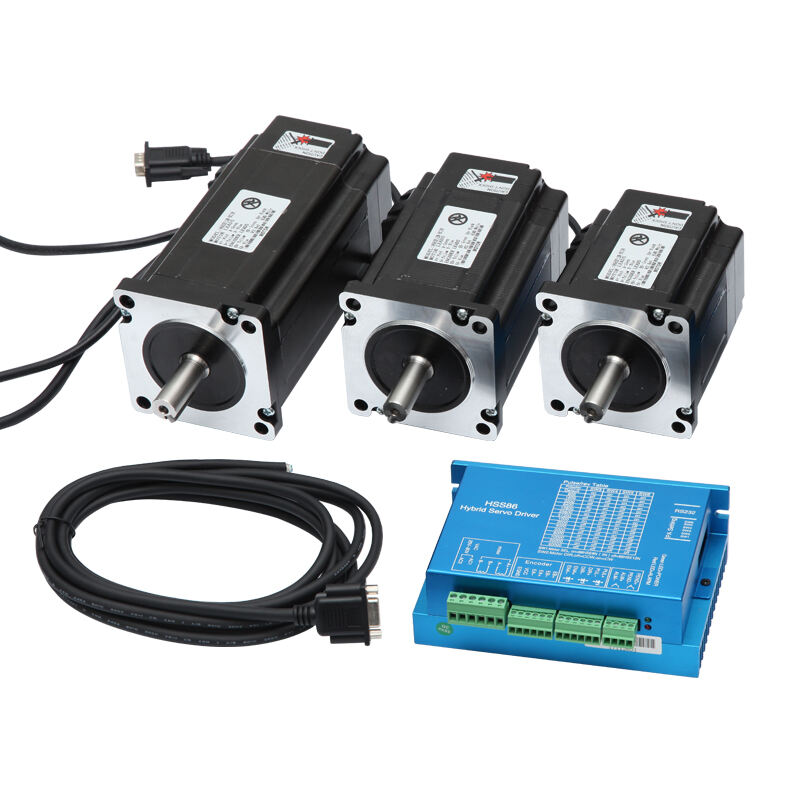
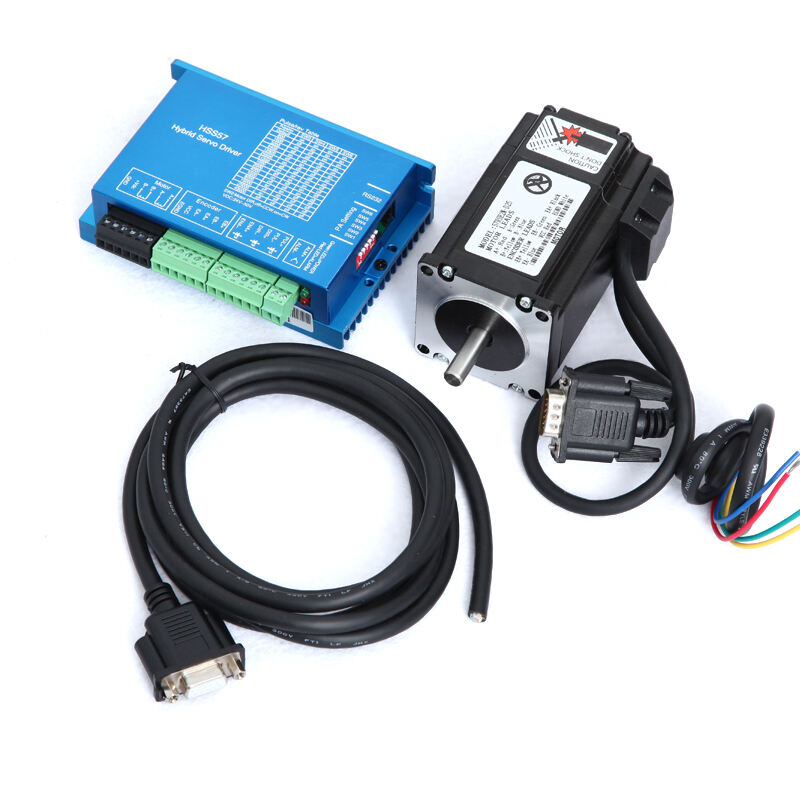
Step Servo Drive Technology: Precision Motion Control Solutions for Industrial Automation

Get a Free Quote

Our representative will contact you soon.
Email
Name
Company Name
WhatsApp
Mobile
Message
0/1000

step servo drive

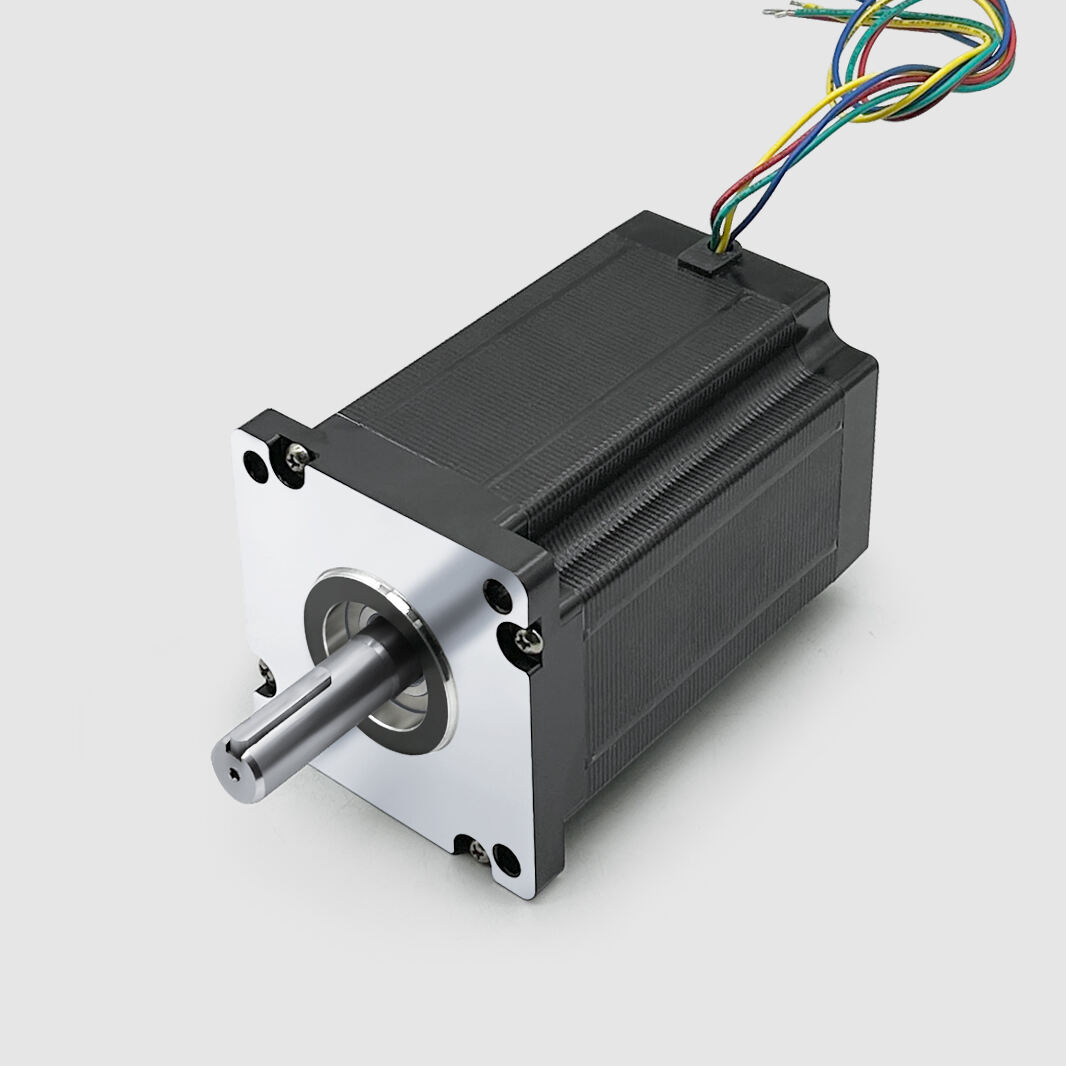
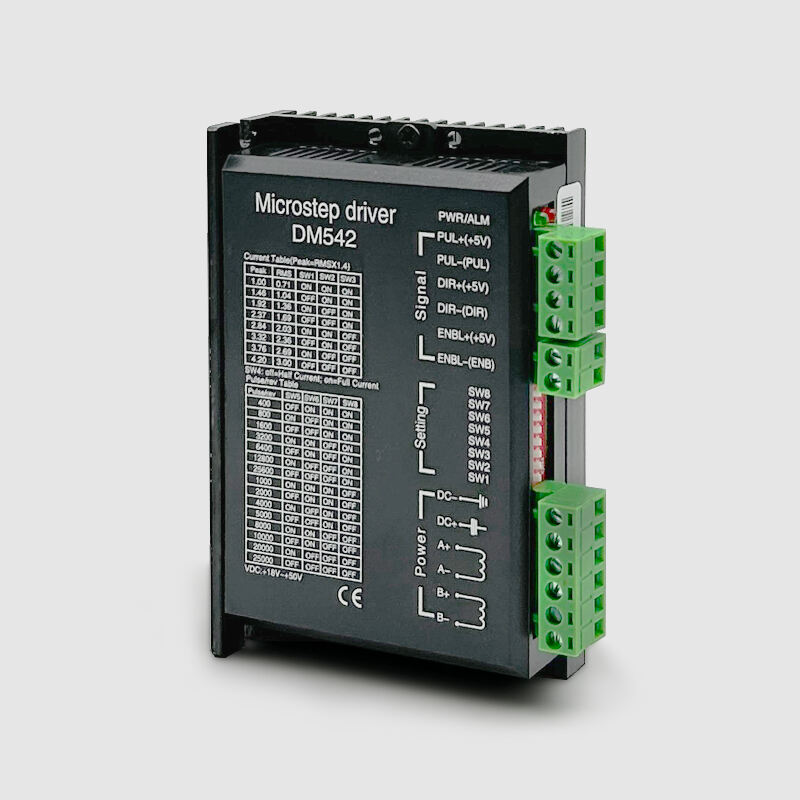
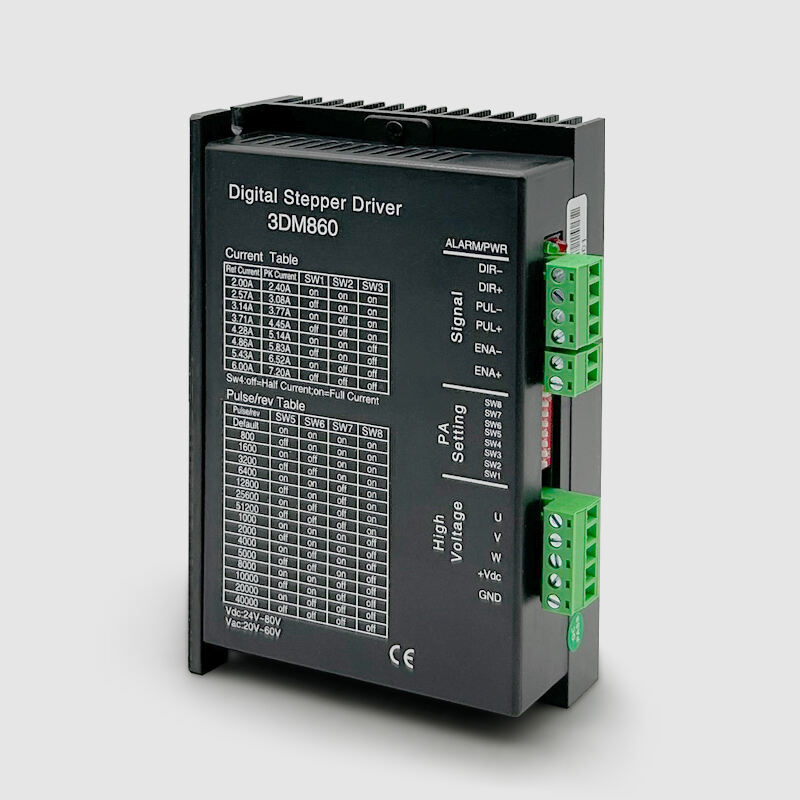
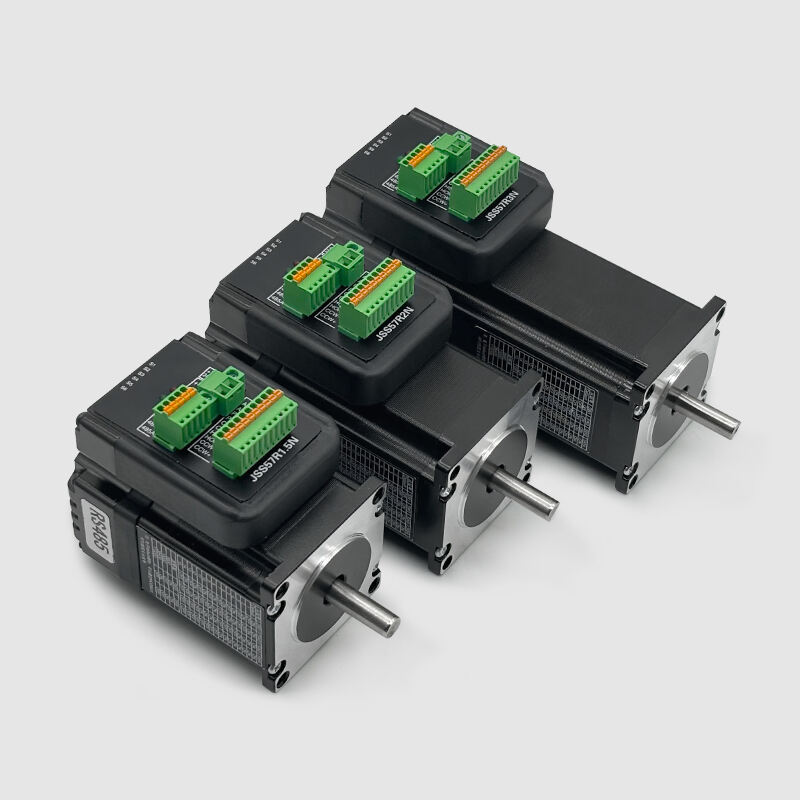
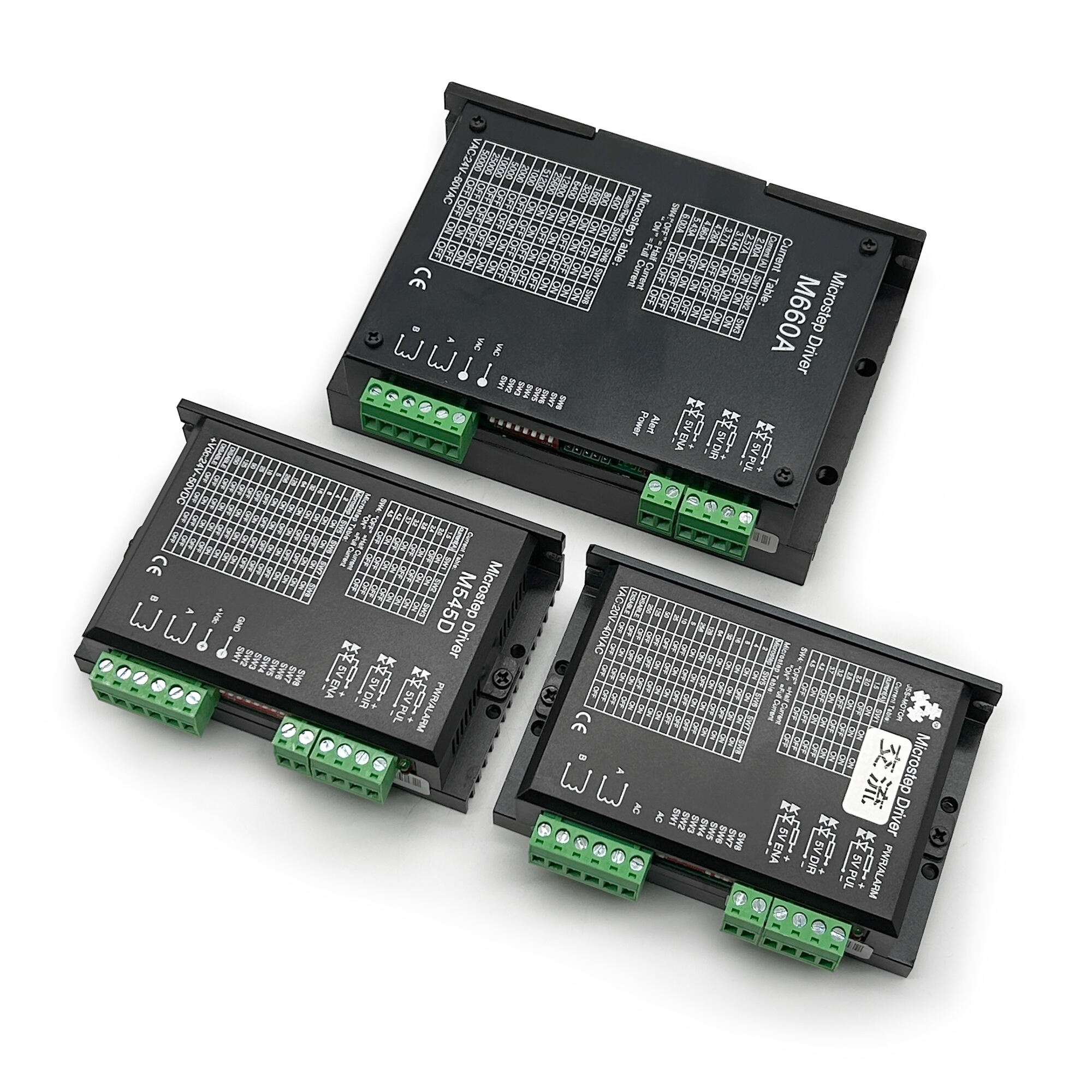
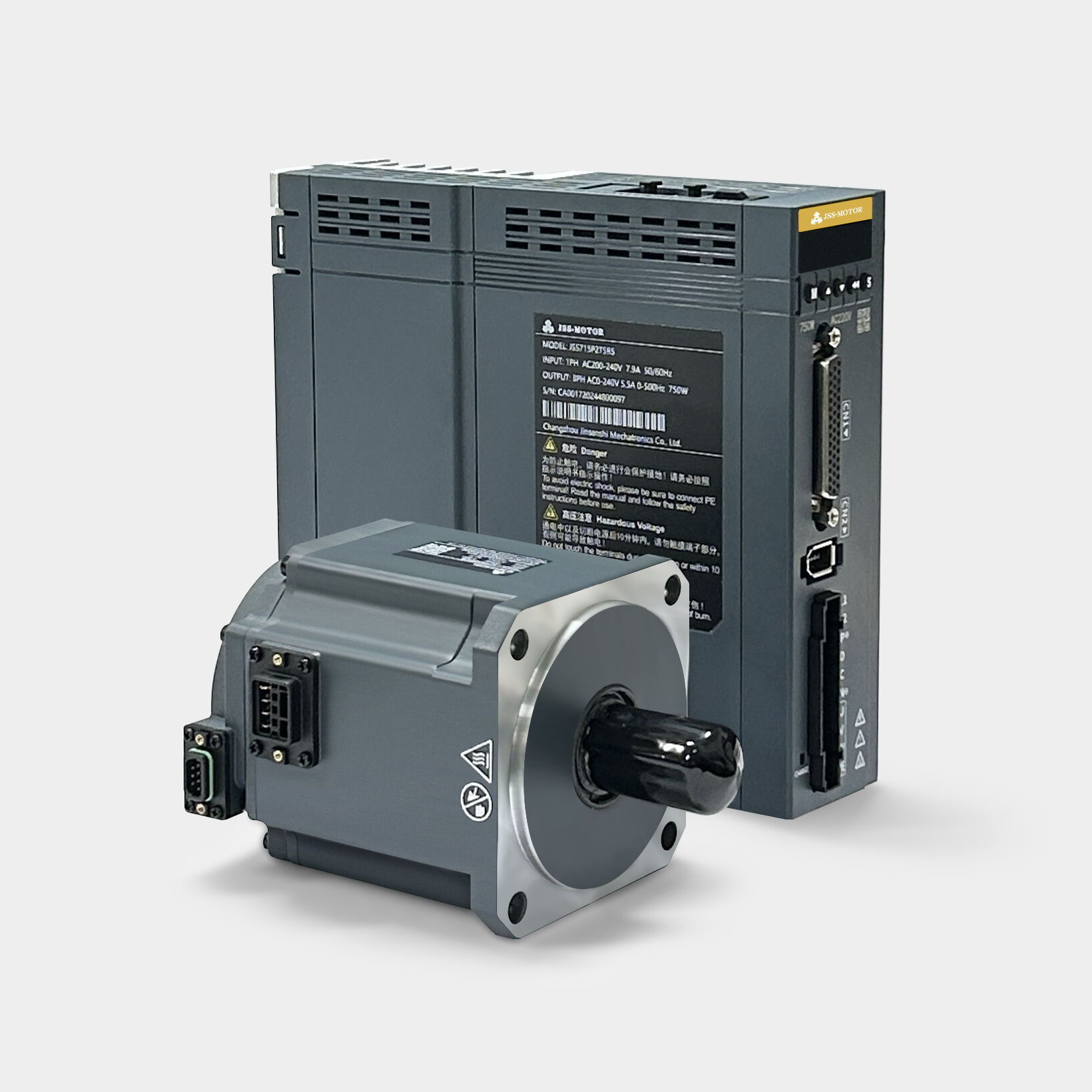
A step servo drive represents a sophisticated motion control solution that combines the precision positioning capabilities of stepper motors with the advanced feedback control systems found in servo drives. This innovative technology bridges the gap between traditional stepper motor systems and full servo solutions, offering engineers and manufacturers a cost-effective alternative for applications requiring precise motion control. The step servo drive operates by utilizing encoder feedback to monitor and correct the actual position of the motor shaft, ensuring accurate positioning even under varying load conditions. Unlike conventional open-loop stepper systems that can lose steps under excessive load or high-speed conditions, the step servo drive maintains closed-loop control, automatically compensating for any positional errors. The system incorporates advanced algorithms that detect missed steps and immediately corrects them, preventing cumulative positioning errors that could compromise system performance. This technology proves particularly valuable in applications where traditional steppers might struggle, such as high-speed operations, variable load conditions, or environments requiring exceptional accuracy. The step servo drive typically features multiple control modes, including position, velocity, and torque control, providing versatility across diverse applications. These drives support various communication protocols, including pulse and direction signals, analog inputs, and digital fieldbus communications, ensuring seamless integration with existing control systems. The compact design of modern step servo drives makes them suitable for space-constrained applications while maintaining robust performance characteristics. Energy efficiency represents another key aspect, as these drives optimize power consumption by adjusting current delivery based on actual load requirements. The step servo drive technology continues evolving, incorporating features like auto-tuning capabilities, built-in safety functions, and enhanced diagnostic tools that simplify installation, commissioning, and maintenance procedures for end users.

New Products

The step servo drive delivers significant advantages that make it an attractive choice for modern automation applications. First and foremost, these drives eliminate the step loss issues commonly associated with traditional stepper motor systems. When operating under heavy loads or at high speeds, conventional steppers may skip steps, leading to positioning errors that accumulate over time. The step servo drive prevents this problem through continuous position feedback, automatically detecting and correcting any deviations from the commanded position. This closed-loop operation ensures consistent accuracy throughout the entire operating range, providing users with reliable and repeatable performance. Cost-effectiveness represents another major advantage, as step servo drives typically cost significantly less than full servo systems while delivering comparable performance for many applications. This economic benefit allows manufacturers to implement precise motion control solutions without exceeding budget constraints. The drives also offer simplified installation and setup procedures compared to complex servo systems. Many step servo drives feature plug-and-play functionality, allowing direct replacement of existing stepper drives without extensive rewiring or reprogramming. Auto-tuning capabilities further reduce commissioning time by automatically optimizing control parameters based on the connected motor and load characteristics. Energy efficiency improvements contribute to lower operational costs and reduced environmental impact. The step servo drive adjusts motor current based on actual torque requirements, consuming less power during light-load conditions compared to traditional stepper drives that maintain constant current. This intelligent power management extends motor life by reducing heat generation and mechanical stress. Versatility in control options enables these drives to adapt to various application requirements. Users can select from multiple control modes, input signal types, and communication protocols, ensuring compatibility with diverse control architectures. Enhanced diagnostic capabilities help minimize downtime by providing real-time status information and fault detection. These features enable predictive maintenance strategies and rapid troubleshooting, ultimately improving overall system reliability and productivity for end users.

Practical Tips

Is closed-loop feedback worth adding to a standard stepper motor driver?

26

Sep

Is closed-loop feedback worth adding to a standard stepper motor driver?

Understanding the Evolution of Stepper Motor Control Systems The world of motion control has witnessed remarkable advancements in recent years, particularly in how we approach stepper motor control. Traditional open-loop stepper systems have served i...
View More
2025 Guide: How AC Servo Motors Transform Industrial Automation

20

Oct

2025 Guide: How AC Servo Motors Transform Industrial Automation

The Evolution of Industrial Motion Control Technology Industrial automation has witnessed a remarkable transformation over the past decades, with ac servo motors emerging as the cornerstone of precise motion control. These sophisticated devices have ...
View More
Closed Loop Stepper Motor: Benefits for Automation

12

Dec

Closed Loop Stepper Motor: Benefits for Automation

Modern automation systems demand precise motion control that delivers consistent performance across diverse industrial applications. Traditional open-loop stepper motors have long served as workhorses in manufacturing environments, but the evolution ...
View More
Industrial Servo Drive Systems: Benefits & Applications

12

Dec

Industrial Servo Drive Systems: Benefits & Applications

Industrial automation has revolutionized manufacturing processes across countless industries, with precision motion control serving as a cornerstone of modern production systems. At the heart of these sophisticated control mechanisms lies the servo d...
View More

Get a Free Quote

Our representative will contact you soon.
Email
Name
Company Name
WhatsApp
Mobile
Message
0/1000

step servo drive

Superior Positioning Accuracy Through Closed-Loop Control

Superior Positioning Accuracy Through Closed-Loop Control

The step servo drive revolutionizes motion control precision through its advanced closed-loop positioning system that continuously monitors and corrects motor position in real-time. Unlike traditional open-loop stepper systems that operate blindly without feedback, the step servo drive incorporates high-resolution encoders that provide constant position verification. This closed-loop architecture ensures that the motor shaft reaches and maintains the exact commanded position, regardless of external disturbances or varying load conditions. The system employs sophisticated control algorithms that compare the commanded position with the actual encoder feedback, instantly calculating any deviation and applying corrective action. This real-time correction capability prevents the accumulation of positioning errors that plague conventional stepper systems, particularly during high-speed operations or when encountering unexpected load variations. The step servo drive maintains positioning accuracy within microstepping resolution throughout its entire speed range, from precise creeping speeds to maximum velocity operations. This consistent accuracy proves invaluable in applications requiring tight tolerances, such as precision manufacturing, medical equipment, and scientific instrumentation. The closed-loop control also enables the drive to recover automatically from external disturbances like mechanical obstructions or sudden load changes, ensuring continuous operation without operator intervention. Furthermore, the system provides position holding capability that maintains precise positioning even when the motor is at rest, preventing drift or movement due to external forces. The step servo drive technology includes advanced filtering and noise rejection features that ensure stable operation even in electrically noisy industrial environments, maintaining positioning integrity under challenging conditions that might cause instability in other motion control solutions.
Seamless Integration and Simplified Installation Process

Seamless Integration and Simplified Installation Process

The step servo drive excels in providing effortless integration capabilities that streamline the implementation process for engineers and system integrators. This technology supports multiple interface options, including traditional pulse and direction signals, analog voltage inputs, and modern digital communication protocols, ensuring compatibility with virtually any control system architecture. The drive accepts standard stepper motor control signals, enabling direct replacement of existing stepper drives without requiring changes to the host controller or extensive rewiring of control panels. This backward compatibility feature significantly reduces installation time and costs while providing immediate performance improvements. The step servo drive incorporates intelligent auto-configuration features that automatically detect connected motor parameters and optimize control settings accordingly. This automated setup process eliminates the need for complex manual tuning procedures that typically require specialized knowledge and extensive testing. Users simply connect the motor and power supply, and the drive automatically configures itself for optimal performance. The system also includes comprehensive parameter storage and backup capabilities, allowing easy replication of settings across multiple machines or quick restoration after maintenance activities. Built-in safety features ensure reliable operation during installation and commissioning phases, including over-current protection, over-voltage monitoring, and thermal management systems. The compact form factor of modern step servo drives facilitates installation in space-constrained applications, while standardized mounting dimensions ensure compatibility with existing enclosures and mounting systems. Comprehensive documentation and support tools, including software utilities for parameter configuration and system monitoring, further simplify the integration process. The step servo drive technology also provides extensive diagnostic and monitoring capabilities that assist during installation verification and ongoing system optimization, ensuring successful implementation across diverse application requirements.
Enhanced Energy Efficiency and Operational Cost Reduction

Enhanced Energy Efficiency and Operational Cost Reduction

The step servo drive delivers exceptional energy efficiency improvements that translate directly into reduced operational costs and environmental benefits for users. Traditional stepper motor drives maintain constant current flow to the motor windings regardless of load conditions, resulting in continuous power consumption and heat generation even when minimal torque is required. The step servo drive employs intelligent current control algorithms that dynamically adjust power delivery based on actual load requirements and operational conditions. During light-load operations or holding positions, the drive reduces current consumption significantly while maintaining adequate holding torque, resulting in substantial energy savings over extended operating periods. This adaptive power management system also reduces motor heating, extending motor life and improving overall system reliability. The drive incorporates advanced power factor correction and switching techniques that maximize electrical efficiency throughout the entire operating range. High-frequency switching power supplies and optimized motor drive circuits minimize power losses, ensuring that maximum energy reaches the motor rather than being dissipated as waste heat. The step servo drive also features automatic standby modes that further reduce power consumption during idle periods while maintaining rapid response capability when motion commands are received. Energy monitoring and reporting capabilities allow users to track power consumption patterns and optimize system operation for maximum efficiency. The reduced heat generation achieved through efficient power management decreases cooling requirements in control enclosures, providing additional energy savings and enabling more compact system designs. Regenerative braking capabilities in some step servo drive models can even recover energy during deceleration phases, feeding power back into the supply system for use by other equipment. These comprehensive energy efficiency features not only reduce electrical operating costs but also support corporate sustainability initiatives and environmental compliance requirements, making the step servo drive an economically and environmentally responsible choice for modern automation applications.
+86-13401517369
[email protected]

Get a Free Quote

Our representative will contact you soon.
Email
Name
Company Name
WhatsApp
Mobile
Message
0/1000

Copyright © 2026 Changzhou Jinsanshi Mechatronics Co., Ltd. All rights reserved.  -  Privacy policy