Advanced Control Flexibility and Precision Positioning
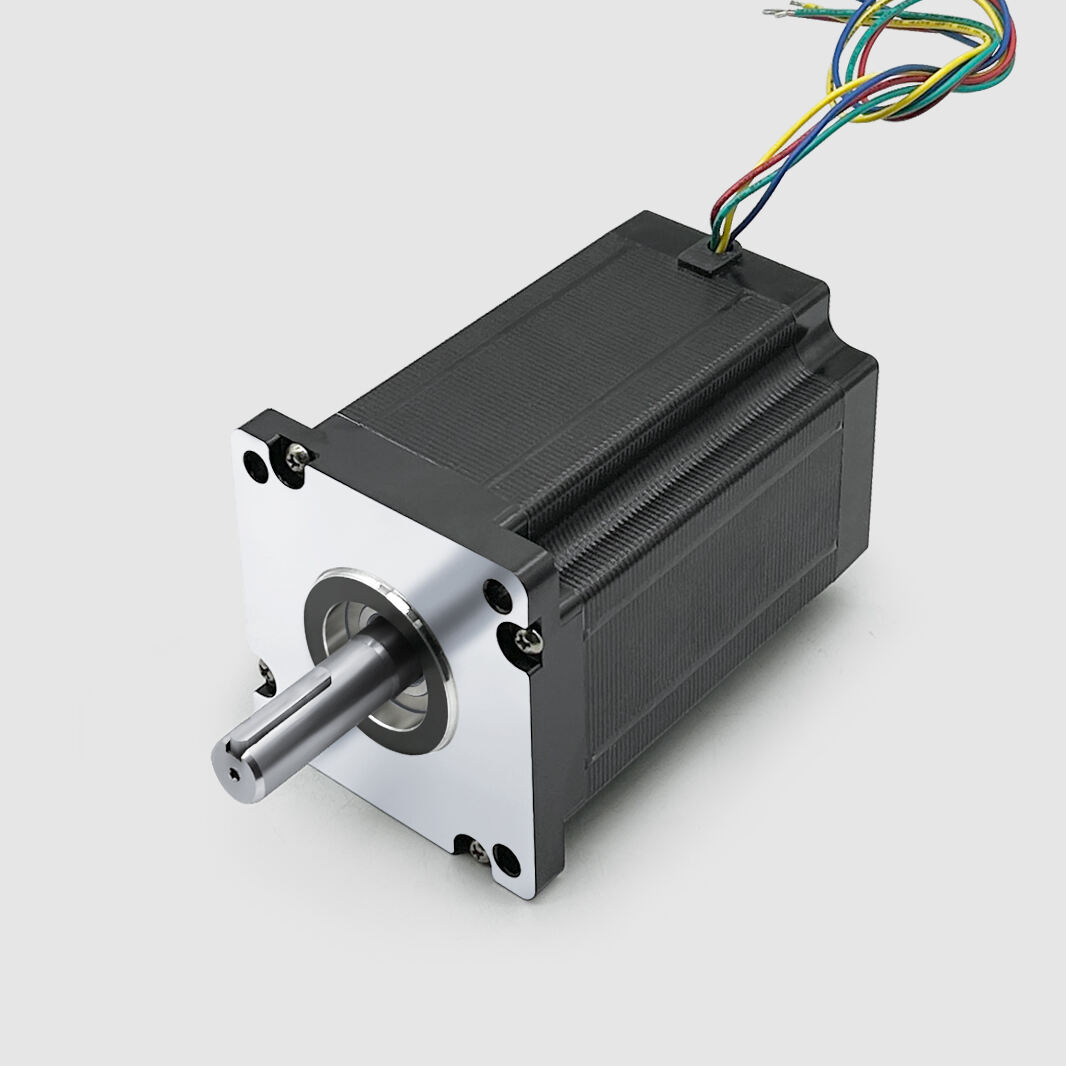
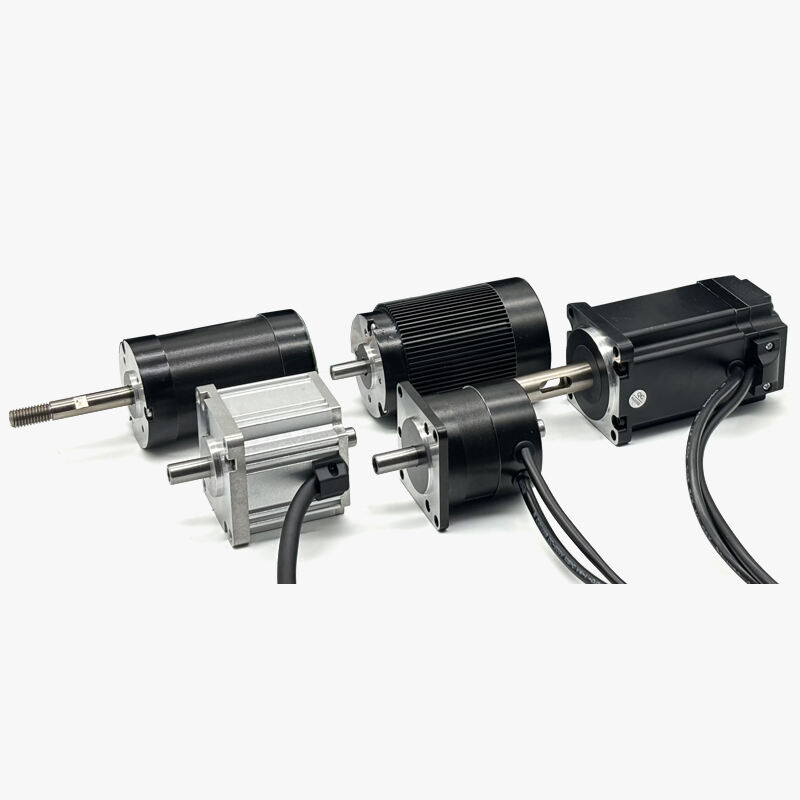
The motor paso a paso nema 34 provides unmatched control flexibility that sets it apart from conventional motor solutions, offering users multiple operational modes to optimize performance for specific applications. This versatility begins with support for various stepping modes, including full-step operation for maximum torque, half-step for improved resolution, and advanced microstepping capabilities that can divide each full step into up to 256 microsteps. The microstepping feature represents a significant technological advancement, virtually eliminating the vibration and noise typically associated with stepping motors while dramatically improving positional resolution. When operating in microstep mode, the motor paso a paso nema 34 can achieve positioning accuracy within a fraction of a degree, making it suitable for extremely precise applications such as optical equipment positioning, semiconductor manufacturing, and scientific instrumentation. The motor supports both bipolar and unipolar winding configurations, allowing seamless integration with different driver systems and control architectures. This flexibility enables users to select the optimal drive method based on their specific requirements for speed, torque, or power consumption. The motor paso a paso nema 34 responds instantly to control signals without the complex tuning requirements associated with servo systems, simplifying programming and reducing commissioning time. Its open-loop operation eliminates the need for feedback devices in many applications, though the motor readily accepts encoder integration for closed-loop control when maximum accuracy is required. The stepping nature of the motor provides inherent position retention, maintaining accurate positioning even during power outages or system interruptions. Control interfaces accommodate various signal types, including step and direction signals, pulse trains, and direct digital control from PLCs or motion controllers. The motor's precise stepping characteristics enable accurate velocity control across a wide range of speeds, from ultra-slow creep speeds measured in steps per minute to rapid positioning sequences exceeding several thousand steps per second.