NEMA 23 Hybrid Stepper Motor - High-Precision Motion Control Solutions

Get a Free Quote

Our representative will contact you soon.
Email
Name
Company Name
WhatsApp
Mobile
Message
0/1000

nema 23 hybrid stepper motor

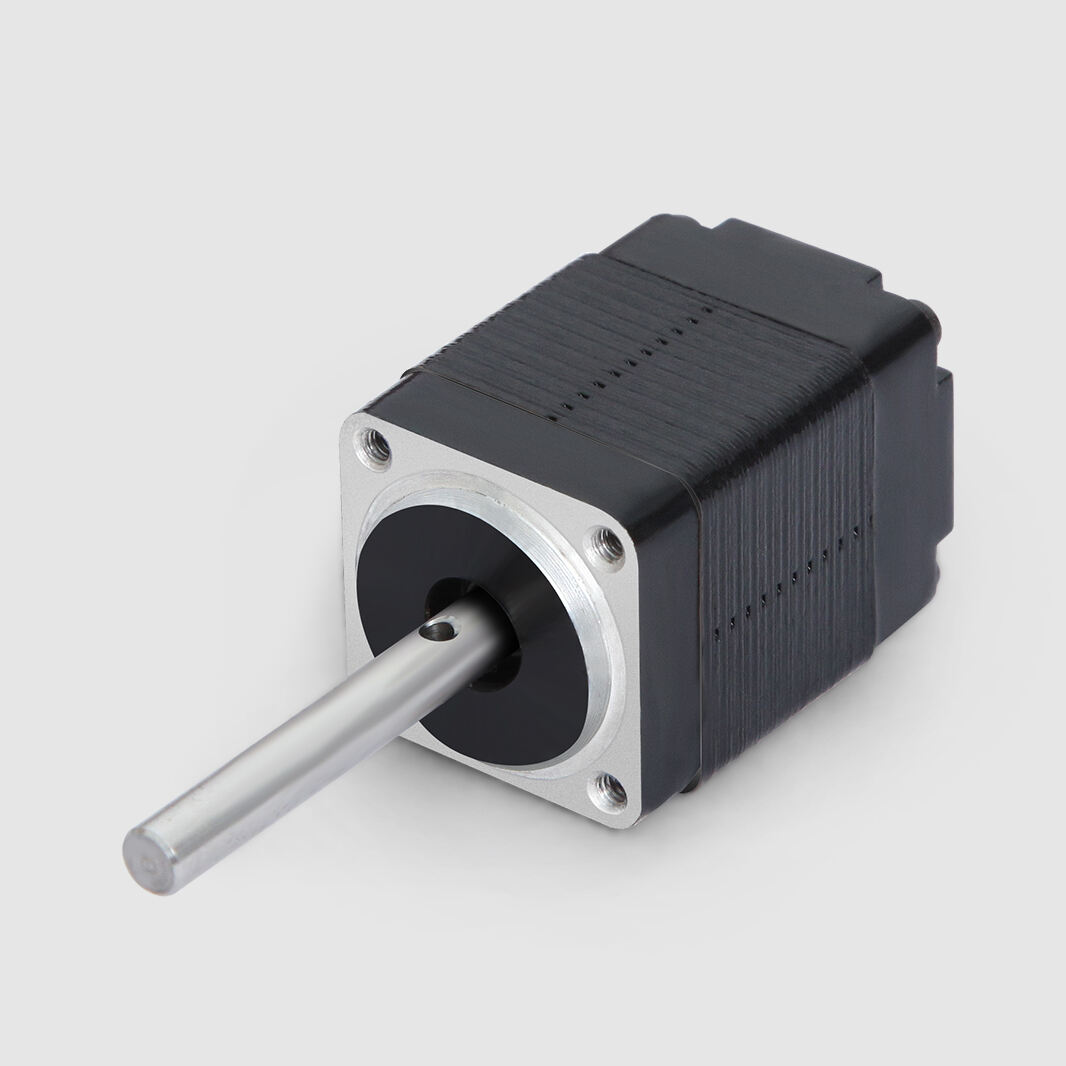
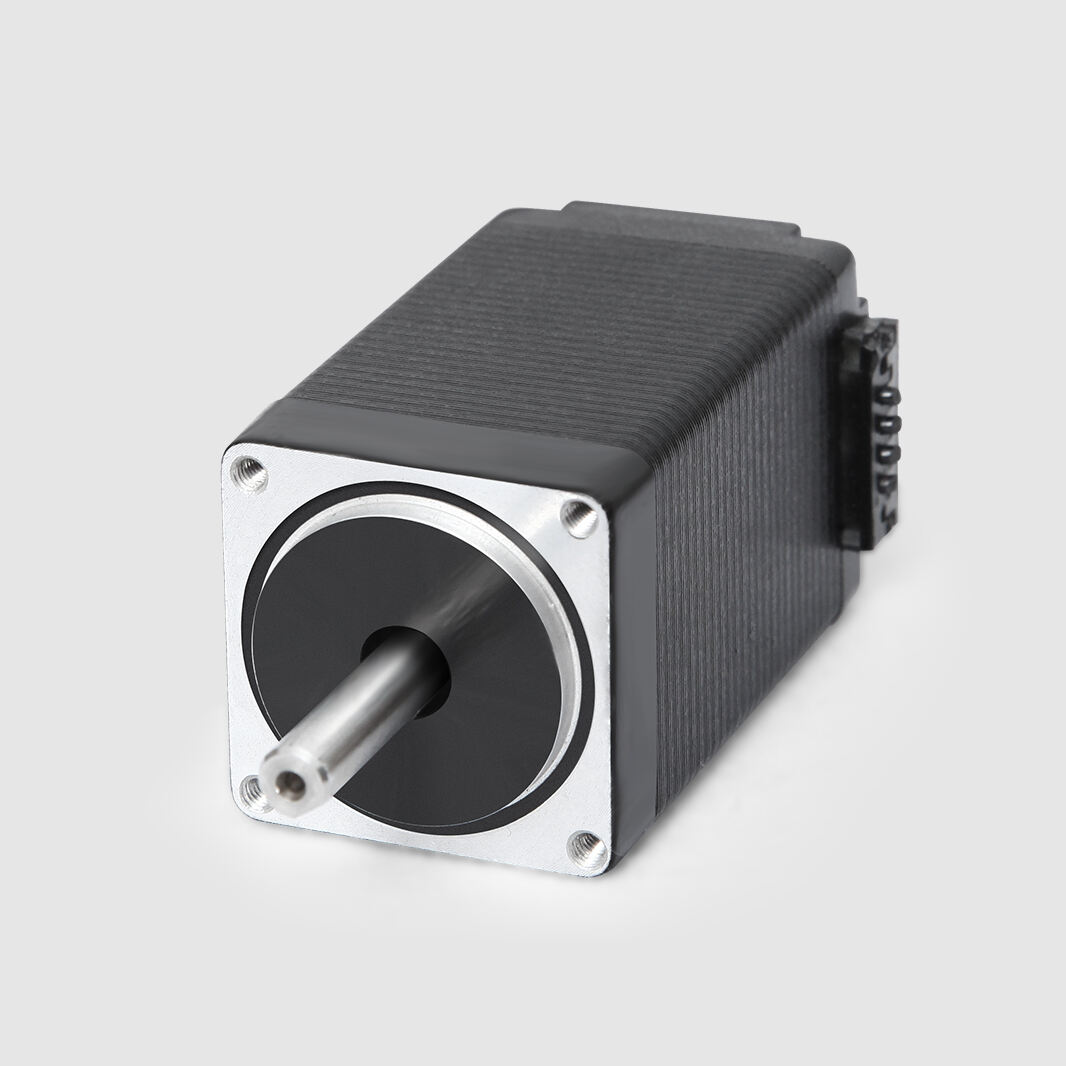
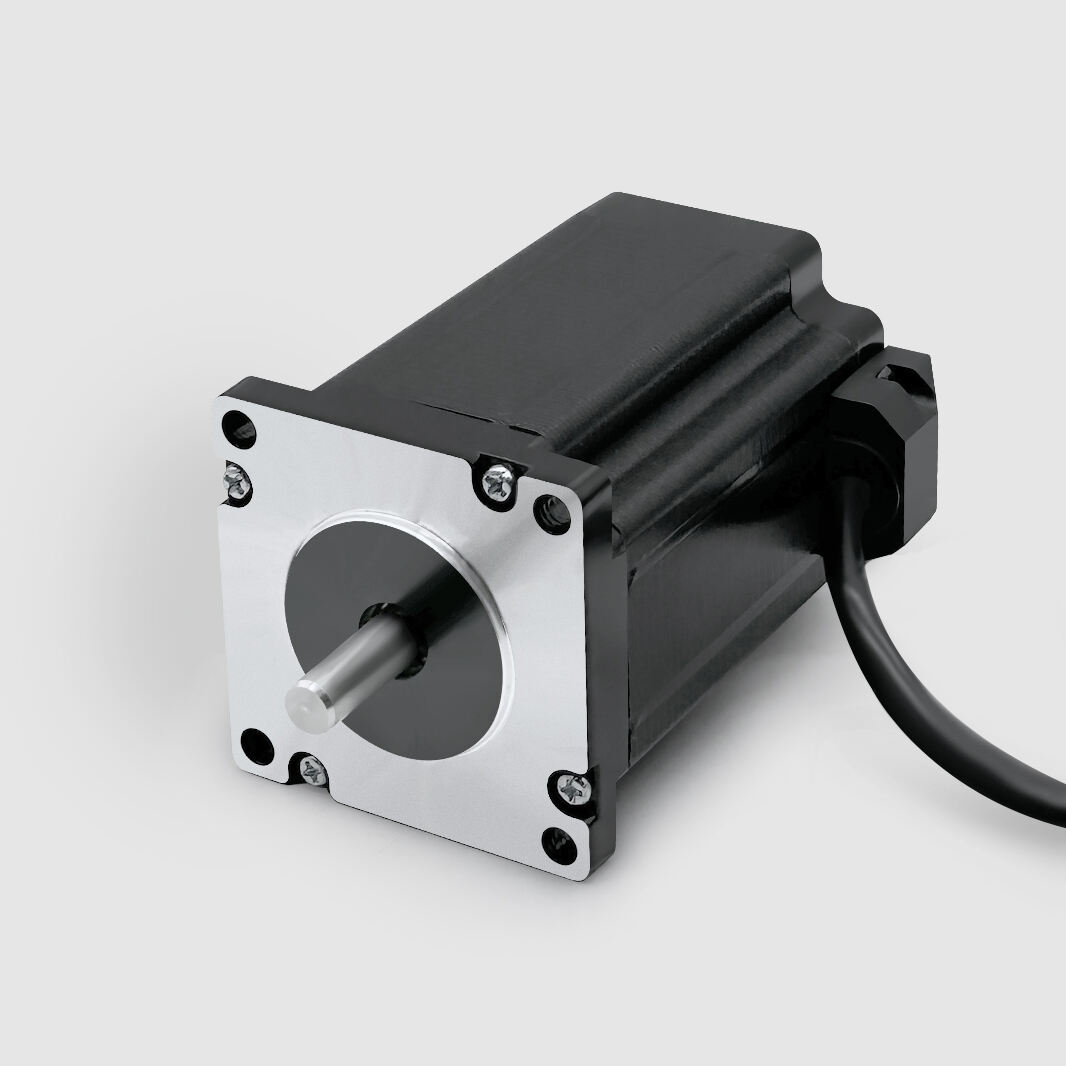
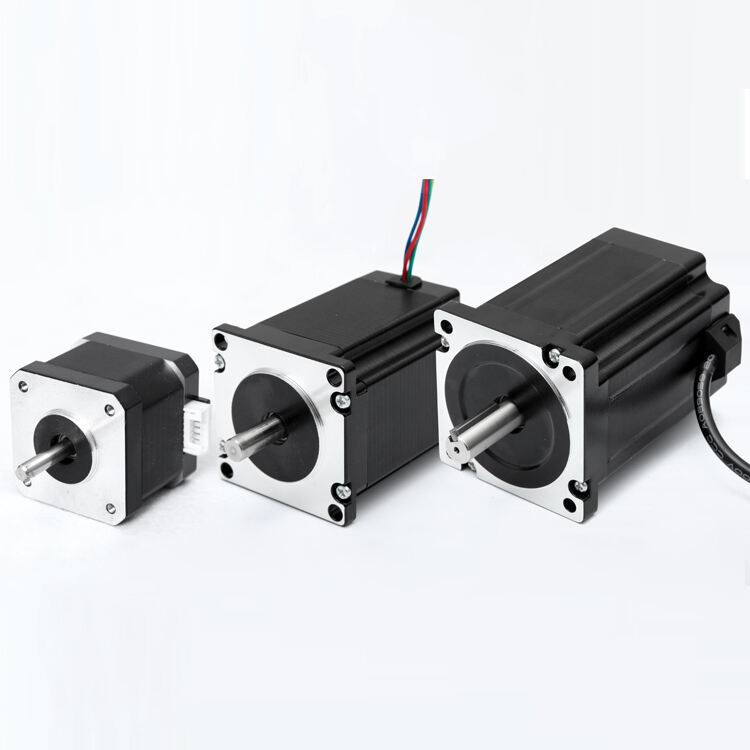
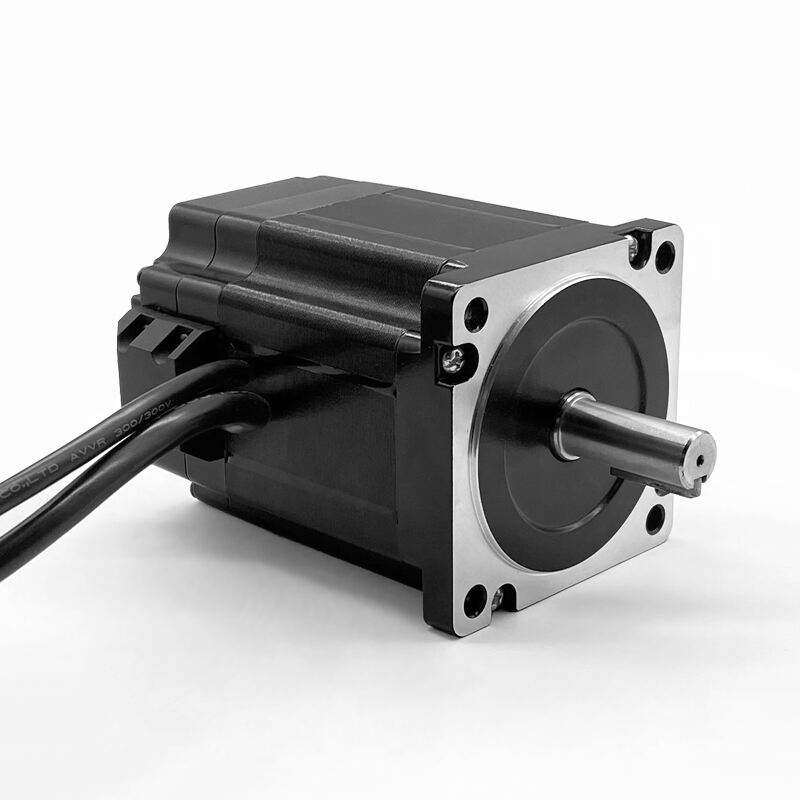
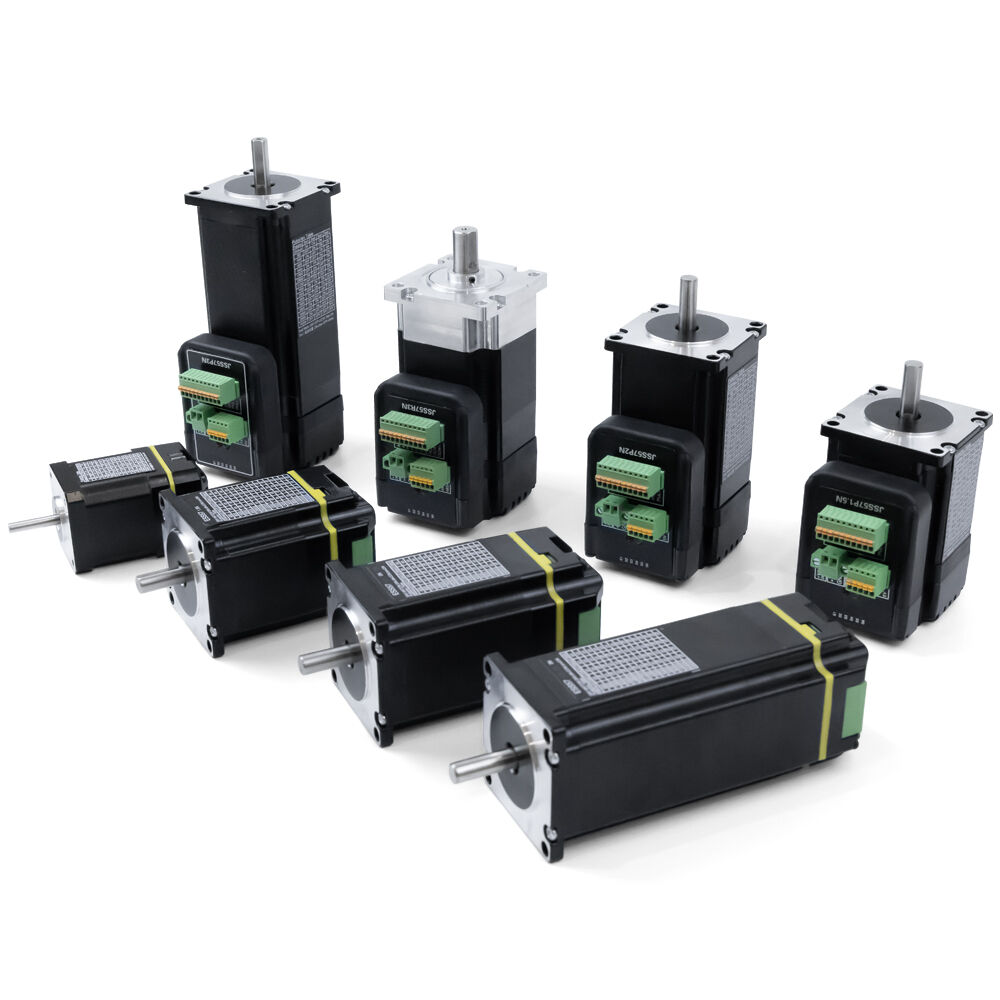
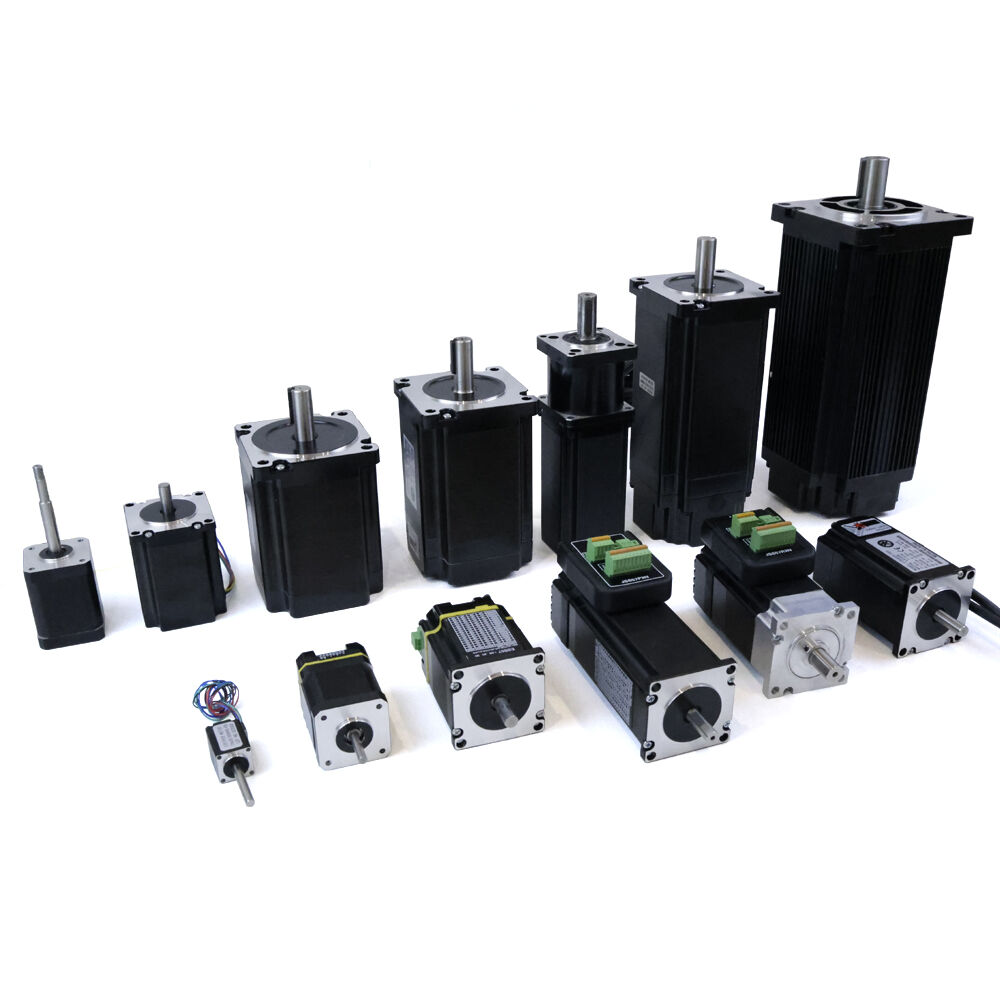
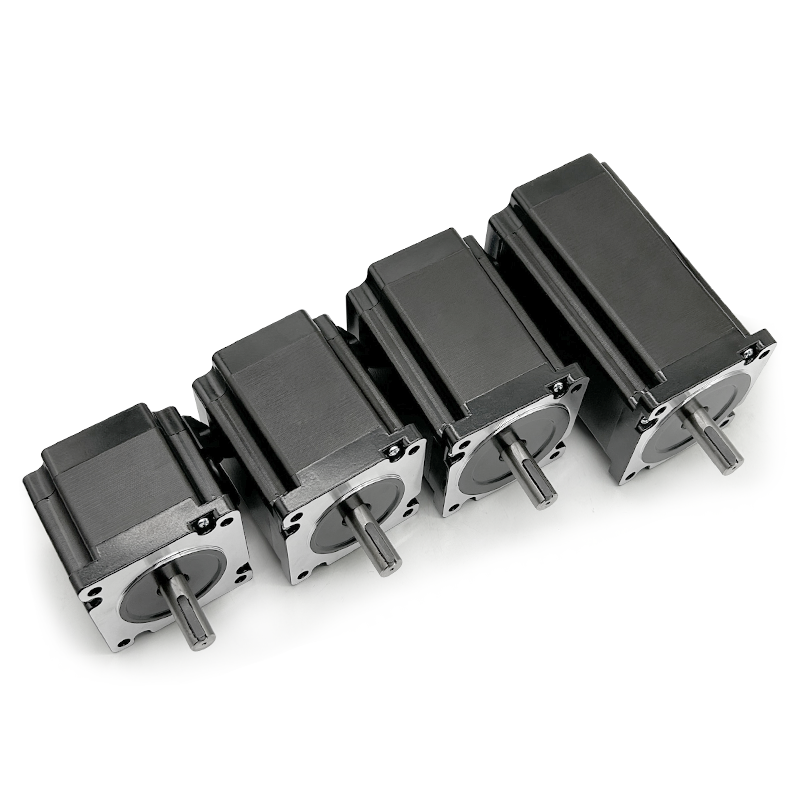
The NEMA 23 hybrid stepper motor represents a sophisticated blend of permanent magnet and variable reluctance technologies, delivering exceptional precision and reliability for demanding industrial applications. This motor design incorporates both permanent magnets and toothed rotor construction, creating a hybrid system that maximizes torque output while maintaining precise step positioning. The NEMA 23 designation refers to the standardized frame size, measuring 2.3 inches square, which ensures universal mounting compatibility across various equipment platforms. These motors typically operate with step angles ranging from 0.9 to 1.8 degrees per step, enabling incredibly fine positioning control that makes them ideal for applications requiring exact movement increments. The hybrid stepper motor technology combines the best characteristics of both permanent magnet and variable reluctance designs, resulting in superior holding torque, enhanced dynamic performance, and improved efficiency compared to traditional stepper motor configurations. Modern NEMA 23 hybrid stepper motors feature advanced winding configurations, including bipolar and unipolar arrangements, allowing for flexible integration with different drive systems and control electronics. The robust construction typically includes precision-machined components, high-grade magnetic materials, and durable bearing systems that ensure long-term operational reliability even in challenging industrial environments. These motors excel in applications requiring precise positioning without feedback systems, as they provide inherent position holding capability and predictable movement characteristics. The torque-to-size ratio of NEMA 23 hybrid stepper motors makes them particularly valuable in space-constrained applications where high performance cannot be compromised. Their ability to maintain position without continuous power consumption, combined with excellent low-speed torque characteristics, positions them as preferred solutions for automation systems, robotics, medical devices, and precision manufacturing equipment.

New Product Recommendations

NEMA 23 hybrid stepper motors deliver numerous practical benefits that make them superior choices for precision motion control applications. These motors provide exceptional positioning accuracy without requiring complex feedback systems, eliminating the need for expensive encoders or resolvers that traditional servo systems demand. This inherent accuracy translates to reduced system costs and simplified installation procedures, making them accessible for both large-scale industrial operations and smaller precision applications. The holding torque capability of NEMA 23 hybrid stepper motors ensures that loads remain securely positioned even when power is removed, providing safety and reliability in critical applications where unexpected movement could cause damage or safety hazards. This feature proves invaluable in vertical axis applications, clamping systems, and safety-critical positioning tasks. The step-by-step operation characteristic allows for precise speed control and smooth motion at low velocities, making these motors ideal for applications requiring gradual acceleration, delicate positioning, or fine adjustments. Unlike traditional motors that may exhibit cogging or irregular motion at low speeds, NEMA 23 hybrid stepper motors maintain consistent performance across their entire speed range. The digital nature of stepper motor control simplifies programming and integration with modern automation systems, as engineers can easily calculate exact positioning requirements based on step counts rather than complex velocity profiles. This digital compatibility makes them perfect partners for microcontroller-based systems and programmable logic controllers. Maintenance requirements are significantly reduced compared to brush-type motors, as NEMA 23 hybrid stepper motors contain no wearing contact surfaces, resulting in longer operational life and reduced downtime. The absence of brushes eliminates spark generation, making these motors suitable for environments where electromagnetic interference must be minimized or where explosive atmospheres require spark-free operation. Energy efficiency is another key advantage, as these motors only consume power during movement and positioning phases, reducing overall energy costs in applications with intermittent operation cycles. The standardized NEMA 23 mounting dimensions ensure easy replacement and upgrade capabilities, protecting equipment investments and reducing inventory requirements for maintenance operations.

Practical Tips

Why monitor voltage ripple when selecting a stepper driver for 3D printers?

26

Sep

Why monitor voltage ripple when selecting a stepper driver for 3D printers?

Understanding Voltage Ripple Impact on 3D Printer Performance The success of any 3D printing project heavily depends on the precision and reliability of the printer's motion control system. At the heart of this system lies the stepper motor driver, w...
View More
Top 10 Servo Motor Applications in Modern Industry

27

Nov

Top 10 Servo Motor Applications in Modern Industry

The evolution of industrial automation has positioned servo motors as essential components in modern manufacturing and production systems. These precision-engineered devices deliver exceptional accuracy, superior speed control, and remarkable efficie...
View More
10 Benefits of Brushless DC Motors in Modern Industry

12

Dec

10 Benefits of Brushless DC Motors in Modern Industry

Industrial automation continues to evolve at an unprecedented pace, driving demand for more efficient and reliable motor technologies. Among the most significant advancements in this field is the widespread adoption of brushless dc motor systems, whi...
View More
Industrial Servo Drive Systems: Benefits & Applications

12

Dec

Industrial Servo Drive Systems: Benefits & Applications

Industrial automation has revolutionized manufacturing processes across countless industries, with precision motion control serving as a cornerstone of modern production systems. At the heart of these sophisticated control mechanisms lies the servo d...
View More

Get a Free Quote

Our representative will contact you soon.
Email
Name
Company Name
WhatsApp
Mobile
Message
0/1000

nema 23 hybrid stepper motor

Superior Torque-to-Size Performance Ratio

Superior Torque-to-Size Performance Ratio

The NEMA 23 hybrid stepper motor stands out in the market due to its exceptional torque-to-size performance ratio, delivering substantially more power than comparable motors in the same compact footprint. This remarkable characteristic stems from the innovative hybrid design that combines permanent magnet technology with variable reluctance construction, creating a synergistic effect that maximizes magnetic flux density and torque generation capability. The compact 2.3-inch square frame houses sophisticated magnetic circuits that generate holding torques typically ranging from 100 to 425 oz-in, depending on the specific model and configuration. This impressive torque output enables these motors to handle substantial loads while occupying minimal space in equipment designs, making them invaluable for applications where space constraints are critical factors. The high torque density directly translates to improved machine performance, as engineers can specify smaller motors without sacrificing operational capability, leading to more compact and efficient equipment designs. In automated manufacturing systems, this advantage allows for the creation of more streamlined production lines with higher throughput capabilities. The superior torque characteristics also provide excellent acceleration performance, enabling faster cycle times in applications such as pick-and-place operations, CNC machining, and automated assembly processes. Furthermore, the high holding torque ensures that positioned loads remain stable under external forces, eliminating the need for additional braking mechanisms in many applications. This feature proves particularly valuable in vertical axis applications where gravity would otherwise cause unwanted movement, and in applications subject to external vibrations or disturbances. The torque-to-size advantage extends to dynamic performance as well, with NEMA 23 hybrid stepper motors maintaining substantial torque output even at higher rotational speeds, unlike many traditional motor types that experience significant torque dropoff as speed increases. This characteristic enables these motors to perform effectively across a wide operational envelope, from precise low-speed positioning to higher-speed transit movements, maximizing their versatility and value proposition for diverse industrial applications.
Exceptional Precision and Repeatability

Exceptional Precision and Repeatability

NEMA 23 hybrid stepper motors deliver unmatched precision and repeatability that sets them apart from conventional motor technologies, making them the preferred choice for applications demanding exact positioning and consistent performance. The inherent step-by-step operation provides resolution capabilities that can achieve positioning accuracy within 0.05 degrees or better, depending on the specific step angle configuration and microstepping implementation. This level of precision eliminates the need for expensive feedback systems in many applications, as the motor's open-loop operation provides predictable and reliable positioning without the complexity and cost associated with closed-loop servo systems. The repeatability characteristics of these motors ensure that they return to the exact same position repeatedly, with typical repeatability specifications of ±5% of one step angle, making them ideal for applications requiring consistent results over millions of operating cycles. This exceptional repeatability stems from the precise manufacturing tolerances maintained in the rotor and stator construction, combined with the digital nature of the stepping operation that eliminates cumulative positioning errors common in analog systems. In applications such as 3D printing, automated dispensing systems, and precision manufacturing equipment, this repeatability ensures consistent product quality and reduces waste from positioning variations. The precision capabilities extend beyond simple positioning to include velocity control, as NEMA 23 hybrid stepper motors can execute exact speed profiles with remarkable consistency, enabling smooth motion control for applications such as camera positioning systems, laboratory automation, and medical device operation. The step resolution can be further enhanced through microstepping techniques, where electronic drive systems subdivide each full step into smaller increments, achieving positioning resolutions of thousands of steps per revolution while maintaining the inherent accuracy and repeatability characteristics. This precision advantage translates directly to improved product quality in manufacturing applications, reduced setup time in automated systems, and enhanced performance in scientific and medical equipment where exact positioning is critical for successful operation. The combination of high precision and excellent repeatability makes NEMA 23 hybrid stepper motors particularly valuable in applications where positioning errors cannot be tolerated, such as semiconductor manufacturing equipment, optical systems alignment, and precision measurement instruments.
Versatile Control and Integration Flexibility

Versatile Control and Integration Flexibility

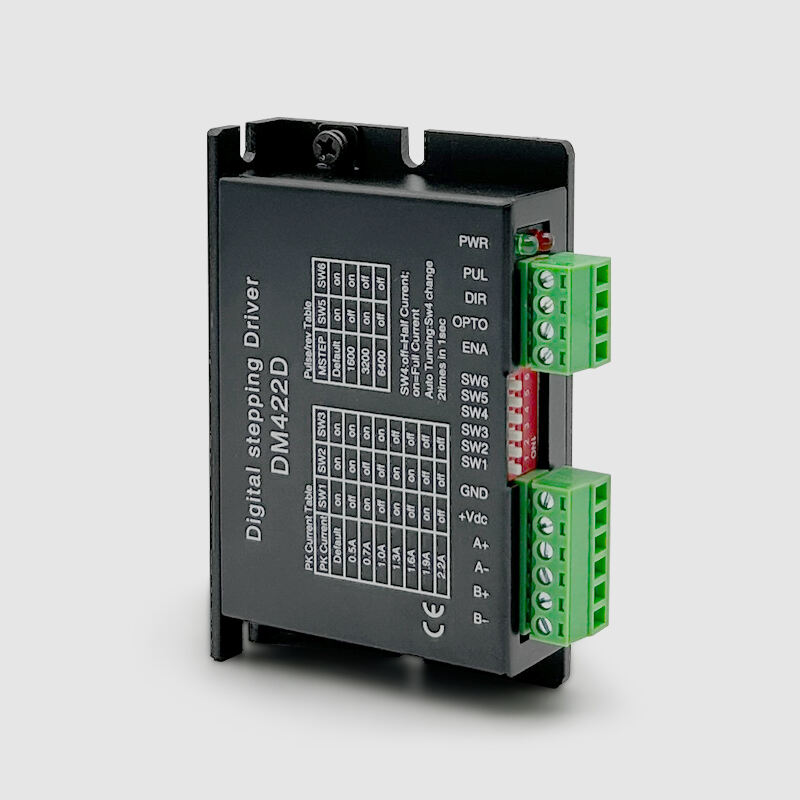
The NEMA 23 hybrid stepper motor offers unprecedented control versatility and integration flexibility that makes it adaptable to virtually any automation requirement, from simple positioning tasks to complex multi-axis coordination systems. This flexibility begins with the multiple winding configurations available, including bipolar, unipolar, and series-parallel arrangements, allowing engineers to optimize the motor characteristics for specific application requirements such as torque, speed, or power consumption. The digital nature of stepper motor control enables seamless integration with modern automation systems, programmable logic controllers, and microcontroller-based platforms, as positioning commands can be expressed in simple step and direction signals that are easily generated by digital control systems. This compatibility eliminates the need for complex analog interfaces and reduces system complexity while improving reliability and reducing electromagnetic interference susceptibility. Advanced drive technologies such as microstepping, current control, and resonance damping can be implemented to enhance performance characteristics, enabling smooth motion at all speeds and reducing vibration and noise levels that might be problematic in precision applications or quiet environments. The control flexibility extends to speed and acceleration profiles, where NEMA 23 hybrid stepper motors can execute complex motion sequences including ramping, S-curve acceleration, and synchronized multi-axis movements with precise timing coordination. This capability makes them ideal for applications such as coordinated robotics, automated manufacturing cells, and precision assembly systems where multiple axes must work together seamlessly. The motor's ability to operate in both full-step and fractional-step modes provides additional flexibility, allowing engineers to optimize resolution versus speed and torque characteristics for specific application segments. Integration advantages include standardized mounting dimensions that ensure compatibility with existing equipment designs and facilitate easy replacement or upgrade scenarios. The wide variety of shaft configurations, connector options, and mounting accessories available for NEMA 23 hybrid stepper motors further enhances integration flexibility, enabling customization for specific mechanical interfaces and electrical connection requirements. Power supply flexibility is another significant advantage, as these motors can operate efficiently across a range of voltage levels, allowing integration into systems with different power architectures without requiring specialized power conversion equipment. This versatility, combined with extensive software support and development tools available from multiple vendors, ensures that NEMA 23 hybrid stepper motors can be successfully integrated into both new equipment designs and retrofit applications across diverse industrial sectors.

+86-13401517369
[email protected]

Get a Free Quote

Our representative will contact you soon.
Email
Name
Company Name
WhatsApp
Mobile
Message
0/1000

Copyright © 2026 Changzhou Jinsanshi Mechatronics Co., Ltd. All rights reserved.  -  Privacy policy